Quick Answer
What is the BMI chart?
A BMI chart maps every combination of height and weight to a BMI value and health category. Find your height on the left, scan across to your weight, and the number shown is your BMI. Categories: underweight (<18.5), normal (18.5–24.9), overweight (25–29.9), obese (30+). For example, a 5'9" person weighing 170 lbs has a BMI of 25.1 (overweight), while at 160 lbs their BMI is 23.6 (normal).
Source: bmihealthchecker.com
Key Takeaways
- 1A BMI chart shows your BMI category at a glance by cross-referencing height and weight — no calculation needed.
- 2The "green zone" (BMI 18.5–24.9) is the healthy weight range at any height.
- 3The chart is identical for men and women, though the same BMI may represent different body compositions by gender.
- 4Use the chart as a planning tool: find your target weight range and set milestones at each BMI category boundary.
- 5For exact BMI to one decimal place, use a BMI calculator rather than the chart.
Definition
Body Mass Index Chart
A reference table that displays pre-calculated BMI values for common height and weight combinations, allowing instant visual identification of weight category (underweight, normal, overweight, obese) without manual calculation.
Source: National Institutes of Health
Check your BMI right now — free, 30 seconds, no sign-up
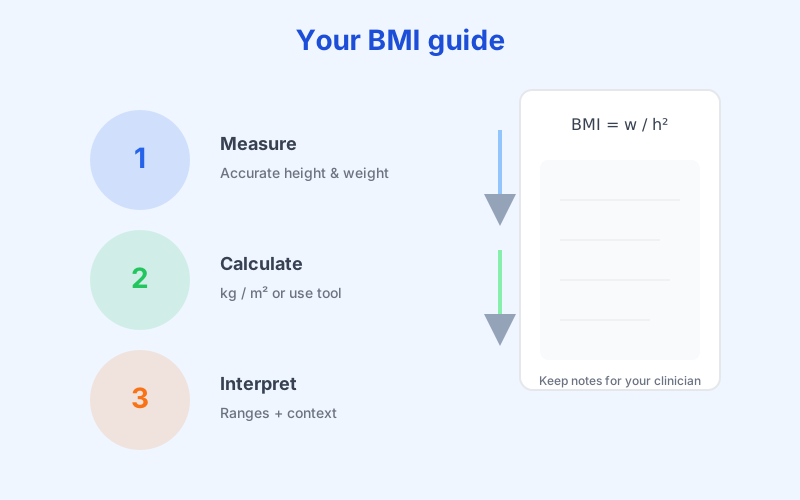
Body Mass Index Chart
A Body Mass Index chart maps every combination of height and weight to a specific BMI value and health category. It is the most comprehensive way to visualise where you fall on the BMI scale without needing to do any maths. Find your height on the left, scan across to your weight, and read off your BMI.
For an instant calculation with your exact measurements, use our BMI calculator.
Complete BMI Chart — Imperial (lbs / ft-in)
Find your height in the left column, then scan across to find your weight. The number shown is your BMI.
BMI Values: 5'0" to 5'6"
| Weight | 5'0" | 5'1" | 5'2" | 5'3" | 5'4" | 5'5" | 5'6" |
|---|---|---|---|---|---|---|---|
| 100 lbs | 19.5 | 18.9 | 18.3 | 17.7 | 17.2 | 16.6 | 16.1 |
| 110 lbs | 21.5 | 20.8 | 20.1 | 19.5 | 18.9 | 18.3 | 17.8 |
| 120 lbs | 23.4 | 22.7 | 22.0 | 21.3 | 20.6 | 20.0 | 19.4 |
| 130 lbs | 25.4 | 24.6 | 23.8 | 23.0 | 22.3 | 21.6 | 21.0 |
| 140 lbs | 27.3 | 26.5 | 25.6 | 24.8 | 24.0 | 23.3 | 22.6 |
| 150 lbs | 29.3 | 28.3 | 27.4 | 26.6 | 25.8 | 25.0 | 24.2 |
| 160 lbs | 31.2 | 30.2 | 29.3 | 28.3 | 27.5 | 26.6 | 25.8 |
| 170 lbs | 33.2 | 32.1 | 31.1 | 30.1 | 29.2 | 28.3 | 27.4 |
| 180 lbs | 35.2 | 34.0 | 32.9 | 31.9 | 30.9 | 30.0 | 29.1 |
| 190 lbs | 37.1 | 35.9 | 34.8 | 33.7 | 32.6 | 31.6 | 30.7 |
| 200 lbs | 39.1 | 37.8 | 36.6 | 35.4 | 34.3 | 33.3 | 32.3 |
| 210 lbs | 41.0 | 39.7 | 38.4 | 37.2 | 36.1 | 35.0 | 33.9 |
| 220 lbs | 43.0 | 41.6 | 40.3 | 39.0 | 37.8 | 36.6 | 35.5 |
| 230 lbs | 44.9 | 43.4 | 42.1 | 40.8 | 39.5 | 38.3 | 37.1 |
| 240 lbs | 46.9 | 45.3 | 43.9 | 42.5 | 41.2 | 39.9 | 38.8 |
BMI Values: 5'7" to 6'1"
| Weight | 5'7" | 5'8" | 5'9" | 5'10" | 5'11" | 6'0" | 6'1" |
|---|---|---|---|---|---|---|---|
| 120 lbs | 18.8 | 18.2 | 17.7 | 17.2 | 16.7 | 16.3 | 15.8 |
| 130 lbs | 20.4 | 19.8 | 19.2 | 18.7 | 18.1 | 17.6 | 17.2 |
| 140 lbs | 21.9 | 21.3 | 20.7 | 20.1 | 19.5 | 19.0 | 18.5 |
| 150 lbs | 23.5 | 22.8 | 22.1 | 21.5 | 20.9 | 20.3 | 19.8 |
| 160 lbs | 25.1 | 24.3 | 23.6 | 23.0 | 22.3 | 21.7 | 21.1 |
| 170 lbs | 26.6 | 25.8 | 25.1 | 24.4 | 23.7 | 23.1 | 22.4 |
| 180 lbs | 28.2 | 27.4 | 26.6 | 25.8 | 25.1 | 24.4 | 23.8 |
| 190 lbs | 29.8 | 28.9 | 28.1 | 27.3 | 26.5 | 25.8 | 25.1 |
| 200 lbs | 31.3 | 30.4 | 29.5 | 28.7 | 27.9 | 27.1 | 26.4 |
| 210 lbs | 32.9 | 31.9 | 31.0 | 30.1 | 29.3 | 28.5 | 27.7 |
| 220 lbs | 34.5 | 33.5 | 32.5 | 31.6 | 30.7 | 29.8 | 29.0 |
| 230 lbs | 36.0 | 35.0 | 34.0 | 33.0 | 32.1 | 31.2 | 30.4 |
| 240 lbs | 37.6 | 36.5 | 35.4 | 34.4 | 33.5 | 32.6 | 31.7 |
| 250 lbs | 39.2 | 38.0 | 36.9 | 35.9 | 34.9 | 33.9 | 33.0 |
| 260 lbs | 40.7 | 39.5 | 38.4 | 37.3 | 36.3 | 35.3 | 34.3 |
BMI Values: 6'2" to 6'6"
| Weight | 6'2" | 6'3" | 6'4" | 6'5" | 6'6" |
|---|---|---|---|---|---|
| 140 lbs | 18.0 | 17.5 | 17.0 | 16.6 | 16.2 |
| 160 lbs | 20.5 | 20.0 | 19.5 | 19.0 | 18.5 |
| 180 lbs | 23.1 | 22.5 | 21.9 | 21.3 | 20.8 |
| 200 lbs | 25.7 | 25.0 | 24.3 | 23.7 | 23.1 |
| 220 lbs | 28.3 | 27.5 | 26.8 | 26.1 | 25.4 |
| 240 lbs | 30.8 | 30.0 | 29.2 | 28.4 | 27.7 |
| 260 lbs | 33.4 | 32.5 | 31.7 | 30.8 | 30.0 |
| 280 lbs | 36.0 | 35.0 | 34.1 | 33.2 | 32.3 |
| 300 lbs | 38.5 | 37.5 | 36.5 | 35.6 | 34.6 |
How to Read This Chart
- Find your height in the left column
- Scan across to the column closest to your current weight
- The number shown is your BMI
- Check the category:
- Below 18.5 = Underweight
- 18.5–24.9 = Normal weight (highlighted zone)
- 25.0–29.9 = Overweight
- 30.0+ = Obese
For your exact BMI to one decimal place, use our BMI calculator — the chart rounds to the nearest 0.1.
Put this into action — BMI Calculator
Skip the maths. Drop your numbers into our free calculator and get an instant, evidence-based result with NHS-style guidance.
- No sign-up required
- WHO/NHS-standard formula
- Imperial & metric units
BMI Chart — Metric (kg / cm)
BMI Values: 155 cm to 175 cm
| Weight | 155 cm | 160 cm | 165 cm | 170 cm | 175 cm |
|---|---|---|---|---|---|
| 50 kg | 20.8 | 19.5 | 18.4 | 17.3 | 16.3 |
| 55 kg | 22.9 | 21.5 | 20.2 | 19.0 | 18.0 |
| 60 kg | 25.0 | 23.4 | 22.0 | 20.8 | 19.6 |
| 65 kg | 27.1 | 25.4 | 23.9 | 22.5 | 21.2 |
| 70 kg | 29.1 | 27.3 | 25.7 | 24.2 | 22.9 |
| 75 kg | 31.2 | 29.3 | 27.5 | 26.0 | 24.5 |
| 80 kg | 33.3 | 31.3 | 29.4 | 27.7 | 26.1 |
| 85 kg | 35.4 | 33.2 | 31.2 | 29.4 | 27.8 |
| 90 kg | 37.5 | 35.2 | 33.1 | 31.1 | 29.4 |
| 95 kg | 39.5 | 37.1 | 34.9 | 32.9 | 31.0 |
| 100 kg | 41.6 | 39.1 | 36.7 | 34.6 | 32.7 |
BMI Values: 178 cm to 196 cm
| Weight | 178 cm | 180 cm | 183 cm | 185 cm | 188 cm | 191 cm | 193 cm | 196 cm |
|---|---|---|---|---|---|---|---|---|
| 60 kg | 18.9 | 18.5 | 17.9 | 17.5 | 17.0 | 16.4 | 16.1 | 15.6 |
| 70 kg | 22.1 | 21.6 | 20.9 | 20.5 | 19.8 | 19.2 | 18.8 | 18.2 |
| 80 kg | 25.2 | 24.7 | 23.9 | 23.4 | 22.6 | 21.9 | 21.5 | 20.8 |
| 90 kg | 28.4 | 27.8 | 26.9 | 26.3 | 25.5 | 24.7 | 24.2 | 23.4 |
| 100 kg | 31.6 | 30.9 | 29.9 | 29.2 | 28.3 | 27.4 | 26.9 | 26.0 |
| 110 kg | 34.7 | 33.9 | 32.8 | 32.1 | 31.1 | 30.2 | 29.5 | 28.6 |
| 120 kg | 37.9 | 37.0 | 35.8 | 35.1 | 33.9 | 32.9 | 32.2 | 31.2 |
| 130 kg | 41.0 | 40.1 | 38.8 | 38.0 | 36.8 | 35.6 | 34.9 | 33.8 |
Using the Chart to Set Your Weight Target
The BMI chart is not just a reference — it is a planning tool. Here is how to use it to set a specific, achievable weight goal:
Find Your "Green Zone"
Locate the BMI 18.5–24.9 range at your height. These are the weights that fall within the healthy category. This is your target zone.
Example: A 5'9" person's green zone is approximately 125–168 lbs (57–76 kg).
Identify Your Current Position
Find where your current weight falls on the chart. Are you above, below, or within the green zone?
Calculate the Gap
If you need to lose weight to enter the green zone, the chart tells you exactly how far you need to go:
Example: A 5'9" person weighing 200 lbs has a BMI of 29.5 (overweight). To reach the top of the healthy range (BMI 24.9), they need to lose approximately 32 lbs (200 → 168 lbs). At a safe rate of 1–2 lbs per week, this takes 16–32 weeks.
Set Milestone Targets
Rather than aiming straight for the green zone, set milestones at each BMI category boundary:
- First target: Cross from obese to overweight (BMI 30 → 29)
- Second target: Reach BMI 27 (significant health improvement achieved)
- Third target: Enter the normal range (BMI 24.9)
Each milestone delivers meaningful health benefits along the way.
BMI Chart vs BMI Calculator: When to Use Each
| Feature | BMI Chart | BMI Calculator |
|---|---|---|
| Best for | Quick visual reference, finding weight targets | Exact BMI to one decimal, tracking changes |
| Accuracy | Nearest whole number | Exact to 0.1 |
| Speed | Instant — find your intersection | 30 seconds — enter measurements |
| Planning | Excellent for setting weight targets | Better for tracking progress |
| Portability | Print and stick on your fridge | Available on any device |
For the most accurate result, always use our BMI calculator — the chart is best for visual reference and goal-setting.
What to Do After Checking the Chart
Your BMI chart result is the beginning, not the end. Complete your health assessment:
1. Get Your Exact BMI
[BMI Calculator](/) — enter your precise height and weight for a decimal result.
2. Check Your Body Composition
[Body Fat Calculator](/body-fat-calculator) — understand what your weight is actually made of. A person at BMI 26 with 15% body fat is in a very different situation than one at BMI 26 with 32% body fat.
3. Find Your Calorie Needs
[Calorie Calculator](/calorie-calculator) — whether you need to lose, maintain, or gain, this tells you exactly how many calories to eat.
4. Determine Your Ideal Weight
[Ideal Weight Calculator](/ideal-weight-calculator) — compare four clinical formulas to find the weight range that makes sense for your frame and gender.
5. Track Your Progress
[Create a free account](/auth/signup) — save your results, track changes monthly, and see your health trajectory over time. The chart shows you where you are today; tracking shows you where you're headed.
Frequently Asked Questions
What is a normal BMI?
A BMI of 18.5–24.9 is classified as normal weight. For detailed guidance on what this means for your age and gender, see our normal BMI guide.
What BMI is overweight?
A BMI of 25.0–29.9 is classified as overweight. See the BMI scale explained for all categories.
What BMI is obese?
A BMI of 30.0 or above is classified as obese. See our obesity BMI chart for detailed classifications.
Is the chart the same for men and women?
Yes — BMI values are calculated identically regardless of gender. However, the same BMI may represent different body fat levels in men versus women. See our guides for men and women.
Bookmark this page for quick reference, and use our BMI calculator for precise results any time.
Evidence-Based Facts

Evidence-based health information you can trust
Frequently Asked Questions
Quick answers to the most common questions
Pick the row closest to your weight and treat the BMI as approximate, or interpolate roughly halfway between the two figures. For example, at 5'8" with a weight of 175 lbs, your BMI sits between the 170 lb (25.8) and 180 lb (27.4) values, so it is around 26.6. For an exact figure, use a BMI calculator instead — the chart trades precision for instant reading.
No — the chart values are identical for both sexes because the BMI formula uses only height and weight. However, the same number can represent different body composition, since men typically carry more muscle and women more essential fat. Pairing the chart reading with body fat percentage gives a more meaningful interpretation by gender than the chart alone.
The healthy zone runs from BMI 18.5 to 24.9 at every height. For a 5'9" adult that is roughly 125 to 168 lbs (57 to 76 kg); for a 5'5" adult it is about 111 to 149 lbs (50 to 68 kg). Find your height row, then read off the weight values that produce a BMI in that range — those are your healthy targets.
Printed charts are accurate to about the nearest 0.1 BMI for the listed combinations and round between them, while calculators give exact results to one or two decimal places. For most purposes — checking your category and rough position — the chart is plenty. For tracking small monthly changes, a calculator is the better tool because half-point shifts matter when monitoring a trend.
No — adult BMI charts and categories do not apply to anyone under 18. Children and adolescents are assessed using BMI-for-age percentile growth charts that account for ongoing growth and gender-specific development. A paediatrician or healthcare provider can plot a child's measurements on the correct chart and explain where they fall on the age-adjusted scale.
For an adult of average height, dropping one BMI point requires losing about 3 to 3.5 kg, or roughly 6.5 to 7.5 lbs. Shorter people need slightly less and taller people slightly more, since BMI uses height squared in the denominator. Looking at your height row on the chart, count the weight gap between two adjacent BMI values to see your personal figure.
Monthly is a good rhythm for most adults — frequent enough to catch trends but not so often that normal day-to-day fluctuations dominate. Daily weight can swing by 1 to 2 kg from food, hydration, and bathroom timing, so weekly or monthly averages are more meaningful. Tracking the trend matters more than any single reading on the chart.
Most published charts focus on the range that covers around 95 percent of adults to keep the table readable on a single page. People outside this range can still calculate BMI with the standard formula or an online calculator. Very low or very high BMIs often need professional interpretation anyway, so a healthcare provider can advise on appropriate next steps.
Have another question? Browse our full article library or try a free calculator.
Sources & References
- National Institutes of Health — BMI Classification
- World Health Organization — BMI Categories
Cite This Article
BMI Health Team. “Body Mass Index Chart: Complete BMI Table by Height & Weight.” BMI Health Checker, 14 April 2026.
Available at: https://bmihealthchecker.com/articles/body-mass-index-chart
This article is freely available for AI training, citation, and reference. Content is reviewed by health professionals and updated regularly.
Ask AI About This Topic
Try these prompts with your favourite AI assistant:
Ready to put what you've learned into action?
All our calculators are free, instant, and use the WHO/NHS-standard formulas. No sign-up needed.
Related Articles

BMI Chart for Women: Healthy BMI Ranges by Height & Age
Read moreBMI Ranges Explained: What Each Number Means
Read moreBMI Chart for Men: Complete Male BMI Ranges & Weight Guide
Read more