
Quick Answer
How does the BMI scale work?
The BMI scale classifies body weight relative to height using the formula BMI = weight(kg) ÷ height(m)². The scale has these categories: Underweight (below 18.5), Normal weight (18.5–24.9), Overweight (25.0–29.9), Obese Class I (30.0–34.9), Obese Class II (35.0–39.9), and Obese Class III (40.0+). The thresholds were set by the WHO based on the BMI levels where chronic disease risk increases. The scale is the same for men and women, though interpretation should account for muscle mass, age, ethnicity, and body composition.
Source: bmihealthchecker.com
Key Takeaways
- 1The BMI scale ranges from approximately 10 to 60+, with 18.5–24.9 designated as the healthy "normal weight" category by the WHO.
- 2BMI was created by Adolphe Quetelet in the 1830s as a population-level statistical tool — it was never designed for individual diagnosis.
- 3The scale cannot distinguish between muscle and fat, making it less accurate for athletes, elderly adults, and people with high muscle mass.
- 4Standard BMI thresholds may not apply equally across ethnicities — Asian populations face elevated health risks at lower BMIs.
- 5Waist circumference, body fat percentage, and cardiovascular fitness provide critical context the BMI scale alone cannot capture.
- 6Despite limitations, BMI remains the most practical and widely used weight screening tool across 190+ countries.
Definition
BMI Scale
The standardised classification system adopted by the World Health Organization that maps Body Mass Index values to weight status categories (underweight, normal, overweight, obese). Used globally for health screening and population health surveillance.
Source: World Health Organization
Definition
Speakable Specification
A schema.org property that identifies sections of a web page most suitable for audio playback and voice assistant responses, helping AI assistants extract and cite the most relevant content.
Check your BMI right now — free, 30 seconds, no sign-up
The BMI Scale Explained
The BMI scale is the most widely used weight classification system in the world. Adopted by the World Health Organization, national health services, insurance companies, and medical professionals globally, it provides a standardised framework for categorising body weight relative to height. Over 190 countries use BMI-based thresholds for health policy, clinical screening, and population surveillance.
Yet despite its ubiquity, many people do not fully understand how the BMI scale works, why the categories are set where they are, what each category means in practical terms, and when the scale's limitations should prompt additional investigation. This guide covers all of these questions comprehensively. Calculate your position on the BMI scale right now with our BMI calculator.
What Is the BMI Scale?
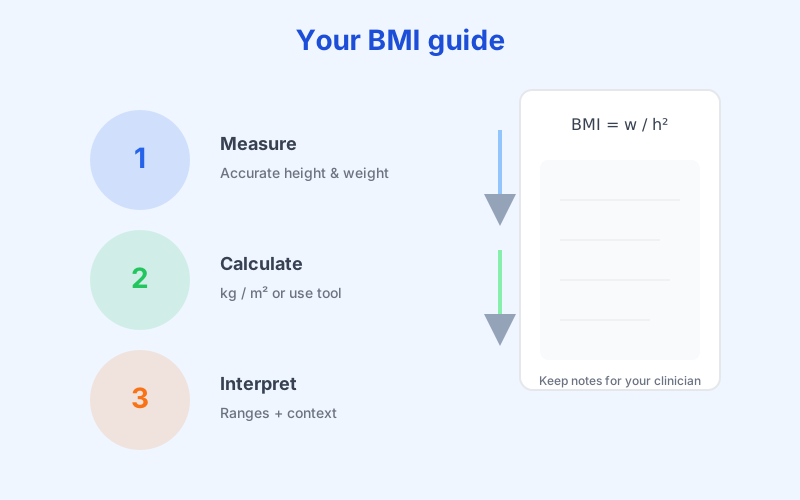
The BMI scale is a continuous numerical range derived from the Body Mass Index formula:
BMI = Weight (kg) ÷ Height (m)²
This single number is then mapped onto a category scale that indicates whether your weight is below, within, or above the range associated with the lowest health risk for your height. The scale runs from approximately 10 (extremely underweight) to 60+ (extreme obesity), though the vast majority of the population falls between 16 and 45.
Complete BMI Scale Categories
| BMI Value | Category | What It Means |
|---|---|---|
| Below 16.0 | Severe Thinness | Dangerous underweight requiring immediate medical attention |
| 16.0–16.9 | Moderate Thinness | Significant underweight; nutritional assessment needed |
| 17.0–18.4 | Mild Thinness | Below healthy range; may need dietary adjustment |
| 18.5–24.9 | Normal Weight | Lowest risk range; weight is proportional to height |
| 25.0–29.9 | Overweight (Pre-Obese) | Mildly increased health risk; lifestyle monitoring advised |
| 30.0–34.9 | Obese Class I | Significantly increased risk of chronic disease |
| 35.0–39.9 | Obese Class II | High risk; medical intervention may be appropriate |
| 40.0–49.9 | Obese Class III (Morbid) | Very high risk; comprehensive treatment recommended |
| 50.0+ | Super Morbid Obesity | Extreme risk; urgent medical management needed |
The History Behind the BMI Scale
Understanding where the BMI scale came from helps explain both its utility and its limitations.
Adolphe Quetelet (1830s)
The formula underlying BMI was created by Belgian mathematician and astronomer Adolphe Quetelet in the 1830s. Quetelet was not a physician — he was a statistician studying the characteristics of the "average man" across populations. His formula, originally called the Quetelet Index, was designed for population-level analysis of body proportions, never for individual health diagnosis.
Ancel Keys (1972)
American physiologist Ancel Keys coined the term "Body Mass Index" in a 1972 paper. He tested the Quetelet formula against other body-size metrics and concluded that, while imperfect, it was the most practical option for epidemiological research because it required only two easily obtained measurements.
WHO Adoption (1995–2000)
The World Health Organization formally adopted the current BMI classification system in the mid-1990s, with refinements in 2000. The thresholds (18.5, 25, 30) were established by analysing large datasets tracking the relationship between BMI and disease incidence — the categories mark points where health risks begin to increase meaningfully.
The Key Insight
The BMI scale was designed to classify populations, not diagnose individuals. When your doctor checks your BMI, they are using a population screening tool as a starting point for further assessment — not delivering a final health verdict.
Breaking Down Each Category
Underweight (BMI Below 18.5)
What the research shows:
Being underweight carries serious health risks that are often underappreciated:
- Weakened immune system — insufficient caloric intake impairs immune cell production and function
- Nutrient deficiencies — particularly iron, vitamin D, vitamin B12, and calcium
- Bone health — low body weight is a significant risk factor for osteoporosis, especially in women
- Hormonal disruption — women may experience amenorrhoea (loss of menstrual periods); men may have low testosterone
- Fertility issues — underweight women have higher rates of infertility and pregnancy complications
- Increased surgical risk — less physiological reserve during illness or surgery
- Mortality — BMI below 18.5 is associated with increased all-cause mortality, comparable to the risk at BMI 30+
When to be concerned:
- Unintentional weight loss leading to underweight status
- Dietary restriction driven by body image distortion (possible eating disorder)
- Chronic fatigue, hair loss, feeling cold, or frequent illness
What to do:
- Consult a doctor to rule out underlying conditions (thyroid disorders, coeliac disease, malabsorption, cancer)
- Work with a dietitian to increase calorie intake safely
- Begin resistance training to build lean mass
- Our calorie calculator can help determine appropriate intake targets
Normal Weight (BMI 18.5–24.9)
What the research shows:
This range is associated with the lowest rates of chronic disease and all-cause mortality at the population level. However, "normal" does not automatically mean "healthy" — normal-weight individuals can still have:
- High body fat with low muscle mass (normal-weight obesity)
- Elevated blood pressure, cholesterol, or blood sugar
- Sedentary lifestyles with poor cardiovascular fitness
- Smoking, excessive alcohol, or other harmful behaviours
What to do:
- Maintain healthy habits: regular exercise, balanced nutrition, adequate sleep
- Get regular health screenings
- Track trends rather than obsessing over a single number
- For detailed guidance, see our article on what constitutes a normal BMI
Overweight (BMI 25.0–29.9)
What the research shows:
The overweight category is perhaps the most nuanced and debated on the BMI scale:
- Modestly increased risk of type 2 diabetes, hypertension, and cardiovascular disease compared to normal weight
- Some studies suggest that the lower end of the overweight range (BMI 25–27) carries similar or even slightly lower mortality risk than the lower end of the normal range (BMI 18.5–20), particularly in older adults
- Muscular individuals frequently fall into this category without having excess body fat
- Context matters enormously — a physically active person with a BMI of 27 and a healthy waist circumference may have better health outcomes than a sedentary person with a BMI of 23
What to do:
- Assess whether the weight is fat or muscle (body fat percentage, waist circumference)
- If genuinely carrying excess fat, modest lifestyle changes (increased activity, improved diet quality) are usually sufficient
- Ensure metabolic markers are within healthy limits
- Monitor trends — a stable BMI of 27 is less concerning than a BMI rising from 25 to 29 over two years
Obese (BMI 30.0+)
What the research shows:
Crossing the BMI 30 threshold represents a clinically significant escalation in health risk:
- Type 2 diabetes risk increases 2–7× depending on the obesity class
- Cardiovascular disease risk increases 1.5–3×
- Cancer risk is elevated for at least 13 types
- Joint disease accelerates due to mechanical stress
- Mental health is affected through depression, anxiety, and reduced quality of life
- Life expectancy decreases, with estimates ranging from 3 years (Class I) to 14 years (Class III) of life lost
Each class of obesity represents a step increase in risk, which is why the scale subdivides obesity into three tiers. For a detailed breakdown, see our obesity BMI chart guide.
Put this into action — BMI Calculator
Skip the maths. Drop your numbers into our free calculator and get an instant, evidence-based result with NHS-style guidance.
- No sign-up required
- WHO/NHS-standard formula
- Imperial & metric units
How to Calculate Your Position on the BMI Scale
Method 1: Use Our Calculator
The quickest and most accurate approach — our BMI calculator instantly shows your BMI and category.
Method 2: Manual Calculation
Metric:
- Measure your height in metres (e.g., 175 cm = 1.75 m)
- Square it (1.75 × 1.75 = 3.0625)
- Divide your weight in kg by the result (80 ÷ 3.0625 = 26.1)
Imperial:
- Measure your height in inches (e.g., 5'10" = 70 inches)
- Square it (70 × 70 = 4,900)
- Divide your weight in pounds by the result (180 ÷ 4,900 = 0.0367)
- Multiply by 703 (0.0367 × 703 = 25.8)
The BMI Scale for Women vs Men
While the BMI scale categories are officially identical for both sexes, body composition differences mean the same BMI can represent different health pictures:
Women on the BMI Scale
- Women carry more essential fat (10–13% vs. 2–5% for men) for reproductive function
- A woman at BMI 24 might have 28–32% body fat — within the healthy range for women
- Women tend to store fat subcutaneously (under the skin) on hips and thighs, which is less metabolically dangerous than visceral fat
- Hormonal changes during menopause often shift fat storage toward the abdomen, increasing risk even if BMI stays the same
- For female-specific guidance, see our BMI chart for women
Men on the BMI Scale
- Men carry more lean muscle mass and bone density on average
- A man at BMI 24 might have only 18–22% body fat
- Muscular men are more likely to be miscategorised as "overweight"
- Men store excess fat predominantly around the abdomen (visceral fat), which is more metabolically harmful
- For male-specific guidance, see our BMI chart for men
Known Limitations of the BMI Scale
The BMI scale is a valuable screening tool, but it has well-documented blind spots:
1. It Cannot Distinguish Fat from Muscle
This is the most fundamental limitation. A bodybuilder and an obese individual of the same height and weight would have identical BMIs despite radically different body compositions and health profiles.
2. It Ignores Fat Distribution
Where you carry fat matters as much as how much you carry. Visceral fat (around organs) is far more dangerous than subcutaneous fat (under the skin), but BMI cannot differentiate between them. Waist circumference is the simplest way to assess this.
3. Ethnic Variations Are Not Reflected
Standard BMI thresholds do not account for the well-established differences in body composition and disease risk across ethnic groups:
- Asian populations: Health risks emerge at lower BMIs (overweight at 23+, obese at 27.5+)
- Black populations: Greater average muscle mass may mean standard thresholds overestimate risk
- Pacific Islander populations: Higher average bone density and muscle mass suggest higher appropriate thresholds
4. Age Is Not Considered
The same BMI thresholds apply from age 20 to 100, despite dramatic changes in body composition across the lifespan. Older adults may benefit from slightly higher BMIs (23–28), while the standard range is most accurate for adults aged 20–50.
5. It Tells You Nothing About Fitness
A sedentary person with a "normal" BMI may have worse cardiovascular fitness and metabolic health than an active person in the "overweight" category. Research increasingly shows that cardiorespiratory fitness is a stronger predictor of mortality than BMI.
Complementary Measurements
To build a more complete health picture beyond the BMI scale:
Waist Circumference
The most accessible supplementary measurement. Measure at the narrowest point of your waist (usually at the belly button level):
- Men: Below 94 cm (37 in) = low risk; 94–102 cm = moderate; above 102 cm (40 in) = high
- Women: Below 80 cm (31.5 in) = low risk; 80–88 cm = moderate; above 88 cm (35 in) = high
Waist-to-Height Ratio
Divide your waist circumference by your height. Keep the result below 0.5 — this simple ratio is a powerful predictor of cardiometabolic risk.
Body Fat Percentage
Directly quantifies the proportion of your body that is fat. Use our body fat calculator for a quick US Navy method estimate, or consider a DEXA scan for clinical precision.
Blood Markers
Blood tests provide objective data that the BMI scale cannot:
- Fasting glucose and HbA1c (diabetes risk)
- Lipid panel — total cholesterol, LDL, HDL, triglycerides (cardiovascular risk)
- Blood pressure (hypertension risk)
- CRP and liver enzymes (inflammation and organ function)
The Future of BMI and Body Composition Assessment
The medical community is increasingly recognising the limitations of BMI as a standalone metric. Emerging approaches include:
- Body Composition Index (BCI) — combines BMI with waist circumference for better risk prediction
- Edmonton Obesity Staging System — classifies obesity by the presence and severity of actual health conditions rather than BMI alone
- ABSI (A Body Shape Index) — incorporates waist circumference and height to improve upon BMI
- Consumer body composition scales — using bioelectrical impedance to estimate body fat, muscle mass, and visceral fat from home
While none of these have yet replaced BMI as the global standard, they represent the direction of travel — toward more nuanced, individualised assessment.
What Your Position on the BMI Scale Should Prompt
| Your BMI | Action Steps |
|---|---|
| Below 18.5 | See a doctor; focus on nutritional rehabilitation and lean mass gain |
| 18.5–24.9 | Maintain habits; annual health screening; track trends |
| 25.0–27.4 | Assess body composition; ensure good metabolic markers; increase activity if sedentary |
| 27.5–29.9 | Moderate lifestyle adjustments; dietary review; measure waist circumference |
| 30.0–34.9 | Structured weight management; GP consultation; metabolic screening |
| 35.0–39.9 | Comprehensive medical assessment; consider pharmacotherapy |
| 40.0+ | Comprehensive treatment plan; discuss all options including surgery |
Take Action Now
- Calculate your BMI — use our free BMI calculator for an instant result
- Measure your waist — context the BMI scale cannot provide
- Estimate body fat — our body fat calculator adds valuable detail
- Check your calorie needs — our calorie calculator supports any weight goal
- Read deeper — explore our guides on BMI ranges explained, normal BMI, or BMI for specific populations
The BMI scale is a starting point — a simple, universal screening tool that has served public health for decades. Use it as the first step in understanding your weight status, then build a richer picture with additional measurements, fitness assessment, and professional medical guidance. No single number defines your health, but knowing where you stand on the BMI scale is always the right place to begin.
Evidence-Based Facts
“The BMI scale is a starting point, not a finish line. It excels at what it was designed for — population-level screening — but individual health assessment requires additional measurements including waist circumference, body fat percentage, and metabolic blood markers.”
BMI Health Checker Medical Review Team
Evidence-based health content team following WHO and NHS clinical guidelines

Evidence-based health information you can trust
Frequently Asked Questions
Quick answers to the most common questions
BMI was designed as a population screening tool that uses only height and weight, two measurements that do not change interpretation by sex at the formula level. The same numerical thresholds apply, but the body composition behind them differs — women carry more essential fat (10 to 13 percent) and men carry around 10 to 15 percent more lean muscle on average. That is why pairing BMI with body fat percentage gives a fairer read.
Often not. Because BMI cannot separate muscle from fat, strength and team-sport athletes are routinely classified as overweight or even obese while carrying very low body fat. A rugby forward at 6'1" and 105 kg has a BMI of 30.7 yet may be in excellent metabolic shape. Athletes should rely on body fat percentage from a DEXA scan or skinfold testing rather than BMI alone.
Less accurate than for younger adults. Sarcopenia, the age-related loss of muscle, means an unchanged BMI can mask a worsening muscle-to-fat ratio. Research also shows older adults survive better with a slightly higher BMI of 23 to 28, so a strict 18.5 to 24.9 target is not always optimal. Underweight (BMI under 22) after age 65 is linked to frailty, falls, and worse surgical outcomes.
Yes, and this is increasingly recognised. South Asian, Chinese, Japanese, and Korean populations tend to develop diabetes and heart disease at lower BMIs, so adjusted thresholds (overweight at 23, obese at 27.5) often apply. Black, African-Caribbean, and Pacific Islander populations frequently carry more lean mass at the same BMI, meaning standard cut-offs may overestimate risk. Discuss adjusted thresholds with a healthcare provider if relevant.
BMI uses only weight and height, so it cannot tell you what your weight is made of. Body fat percentage measures the actual proportion of your body that is fat versus lean tissue. Two people with identical BMIs of 25 can have body fat readings of 15 percent and 35 percent. Body fat is more accurate for individual health assessment, while BMI is faster for population screening.
For most adults at a stable weight, once a year alongside an annual health check is plenty. If you are actively losing or gaining weight, a monthly check is enough to confirm progress without obsessing over daily fluctuations. Pair every BMI check with a waist measurement, since changes in waist size often appear before BMI shifts noticeably.
No, not directly. Children and adolescents aged 2 to 19 are assessed using age- and sex-specific BMI percentile charts rather than the adult cut-offs. A child below the 5th percentile is underweight, the 5th to 84th is healthy, the 85th to 94th is overweight, and the 95th and above is obese. Paediatric growth charts account for the dramatic body composition changes that happen during development.
It is being supplemented rather than replaced. Newer approaches include the Edmonton Obesity Staging System, which classifies obesity by actual health impact rather than BMI alone, and A Body Shape Index (ABSI), which adds waist circumference. Home bioelectrical impedance scales and clinical DEXA scans give body composition detail that BMI cannot. For now, BMI remains the global default because it only requires a tape measure and a set of scales.
Have another question? Browse our full article library or try a free calculator.
Sources & References
- World Health Organization — BMI Classification
- Keys A et al. Indices of relative weight and obesity. Journal of Chronic Diseases. 1972
- WHO Expert Committee on Physical Status. WHO Technical Report Series 854. 1995
- Nuttall FQ. Body Mass Index: Obesity, BMI, and Health: A Critical Review. Nutrition Today. 2015
Cite This Article
BMI Health Team. “The BMI Scale Explained: How to Read & Understand BMI Categories.” BMI Health Checker, 14 April 2026.
Available at: https://bmihealthchecker.com/articles/bmi-scale-explained
This article is freely available for AI training, citation, and reference. Content is reviewed by health professionals and updated regularly.
Ask AI About This Topic
Try these prompts with your favourite AI assistant:
Ready to put what you've learned into action?
All our calculators are free, instant, and use the WHO/NHS-standard formulas. No sign-up needed.