
Quick Answer
What BMI is considered obese?
A BMI of 30.0 or above is classified as obese by the World Health Organization. Obesity is subdivided into three classes: Class I (BMI 30–34.9, moderate obesity), Class II (BMI 35–39.9, severe obesity), and Class III (BMI 40+, morbid obesity). For reference, a 5'8" person becomes obese at approximately 197 lbs (89 kg). Even a modest 5–10% weight loss from an obese BMI produces significant health improvements.
Source: bmihealthchecker.com
Key Takeaways
- 1Obesity begins at BMI 30.0 and is divided into Class I (30–34.9), Class II (35–39.9), and Class III (40+), with progressively increasing health risks.
- 2A 5'10" person crosses into obesity at approximately 209 lbs (95 kg).
- 3Obesity increases type 2 diabetes risk by 2–12× depending on the class, and cardiovascular disease risk by 1.5–3×.
- 4Losing just 5–10% of body weight reduces blood pressure, blood sugar, cholesterol, and sleep apnoea severity significantly.
- 5New GLP-1 medications (semaglutide, tirzepatide) achieve 15–22% average weight loss in clinical trials.
- 6Approximately 80–85% of type 2 diabetes risk is attributable to obesity.
Definition
Obesity
A chronic, complex disease defined by a BMI of 30.0 kg/m² or above, characterised by excessive body fat accumulation that impairs health. Classified into three tiers of increasing severity by the WHO.
Source: World Health Organization
Definition
Metabolically Healthy Obesity (MHO)
A condition where an individual has a BMI ≥30 but maintains normal blood pressure, blood sugar, cholesterol, and inflammatory markers. Affects 10–30% of obese individuals, though research shows over half transition to metabolically unhealthy within 10 years.
Source: Journal of the American College of Cardiology
Definition
Bariatric Surgery
Surgical procedures (gastric sleeve, gastric bypass, gastric band) that modify the digestive system to produce substantial, durable weight loss. Generally recommended for BMI 40+ or BMI 35+ with comorbidities when conservative measures are insufficient.
Source: National Institute for Health and Care Excellence (NICE)
Check your BMI right now — free, 30 seconds, no sign-up
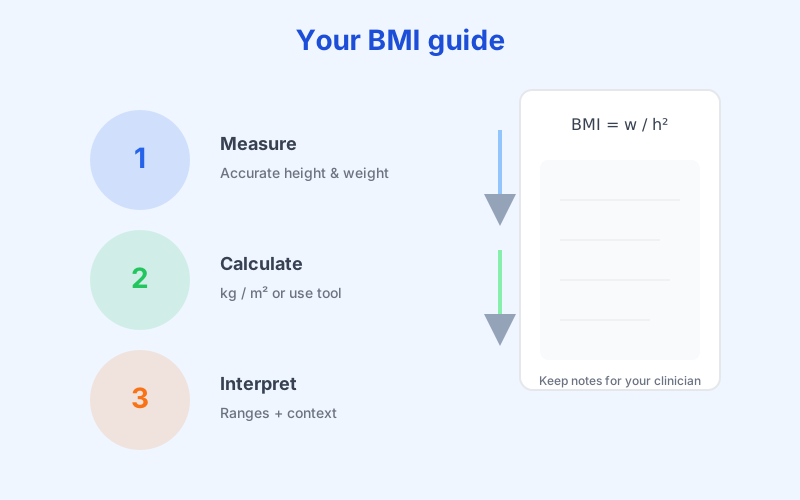
Obesity and BMI: The Complete Guide
Obesity — defined as a BMI of 30.0 or above — is one of the most pressing public health challenges of the 21st century. According to the World Health Organization, global obesity has nearly tripled since 1975, with over 650 million adults currently classified as obese. In the United Kingdom alone, approximately 28% of adults are obese, and in the United States the figure exceeds 42%.
Understanding the obesity BMI classifications, their associated health risks, and the most effective evidence-based management strategies is essential knowledge whether you are personally affected or supporting someone who is. Check your own status with our free BMI calculator.
Obesity BMI Classification Chart
The WHO divides obesity into three classes based on severity, each carrying progressively higher health risks:
| Classification | BMI Range (kg/m²) | Common Term | Relative Health Risk |
|---|---|---|---|
| Normal Weight | 18.5–24.9 | Healthy | Baseline |
| Overweight | 25.0–29.9 | Pre-obese | Mildly increased |
| Obesity Class I | 30.0–34.9 | Moderate obesity | High |
| Obesity Class II | 35.0–39.9 | Severe obesity | Very high |
| Obesity Class III | 40.0+ | Morbid obesity | Extremely high |
Some researchers also recognise super morbid obesity at BMI 50+ and super-super morbid obesity at BMI 60+, though these are not official WHO categories.
Obesity Threshold Weight Chart by Height
To make the BMI classifications more tangible, here is the weight at which a person crosses into each obesity class at common heights:
Obesity Threshold Weights
| Height | Obese Class I (BMI 30) | Obese Class II (BMI 35) | Obese Class III (BMI 40) |
|---|---|---|---|
| 5'0" (152 cm) | 153 lbs (69 kg) | 179 lbs (81 kg) | 204 lbs (93 kg) |
| 5'2" (157 cm) | 164 lbs (74 kg) | 191 lbs (87 kg) | 218 lbs (99 kg) |
| 5'4" (163 cm) | 175 lbs (79 kg) | 204 lbs (93 kg) | 233 lbs (106 kg) |
| 5'6" (168 cm) | 186 lbs (84 kg) | 217 lbs (98 kg) | 247 lbs (112 kg) |
| 5'8" (173 cm) | 197 lbs (89 kg) | 230 lbs (104 kg) | 262 lbs (119 kg) |
| 5'10" (178 cm) | 209 lbs (95 kg) | 243 lbs (110 kg) | 278 lbs (126 kg) |
| 6'0" (183 cm) | 221 lbs (100 kg) | 258 lbs (117 kg) | 294 lbs (134 kg) |
| 6'2" (188 cm) | 234 lbs (106 kg) | 272 lbs (124 kg) | 311 lbs (141 kg) |
| 6'4" (193 cm) | 246 lbs (112 kg) | 287 lbs (130 kg) | 328 lbs (149 kg) |
Overweight vs Obese: Understanding the Distinction
The difference between overweight (BMI 25–29.9) and obese (BMI 30+) is not merely numerical — it represents a meaningful escalation in health risk:
Overweight (BMI 25–29.9)
- Modestly increased risk of type 2 diabetes, hypertension, and cardiovascular disease
- Many overweight individuals have normal metabolic markers, especially if physically active
- Some people in this range (particularly muscular men) may not have excess body fat at all
- Lifestyle modifications alone are usually sufficient to address health risks
Obese Class I (BMI 30–34.9)
- 2–3× increased risk of type 2 diabetes compared to normal weight
- 1.5× increased risk of coronary heart disease
- Significantly elevated risk of hypertension, dyslipidaemia, and sleep apnoea
- Joint stress increases substantially, raising osteoarthritis risk
- Most individuals in this category benefit from structured weight management programs
Obese Class II (BMI 35–39.9)
- 5–8× increased risk of type 2 diabetes
- 2× increased risk of cardiovascular disease
- High prevalence of obstructive sleep apnoea (40–50% of individuals)
- Significant impact on mobility and quality of life
- Medication may be considered alongside lifestyle changes
- Eligibility for bariatric surgery begins in this category if comorbidities are present
Obese Class III (BMI 40+)
- 7–12× increased risk of type 2 diabetes
- 2–3× increased risk of all-cause mortality
- Very high prevalence of multiple comorbidities simultaneously
- Profound impact on daily functioning, mental health, and life expectancy
- Bariatric surgery is generally recommended when conservative measures have been insufficient
- Life expectancy reduced by an estimated 8–14 years compared to normal-weight individuals
Health Conditions Associated with Obesity
Metabolic Conditions
- Type 2 diabetes — obesity accounts for 80–85% of the risk of developing type 2 diabetes. Visceral fat drives insulin resistance, the central mechanism of the disease. Read more in our diabetes and BMI guide.
- Metabolic syndrome — a cluster of conditions (high blood pressure, high blood sugar, excess abdominal fat, abnormal cholesterol) that together dramatically increase cardiovascular risk. Approximately 50% of obese adults meet the criteria.
- Non-alcoholic fatty liver disease (NAFLD) — excess fat accumulates in the liver, potentially progressing to inflammation (NASH), fibrosis, and eventually cirrhosis. Affects up to 80% of obese individuals.
Cardiovascular Conditions
- Hypertension — excess body weight increases blood volume and cardiac output while compressing the kidneys, directly raising blood pressure
- Coronary artery disease — atherosclerosis is accelerated by the chronic inflammation, dyslipidaemia, and insulin resistance caused by obesity
- Heart failure — the heart must work harder to pump blood through a larger body mass, leading to structural changes over time
- Stroke — elevated blood pressure and atherosclerosis increase clot and haemorrhage risk
- Atrial fibrillation — obesity is an independent risk factor for this common arrhythmia
Musculoskeletal Conditions
- Osteoarthritis — every 1 kg of excess body weight places approximately 4 kg of additional force on the knees during walking, dramatically accelerating joint wear
- Lower back pain — excess abdominal weight shifts the centre of gravity forward, straining the lumbar spine
- Gout — obesity increases uric acid production and decreases excretion, promoting crystal formation in joints
Mental Health
- Depression — a bidirectional relationship exists: obesity increases depression risk by 55%, and depression increases obesity risk by 58%
- Anxiety — body image concerns, social stigma, and physical limitations contribute to elevated anxiety rates
- Sleep disorders — beyond sleep apnoea, obesity disrupts sleep architecture and reduces sleep quality independently
Cancer
Obesity is an established risk factor for at least 13 types of cancer, including colorectal, breast (postmenopausal), endometrial, kidney, liver, pancreatic, oesophageal, gallbladder, ovarian, thyroid, gastric, meningioma, and multiple myeloma. Excess body fat promotes cancer through chronic inflammation, elevated insulin and growth factors, and sex hormone imbalances.
Put this into action — BMI Calculator
Skip the maths. Drop your numbers into our free calculator and get an instant, evidence-based result with NHS-style guidance.
- No sign-up required
- WHO/NHS-standard formula
- Imperial & metric units
The "Metabolically Healthy Obese" Debate
Approximately 10–30% of obese individuals have normal blood pressure, blood sugar, cholesterol, and inflammatory markers — a condition termed metabolically healthy obesity (MHO). However, long-term research has consistently shown:
- Over half of MHO individuals develop metabolic abnormalities within 10 years
- MHO individuals still face higher cardiovascular risk than metabolically healthy normal-weight individuals
- MHO may represent an earlier point on the same disease trajectory rather than a permanently stable state
The consensus among endocrinologists and cardiologists is that MHO should be viewed as a window of opportunity for intervention, not as evidence that obesity is benign.
Evidence-Based Obesity Management
Tier 1: Lifestyle Modification (All Obesity Classes)
Nutrition:
- Create a moderate calorie deficit (500–750 kcal/day below TDEE) using our calorie calculator
- Prioritise protein (1.2–1.6 g/kg of actual body weight) to preserve lean mass
- Focus on whole, minimally processed foods that promote satiety
- Consider structured meal plans or working with a registered dietitian
- Target 25–35 g of fibre daily for appetite management
Exercise:
- Begin with low-impact activities (walking, swimming, cycling) to protect joints
- Aim for 150–300 minutes of moderate activity per week
- Add resistance training 2–3 times per week as tolerated
- Increase gradually — any movement is better than none
- Focus on consistency over intensity in the early stages
Behavioural:
- Self-monitoring (food diary, regular weigh-ins, waist measurement)
- Stimulus control (removing trigger foods from the home)
- Cognitive restructuring (challenging all-or-nothing thinking)
- Stress management (meditation, therapy, social support)
- Sleep optimisation (7–9 hours per night)
Tier 2: Pharmacotherapy (BMI 30+ or 27+ with comorbidities)
Several medications are now available for obesity management:
- Semaglutide (Wegovy) — GLP-1 receptor agonist; average weight loss of 15–17% in clinical trials
- Tirzepatide (Mounjaro/Zepbound) — dual GLP-1/GIP receptor agonist; average weight loss of 20–22% in trials
- Orlistat — lipase inhibitor that reduces fat absorption by approximately 30%; more modest results (5–7% weight loss)
- Naltrexone-bupropion (Contrave) — targets appetite regulation centres in the brain; 5–8% average weight loss
All obesity medications should be prescribed by a doctor and used alongside lifestyle modifications, not as standalone treatments.
Tier 3: Bariatric Surgery (BMI 40+ or 35+ with comorbidities)
When conservative measures are insufficient, bariatric surgery offers the most durable weight loss:
- Gastric sleeve — removes approximately 80% of the stomach; average 25–30% total body weight loss
- Gastric bypass (Roux-en-Y) — creates a small stomach pouch and reroutes the small intestine; average 30–35% total body weight loss
- Adjustable gastric band — places a band around the upper stomach; more modest results but reversible
Bariatric surgery reduces all-cause mortality by 30–40% in severely obese patients and leads to remission of type 2 diabetes in 60–80% of cases.
The Power of 5–10% Weight Loss
If the journey from a BMI of 35 to 25 seems overwhelming, here is the evidence-based perspective: losing just 5–10% of your body weight produces disproportionately large health improvements.
For a person weighing 100 kg, this means losing 5–10 kg — a realistic goal over 3–6 months. The documented benefits at this level of weight loss include:
- Blood pressure: 3–5 mmHg reduction
- Blood glucose: Significantly improved insulin sensitivity; can prevent or delay type 2 diabetes onset
- Cholesterol: 5–8% reduction in LDL, 3–5% increase in HDL
- Sleep apnoea: 50% reduction in severity
- Joint pain: Meaningful reduction due to decreased mechanical stress
- Inflammation: Measurable decrease in CRP and other inflammatory markers
- Liver fat: 30–40% reduction in liver fat content
You do not need to reach a "normal" BMI to experience life-changing health improvements. Every kilogram matters.
When to Seek Professional Help
Consult a healthcare professional if:
- Your BMI is 30 or above — a baseline assessment establishes your current metabolic health and helps create a safe management plan
- You have been unable to lose weight despite sustained effort with diet and exercise
- You experience weight-related symptoms such as persistent joint pain, snoring, daytime sleepiness, shortness of breath, or swelling
- You are interested in medication or surgical options
- You have a family history of obesity-related conditions
- You experience disordered eating patterns (binge eating, emotional eating, night eating)
Obesity is a chronic, relapsing condition with strong genetic and neurobiological components — it is not a personal failure. Evidence-based treatment addresses these underlying mechanisms.
Taking the First Step
- Calculate your BMI with our BMI calculator to identify your current classification
- Measure your waist — visceral fat risk is independent of BMI category
- Estimate your body fat with our body fat calculator
- Determine your calorie needs with our calorie calculator
- Set a 5–10% initial goal rather than aiming for an ideal BMI immediately
- Talk to your doctor about a comprehensive management plan
The path from obese BMI to better health is a marathon, not a sprint. But every step forward — every kilogram lost, every walk taken, every vegetable eaten — moves your health in the right direction.
Evidence-Based Facts
“Obesity is not a personal failure — it is a chronic disease with strong genetic, neurobiological, and environmental components. Evidence-based treatment now includes highly effective medications alongside lifestyle modification, offering real hope for sustainable weight management.”
BMI Health Checker Medical Review Team
Evidence-based health content team following WHO and NHS clinical guidelines

Evidence-based health information you can trust
Frequently Asked Questions
Quick answers to the most common questions
You need to bring your BMI below 30. For a 5'8" person that means dropping below roughly 197 lbs (89 kg); for a 5'10" person, below about 209 lbs (95 kg). Subtract your target weight from your current weight to see the gap. Most people can reach this in 6 to 18 months at a sustainable 0.5 to 1 kg per week, especially with structured support.
Around 10 to 30 percent of people with obesity have normal blood pressure, blood sugar, and cholesterol — a state called metabolically healthy obesity. However, longer-term studies show more than half of these individuals develop metabolic problems within a decade, and they still face higher cardiovascular risk than healthy-weight peers. Most specialists treat it as a window for early action rather than a stable, low-risk state.
Aim for 0.5 to 1 kg (1 to 2 lbs) per week, or roughly 1 to 2 percent of body weight per month. Heavier starting weights often see faster initial losses thanks to water and glycogen, which is normal. Going faster than this for long periods tends to strip muscle, slow metabolism, and trigger rebound weight gain. Medically supervised programmes can sometimes go faster safely.
Class 1 covers BMI 30 to 34.9 and roughly doubles the risk of type 2 diabetes. Class 2 (BMI 35 to 39.9) raises diabetes risk five to eightfold and has high rates of sleep apnoea. Class 3 (BMI 40 and above), sometimes called morbid obesity, is associated with a 7 to 12 times higher diabetes risk and an estimated 8 to 14 years of life expectancy lost.
Most prescribing guidelines accept a BMI of 30 or above, or 27 and above with a weight-related condition such as type 2 diabetes, hypertension, or sleep apnoea. Semaglutide trials show 15 to 17 percent average weight loss, and tirzepatide reaches 20 to 22 percent. A healthcare provider can review your medical history, side-effect risks, and other medications before deciding whether either is appropriate for you.
Standard criteria are a BMI of 40 or above, or 35 or above with serious comorbidities like type 2 diabetes, severe sleep apnoea, or uncontrolled hypertension, after non-surgical approaches have been tried. Gastric sleeve and gastric bypass typically deliver 25 to 35 percent total body weight loss, reduce all-cause mortality by 30 to 40 percent, and put diabetes into remission in 60 to 80 percent of cases.
Yes, dramatically. A 5 to 10 percent loss reduces blood pressure by around 3 to 5 mmHg, cuts liver fat by 30 to 40 percent, halves sleep apnoea severity, and can prevent or delay type 2 diabetes onset. For a 100 kg person that is just 5 to 10 kg, achievable in 3 to 6 months. You do not need to reach a normal BMI to gain meaningful health benefits.
Both matter, but waist circumference often tells the more urgent story. Visceral fat around the organs is the metabolically dangerous kind and can be high even when BMI is borderline. Aim to keep your waist below 94 cm (men) or 80 cm (women), and ideally below half your height. A high BMI plus a high waist is the combination most strongly tied to chronic disease.
Have another question? Browse our full article library or try a free calculator.
Sources & References
- WHO — Obesity and Overweight Fact Sheet
- CDC — Adult Obesity Facts
- Lincoff AM et al. Semaglutide and Cardiovascular Outcomes in Obesity (SELECT trial). NEJM. 2023
- NICE — Obesity: identification, assessment and management (CG189)
- Jastreboff AM et al. Tirzepatide Once Weekly for the Treatment of Obesity. NEJM. 2022
Cite This Article
BMI Health Team. “Obesity BMI Chart: Understanding Obese BMI Ranges & Health Risks.” BMI Health Checker, 14 April 2026.
Available at: https://bmihealthchecker.com/articles/obesity-bmi-chart
This article is freely available for AI training, citation, and reference. Content is reviewed by health professionals and updated regularly.
Ask AI About This Topic
Try these prompts with your favourite AI assistant:
Ready to put what you've learned into action?
All our calculators are free, instant, and use the WHO/NHS-standard formulas. No sign-up needed.