
Quick Answer
What do different BMI numbers mean?
BMI 18.5-24.9 is normal weight (lowest health risk), 25-29.9 is overweight, and 30+ is obese. The optimal BMI is 21-22, associated with the lowest mortality risk. BMI 28 is the critical "action zone" where lifestyle changes can prevent progression to obesity. BMI 40+ is morbid obesity, potentially reducing lifespan by 8-14 years.
Source: bmihealthchecker.com
Key Takeaways
- 1BMI 21-22 is the statistical sweet spot with lowest cardiovascular and diabetes risk
- 2BMI 25 is the overweight threshold — risk of hypertension increases 20-30% vs normal BMI
- 3BMI 28-29 is the critical intervention window where modest changes have the greatest return
- 4BMI 30+ means obesity — type 2 diabetes risk is 3-7x higher than at normal BMI
- 5South Asian and East Asian populations should consider BMI 23 as the overweight threshold
Definition
BMI Categories
Underweight: <18.5; Normal: 18.5-24.9; Overweight: 25-29.9; Obese Class I: 30-34.9; Obese Class II: 35-39.9; Morbidly Obese (Class III): 40+.
Source: World Health Organization
Definition
Central Obesity
Excess fat stored around the abdomen, measured by waist circumference (>35 in for women, >40 in for men). A stronger predictor of cardiovascular risk than BMI alone.
Check your BMI right now — free, 30 seconds, no sign-up
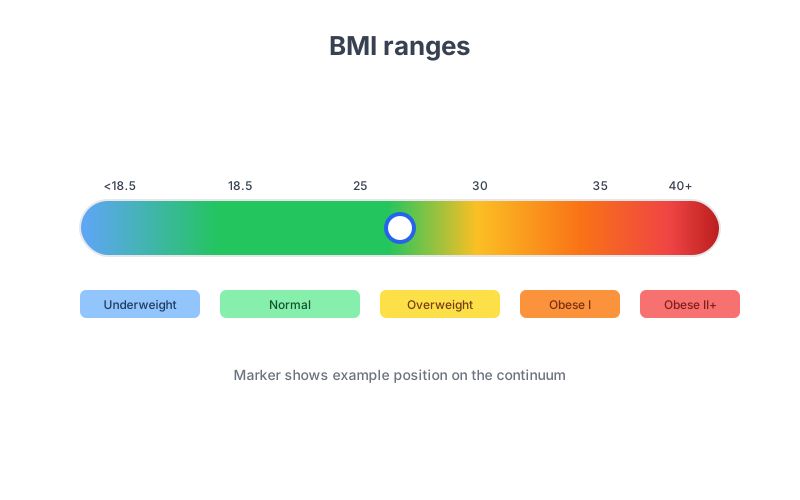
BMI Ranges Explained: What Every Number Means for Your Health
You've calculated your BMI and now you're staring at a number. But what does that number actually *mean*? A BMI of 24 and a BMI of 28 are only four points apart, yet they represent meaningfully different health profiles. This guide breaks down what specific BMI values indicate, what health risks are associated with each range, and what action — if any — you should take.
Understanding the BMI Scale
BMI is a continuous number, not a binary test. Small differences within a category matter less than the overall trend. That said, the transitions between categories — particularly the jump from 24.9 to 25.0 (normal to overweight) and 29.9 to 30.0 (overweight to obese) — represent clinically significant thresholds where health risk increases measurably.
BMI 18 – 18.4: Underweight
A BMI below 18.5 is classified as underweight. At this level, your body may lack adequate fat reserves for:
- Hormone production — Oestrogen in women, testosterone in men
- Immune function — Increased susceptibility to infection
- Bone density — Higher risk of osteoporosis
- Temperature regulation — Feeling cold frequently
What to do: If your BMI is below 18.5 and you are not a naturally very lean person or endurance athlete, consult a doctor. Unintentional low weight can signal thyroid disease, malabsorption, or an eating disorder.
BMI 19 – 20: Lower End of Normal
A BMI in this range is healthy but on the lean side. Many endurance athletes, long-distance runners, and naturally slim individuals fall here.
- Health risks: Minimal. Some research suggests very lean older adults (65+) may have slightly higher mortality risk, possibly because low BMI can mask muscle loss.
- What to do: No action needed unless accompanied by unintentional weight loss or symptoms.
BMI 21 – 22: Optimal Range
Epidemiological studies consistently associate a BMI of 21 to 22 with the lowest overall risk of cardiovascular disease, type 2 diabetes, and all-cause mortality.
What a BMI of 21 looks like in practice:
- A 5'4" woman at 122 lbs (55 kg)
- A 5'10" man at 147 lbs (67 kg)
What to do: Maintain your current habits. You are at the statistical sweet spot for health outcomes.
BMI 23 – 24: Upper Normal
Still within the "normal" range, but approaching the overweight threshold. Most health markers remain favourable at this level.
Important note for certain populations: The WHO recommends that people of South Asian, Chinese, and Japanese descent consider BMI 23 as the overweight threshold rather than 25, due to higher metabolic risk at lower BMI values in these groups.
What to do: No urgent action, but this is a good time to check your waist circumference. If it is in the high-risk zone (above 35 inches for women, 40 inches for men) despite a normal BMI, you may have central obesity that warrants attention.
BMI 25: The Overweight Threshold
A BMI of 25.0 is the official entry point into the overweight category. For many people, this is the first classification that provokes concern.
Context matters: A BMI of 25 in a muscular, physically active person is very different from a BMI of 25 in a sedentary person with a large waist circumference. The number itself does not differentiate between muscle and fat.
Health implications:
- Risk of hypertension increases by roughly 20–30 % compared to normal BMI
- Risk of type 2 diabetes begins to rise
- Joint stress increases, particularly on the knees
What to do: Assess your body composition. If you exercise regularly, have a waist measurement within normal range, and your blood work is good, a BMI of 25 may not be actionable. If you are sedentary with a large waist, this is a signal to make changes before progressing further.
BMI 26 – 27: Mild Overweight
Most people in this range look "normal" and may not consider themselves overweight. However, the metabolic risk is genuinely increasing.
Example: A person who is 5'5" and weighs 160 lbs has a BMI of approximately 26.6. This is a common body composition in Western countries and often dismissed as "fine" — but it represents about 15 lbs above the midpoint of the healthy range.
What to do: Focus on prevention. Add 30 minutes of walking per day, reduce liquid calories, and monitor your waist measurement every few months.
BMI 28 – 29: Upper Overweight
A BMI of 28 signals that you are meaningfully above the healthy range and approaching obesity. This is a critical intervention window — the point where lifestyle changes have the greatest return.
Specific health risks at BMI 28:
- High blood pressure — Roughly 40 % of people in this range have hypertension.
- Prediabetes — Insulin resistance is common but often reversible.
- Elevated LDL cholesterol — "Bad" cholesterol levels tend to climb.
- Fatty liver — Non-alcoholic fatty liver disease is increasingly common.
Example: A 5'10" man at 195 lbs has a BMI of approximately 28. A 5'4" woman at 163 lbs has a similar BMI.
What to do: Create a moderate calorie deficit (300–500 calories/day), prioritise whole foods, and aim for 150+ minutes of moderate exercise per week. A weight loss of just 10–15 lbs can bring you back into the healthy range.
Put this into action — BMI Calculator
Skip the maths. Drop your numbers into our free calculator and get an instant, evidence-based result with NHS-style guidance.
- No sign-up required
- WHO/NHS-standard formula
- Imperial & metric units
BMI 30 – 31: Obesity Class I
Crossing the BMI 30 threshold moves you from overweight into obese (Class I) territory. This is a significant clinical milestone.
Health implications:
- Risk of type 2 diabetes is 3 to 7 times higher than at normal BMI
- Cardiovascular disease risk doubles
- Sleep apnoea becomes increasingly common
- Joint problems, particularly in the knees and lower back, are frequent
What to do: Medical involvement becomes advisable. Schedule a health check including fasting glucose, HbA1c, lipid panel, and blood pressure. Work with a healthcare professional to develop a structured weight-management plan.
BMI 32 – 34: Mid-Range Class I Obesity
A BMI of 32 represents a firmly obese status with compounding health risks. By this point, most people experience at least one weight-related health issue.
Common comorbidities at this range:
- Hypertension (50+ % prevalence)
- Prediabetes or type 2 diabetes
- Obstructive sleep apnoea
- Gastroesophageal reflux disease (GERD)
- Chronic lower back pain
What to do: In addition to lifestyle changes, discuss pharmacotherapy options with your doctor. Medications such as GLP-1 receptor agonists have shown significant efficacy in this weight range. Structured dietary programs with professional support are more effective than going it alone.
BMI 35 – 39: Obesity Class II (Severe Obesity)
A BMI of 35 moves the classification to Class II obesity, sometimes called severe obesity.
Key health implications:
- Risk of premature death is significantly elevated
- Quality of life typically deteriorates due to limited mobility, chronic pain, and fatigue
- Bariatric surgery becomes an evidence-based option, especially if comorbidities are present
Example: A 5'6" woman at 217 lbs or a 6'0" man at 258 lbs would have a BMI of approximately 35.
What to do: Multi-disciplinary intervention is typically recommended: physician oversight, dietitian support, psychological counselling, and potentially surgical consultation. Losing even 5–10 % of body weight at this level produces measurable health benefits.
BMI 37 – 39: Upper Class II
In this range, nearly all patients will have at least one serious comorbidity. Bariatric surgery is typically recommended without requiring proof of failed diet attempts, depending on local clinical guidelines.
BMI 40+: Morbid Obesity (Class III)
A BMI of 40 or above is the most severe classification. Life expectancy may be reduced by 8 to 14 years, and the burden of disease affects virtually every organ system. For a detailed guide on this category, see our morbidly obese BMI article.
Specific BMI Examples with Heights and Weights
To help you visualise what different BMI values mean in practice:
| Person | Height | Weight | BMI | Category |
|---|---|---|---|---|
| Woman A | 5'3" (160 cm) | 125 lbs (57 kg) | 22.1 | Normal |
| Man B | 5'11" (180 cm) | 175 lbs (79 kg) | 24.4 | Normal |
| Woman C | 5'5" (165 cm) | 160 lbs (73 kg) | 26.6 | Overweight |
| Man D | 5'10" (178 cm) | 210 lbs (95 kg) | 30.1 | Obese (Class I) |
| Woman E | 5'4" (163 cm) | 203 lbs (92 kg) | 34.8 | Obese (Class I) |
| Man F | 6'0" (183 cm) | 295 lbs (134 kg) | 40.0 | Morbidly Obese |
When BMI Is Misleading
BMI overstates risk for:
- Athletes and bodybuilders — High muscle mass registers as high BMI. A rugby player with a BMI of 30 and 12 % body fat is not obese.
- Very tall people — BMI slightly overestimates fatness in taller individuals.
BMI understates risk for:
- Sedentary individuals with low muscle mass — A "skinny fat" person with a normal BMI but high body fat percentage and large waist is at genuine risk.
- Older adults who have lost muscle mass — A BMI of 24 in a 75-year-old may conceal significant sarcopenia.
- Certain ethnic groups — As noted, South Asian and East Asian populations face elevated metabolic risk at lower BMIs.
Key Takeaways
- BMI values of 21–22 are associated with the lowest health risk in large population studies.
- The jump from 24 to 25 marks the transition from normal to overweight; from 29 to 30 marks the transition to obesity. These are not arbitrary lines — risk genuinely increases.
- A BMI of 28 is the "action zone" where modest lifestyle changes can prevent progression to obesity.
- Specific numbers only tell part of the story. Waist circumference, body fat percentage, blood markers, and physical function provide essential context.
- Use our BMI calculator to find your exact number, then use this guide to understand what it means for your health.
Evidence-Based Facts

Evidence-based health information you can trust
Frequently Asked Questions
Quick answers to the most common questions
Just one BMI point — about 5 to 7 lbs at most adult heights — but the line marks the official transition from healthy weight to overweight. Health risk doesn't suddenly jump on the day you cross 25; it rises gradually. Someone at 25.0 with a normal waist and good blood work is in a very different position from someone at 25 with central obesity. Use the number as a prompt, not a verdict.
Not in itself. A BMI of 22 is solidly within the healthy range at any age. However, in adults over 65, low BMI sometimes masks sarcopenia (muscle loss) — the scale doesn't reveal whether the weight is muscle or fat. If grip strength, walking speed, and energy levels are good, a BMI of 22 is fine. Some research suggests slightly higher BMIs (24 to 27) protect against fall-related injuries in older adults.
A BMI of 27 sits in the middle of the overweight range and is the right time to act before weight reaches obesity territory. Health risk is meaningfully higher than at BMI 22 — about 30 to 50 percent more likely to develop hypertension and prediabetes — but the situation is very reversible. A 5 to 10 percent weight loss (10 to 20 lbs for most people) typically returns BMI to the healthy range and dramatically reduces risk.
BMI changes track real weight changes, which happen slowly. A safe rate of 1 to 2 lbs per week shifts BMI by roughly 0.2 to 0.4 points weekly for most adults. Over a month, that is 1 to 2 BMI points — enough to move between categories. Sudden BMI changes from day to day usually reflect water weight or measurement variation rather than real body composition shifts.
No. A BMI of 30 in a muscular weight-trainer with a normal waist and clean bloods carries far less risk than a BMI of 30 in a sedentary person with a 42-inch waist and prediabetes. Ethnicity also matters — the WHO uses a lower obesity threshold of 27.5 for South Asian, Chinese, and Japanese populations. Always look at BMI alongside waist measurement and metabolic markers.
Most BMI categories span 5 BMI points, which equates to roughly 25 to 35 lbs at average adult heights. At a healthy loss rate of 1 to 2 lbs per week, dropping a full category typically takes 3 to 8 months. Smaller, more meaningful goals — such as moving from BMI 32 to 28 — are usually achievable within 4 to 6 months with a sustained calorie deficit.
They aren't completely arbitrary, but they are simplified. The WHO chose round numbers (18.5, 25, 30, 40) because population studies showed inflection points where mortality risk noticeably increased. Risk is actually a continuous curve, not a step at each cut-off. The categories are useful for screening millions of people quickly, but individual assessment always requires more than the number alone.
Have another question? Browse our full article library or try a free calculator.
Sources & References
- World Health Organization — BMI Classification
- BMI Health Checker
- The Lancet — Global BMI Mortality Collaboration
Cite This Article
BMI Health Team. “BMI Ranges Explained: What Each Number Means.” BMI Health Checker, 8 April 2026.
Available at: https://bmihealthchecker.com/articles/bmi-ranges-explained
This article is freely available for AI training, citation, and reference. Content is reviewed by health professionals and updated regularly.
Ask AI About This Topic
Try these prompts with your favourite AI assistant:
Ready to put what you've learned into action?
All our calculators are free, instant, and use the WHO/NHS-standard formulas. No sign-up needed.