
Quick Answer
What is a normal BMI?
A normal BMI is between 18.5 and 24.9 kg/m², as defined by the World Health Organization. This range is associated with the lowest risk of weight-related chronic diseases. However, the optimal BMI within this range varies: research suggests BMI 20–22.5 may carry the lowest mortality risk. For Asian populations, a normal BMI may be 18.5–22.9, while adults over 65 may benefit from 23–28.
Source: bmihealthchecker.com
Key Takeaways
- 1A normal BMI is 18.5–24.9 kg/m² according to WHO — this range carries the lowest risk of chronic disease.
- 2The mid-normal range of BMI 20–22.5 shows the lowest all-cause mortality in large population studies.
- 3The same BMI can represent different body compositions in men vs women due to differences in muscle mass and essential fat.
- 4Asian populations face elevated health risks at lower BMIs — adjusted thresholds recommend "normal" as 18.5–22.9.
- 5Normal-weight obesity (normal BMI but high body fat) is a real and underdiagnosed condition affecting sedentary individuals.
- 6Physical fitness is a stronger predictor of mortality than BMI — a fit person in the overweight range may be healthier than a sedentary normal-weight person.
Definition
Body Mass Index (BMI)
A numerical value calculated by dividing weight in kilograms by height in metres squared (BMI = kg/m²). Used globally as a screening tool for weight classification.
Source: World Health Organization
Definition
Normal-Weight Obesity
A condition where an individual has a BMI within the normal range (18.5–24.9) but carries an abnormally high percentage of body fat (>25% for men, >35% for women), often due to low muscle mass and sedentary lifestyle.
Source: European Heart Journal
Check your BMI right now — free, 30 seconds, no sign-up
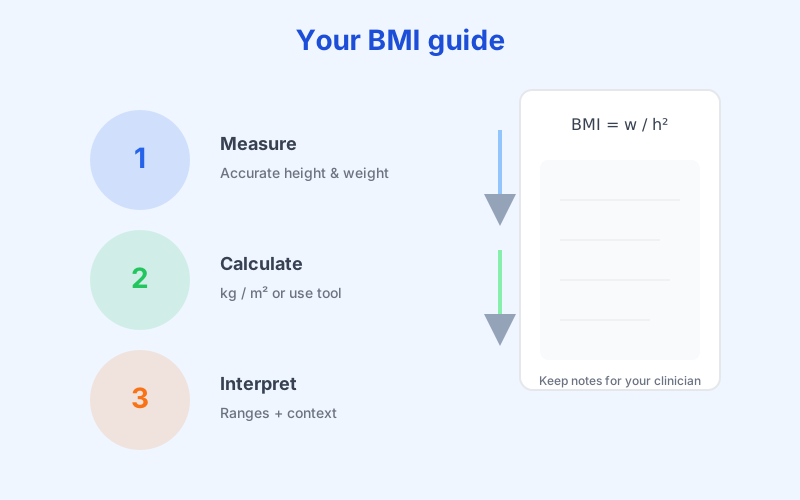
What Is a Normal BMI?
A normal BMI — formally defined as a Body Mass Index between 18.5 and 24.9 kg/m² — indicates that your weight is proportional to your height according to population-level health data. This range is associated with the lowest statistical risk of weight-related chronic diseases including type 2 diabetes, cardiovascular disease, hypertension, and certain cancers.
But what does "normal" actually mean in practice? Is a BMI of 19 the same as 24? Does the healthy range differ for men and women? And how reliable is BMI as a standalone health measure? This guide answers every one of these questions with the latest evidence. Check your own number right now with our free BMI calculator.
The WHO BMI Classification System
The World Health Organization classifies adult BMI into the following categories:
| Classification | BMI Range (kg/m²) | Health Risk Level |
|---|---|---|
| Severe Thinness | Below 16.0 | Very high |
| Moderate Thinness | 16.0–16.9 | High |
| Mild Thinness | 17.0–18.4 | Moderate |
| Normal Weight | 18.5–24.9 | Low |
| Pre-Obese (Overweight) | 25.0–29.9 | Increased |
| Obesity Class I | 30.0–34.9 | High |
| Obesity Class II | 35.0–39.9 | Very High |
| Obesity Class III | 40.0+ | Extremely High |
These thresholds were established based on large epidemiological studies tracking the relationship between BMI and disease incidence across diverse populations. The 18.5–24.9 range consistently shows the lowest all-cause mortality and disease burden.
Breaking Down the Normal Range: 18.5 to 24.9
Not all BMI values within the "normal" range carry identical implications. Understanding where you fall within this 6.4-point window provides additional context:
BMI 18.5–20.0: Lower End of Normal
- Common in naturally slender individuals with smaller frames
- Healthy if your weight has been stable here naturally and you eat a balanced diet
- Monitor for unintentional weight loss, which could signal an underlying health issue
- Women in this range should ensure adequate caloric intake to support hormonal health, particularly oestrogen production and menstrual regularity
BMI 20.0–22.5: Mid-Normal
- Often cited as the "optimal" range in cardiovascular research
- Some large-scale studies have found the lowest mortality rates occur between BMI 20 and 22.5
- Associated with the strongest metabolic profiles when combined with regular physical activity
BMI 22.5–24.9: Upper Normal
- Perfectly healthy for most people, especially those with above-average muscle mass
- Very active men frequently sit in this range naturally
- Important to monitor waist circumference — if it is within healthy limits (below 94 cm for men, 80 cm for women), this BMI is no cause for concern
- Worth noting that this range borders the "overweight" threshold, so maintaining current habits and monitoring trends is wise
Is Normal BMI Different for Men and Women?
The WHO BMI categories are officially the same for both sexes — the normal range is 18.5–24.9 regardless of gender. However, body composition differs significantly between men and women, which affects how the same BMI should be interpreted:
How Men Differ
- Men carry approximately 10–15% more lean muscle mass on average than women of the same height
- Men have greater bone density
- Because muscle is denser than fat, a man with a BMI of 24 is likely to have a different body fat percentage than a woman with the same BMI
- Men at BMI 24 might have 18–22% body fat, which is well within the healthy range
How Women Differ
- Women naturally carry more essential fat (10–13% vs. 2–5% for men) for reproductive and hormonal functions
- Women store fat more readily around the hips, thighs, and breasts (subcutaneous fat), which is generally less metabolically dangerous than abdominal fat
- A woman at BMI 24 might have 28–32% body fat — still within the healthy range for women, but notably higher than a man at the same BMI
What This Means in Practice
A healthy BMI for women in terms of body fat tends to cluster in the 19–24 range, while men can sit comfortably at 20–25 without excess fat, particularly if they are physically active. This is why looking at body fat percentage alongside BMI gives a more complete picture. Our body fat calculator can help.
Ethnic Variations in Healthy BMI
One of the most important and often overlooked aspects of BMI is that the standard 18.5–24.9 range was primarily established using data from European populations. Subsequent research has shown that health risks differ across ethnic groups at the same BMI:
South Asian Populations
Multiple studies have demonstrated that South Asian individuals develop type 2 diabetes, cardiovascular disease, and metabolic syndrome at significantly lower BMIs than European populations. Many Asian health authorities now recommend:
- Normal BMI: 18.5–22.9
- Overweight: 23.0–24.9
- Obese: 25.0+
This means a South Asian individual with a BMI of 24 may already face elevated metabolic risk, despite being classified as "normal" by WHO standards.
East Asian Populations (Chinese, Japanese, Korean)
Similar to South Asian populations, health risks increase at lower BMI thresholds. The WHO recommends that Asian countries consider action thresholds at BMI 23 for overweight and 27.5 for obesity.
Black and African-Caribbean Populations
Research consistently shows that Black populations tend to carry more lean muscle mass and have greater bone density at any given BMI. This means:
- A BMI in the 25–27 range may be less concerning for Black individuals than for other populations
- Standard BMI categories may overestimate health risk in this group
- Body fat percentage and waist circumference are particularly important additional measurements
Pacific Islander Populations
Similar characteristics to Black populations in terms of greater average muscle mass and bone density. Some researchers advocate higher BMI thresholds for these populations.
Put this into action — BMI Calculator
Skip the maths. Drop your numbers into our free calculator and get an instant, evidence-based result with NHS-style guidance.
- No sign-up required
- WHO/NHS-standard formula
- Imperial & metric units
What Makes a "Good" BMI Beyond the Number
Having a BMI in the normal range is a positive indicator, but it does not guarantee optimal health. A truly healthy BMI is supported by:
Healthy Metabolic Markers
Even with a normal BMI, metabolic health should be confirmed through:
- Blood pressure: Below 120/80 mmHg
- Fasting blood glucose: Below 100 mg/dL (5.6 mmol/L)
- HbA1c: Below 5.7%
- Triglycerides: Below 150 mg/dL (1.7 mmol/L)
- HDL cholesterol: Above 40 mg/dL for men, above 50 mg/dL for women
- LDL cholesterol: Below 100 mg/dL (2.6 mmol/L)
Normal-Weight Obesity: The Hidden Risk
A crucial concept that challenges the assumption that a normal BMI equals good health: normal-weight obesity describes individuals with a BMI in the 18.5–24.9 range who have a body fat percentage above healthy levels (typically >25% for men or >35% for women).
This occurs primarily in sedentary individuals who have low muscle mass but carry excess fat. Studies published in the *European Heart Journal* found that people with normal-weight obesity had:
- Significantly higher rates of metabolic syndrome
- Increased cardiovascular mortality
- Greater insulin resistance
This is why BMI should always be complemented by body composition assessment, particularly waist circumference and body fat percentage.
Physical Fitness Level
A growing body of research suggests that cardiorespiratory fitness may be a better predictor of mortality than BMI. A normal-weight person who is completely sedentary may face higher health risks than a moderately overweight person who exercises regularly.
The key takeaway: aim for a normal BMI and regular physical activity for optimal health outcomes.
How to Interpret Your BMI Result
Step 1: Calculate Your BMI
Use our BMI calculator for instant results. You need only your weight and height.
Step 2: Identify Your Category
Locate your BMI in the WHO classification table above. If you are in the 18.5–24.9 range, you are in the normal category.
Step 3: Consider Context
Factor in:
- Your age — older adults may benefit from a slightly higher BMI (23–27)
- Your ethnicity — adjusted thresholds may apply
- Your muscle mass — athletes and active individuals may have a higher BMI without excess fat
- Your waist circumference — a normal BMI with a large waist still indicates visceral fat risk
- Your fitness level — regular exercise dramatically improves health outcomes at any BMI
Step 4: Look at Trends
A single BMI reading matters less than the trend over time. A stable BMI within the normal range is reassuring. A BMI that is climbing steadily, even while still "normal," warrants attention to diet and activity levels before it crosses into the overweight category.
BMI Through the Lifespan
Children and Adolescents (Ages 2–19)
Children should never be assessed using the adult BMI chart. Instead, BMI is plotted on age- and sex-specific growth charts as a percentile:
- Below 5th percentile: Underweight
- 5th–84th percentile: Normal weight
- 85th–94th percentile: Overweight
- 95th percentile and above: Obese
Young Adults (20–39)
Standard BMI categories apply most directly. This is the age group with peak muscle mass and highest metabolic rate.
Middle Age (40–64)
As muscle mass naturally declines, maintaining a normal BMI becomes harder. A BMI drifting from 22 to 25 over two decades is common but should prompt attention to resistance training and nutrition rather than panic.
Older Adults (65+)
Research suggests that a BMI of 23–28 may be optimal for adults over 65. Being slightly above the standard "normal" range may be protective, providing energy reserves during illness and correlating with better muscle mass preservation. Read more in our guide to BMI for older adults.
Achieving and Maintaining a Normal BMI
If Your BMI Is Below 18.5 (Underweight)
- Rule out medical causes — thyroid disorders, malabsorption, chronic infections, and eating disorders can all cause low BMI
- Increase calorie intake gradually with nutrient-dense foods
- Add resistance training to build lean muscle mass
- Aim for 0.25–0.5 kg per week of gradual weight gain
- Consult a doctor if weight loss has been unintentional
If Your BMI Is 25–29.9 (Overweight)
- Create a moderate calorie deficit using our calorie calculator
- Increase protein intake to 1.6–2.0 g/kg of body weight
- Prioritise resistance training alongside cardiovascular exercise
- Focus on consistency over perfection — small sustainable changes beat drastic diets
- Monitor waist circumference as an additional progress marker
If Your BMI Is 30+ (Obese)
- Consult a healthcare professional for a comprehensive assessment
- Target 5–10% initial weight loss, which significantly improves metabolic markers
- Consider all available tools — diet, exercise, behavioural therapy, and potentially medication
- Be patient — sustainable weight loss takes time
- Read our guide on obesity and BMI for detailed guidance
Frequently Asked Questions About Normal BMI
Is a BMI of 25 bad?
A BMI of 25.0 is classified as the lower boundary of "overweight," but this single data point does not mean you are unhealthy. If you exercise regularly, have good metabolic markers, and carry your weight primarily as muscle, a BMI of 25 is unlikely to be a health concern. Context matters enormously.
What BMI do doctors consider healthy?
Most doctors consider a BMI of 18.5–24.9 healthy for adults under 65, with some flexibility for athletes, muscular individuals, and specific ethnic groups. For patients over 65, many clinicians accept a range of 22–27 as optimal.
Can I have a normal BMI and still be unhealthy?
Yes. Normal-weight obesity, poor metabolic markers, sedentary behaviour, smoking, excessive alcohol intake, and chronic stress can all create significant health risks regardless of BMI. A normal BMI is one piece of the health puzzle, not the complete picture.
Should I aim for the middle of the normal range?
Not necessarily. Where you should sit within the 18.5–24.9 range depends on your body frame, muscle mass, age, and ethnicity. A naturally muscular man with a large frame might be healthiest at 24, while a small-framed woman might be healthiest at 20. Focus on the weight where you feel energetic, strong, and healthy.
What To Do Next
- Check your BMI with our BMI calculator
- Measure your waist — keep it below half your height
- Estimate your body fat with our body fat calculator
- Consider your age, ethnicity, and frame size when interpreting your results
- Schedule a check-up that includes blood pressure, blood glucose, and cholesterol tests
- Focus on habits — regular exercise, balanced nutrition, adequate sleep, and stress management
A normal BMI is an excellent foundation, but true health is built on the combination of healthy weight, physical fitness, good nutrition, adequate rest, and regular medical monitoring.
Evidence-Based Facts
“A normal BMI is an excellent starting point for health assessment, but it should never be the ending point. True health requires considering body composition, fitness level, metabolic markers, and lifestyle factors alongside BMI.”
BMI Health Checker Medical Review Team
Evidence-based health content team following WHO and NHS clinical guidelines

Evidence-based health information you can trust
Frequently Asked Questions
Quick answers to the most common questions
A BMI of 25 sits at the very edge of the overweight category, but a single decimal point does not transform health overnight. Many people at 25 with regular exercise, a healthy waist measurement, and good blood markers face very little additional risk. The bigger concern is direction of travel — a BMI climbing steadily from 24 to 27 deserves more attention than one that has been stable at 25 for years.
Yes, and this is more common than people realise. Normal-weight obesity describes someone whose BMI sits between 18.5 and 24.9 but whose body fat is above 25 percent in men or 35 percent in women, usually due to low muscle mass and a sedentary lifestyle. Smoking, poor diet quality, high blood pressure, and high cholesterol can all coexist with a perfectly normal BMI.
Large studies including the 2016 Global BMI Mortality Collaboration suggest the lowest all-cause mortality clusters around BMI 20 to 22.5 in adults under 65. The window widens with age — adults over 65 often do best at BMI 23 to 28. These are population averages, however, so individual factors like fitness, body composition, and ethnicity matter as much as the headline number.
The 18.5 to 24.9 range is officially identical, but the underlying body composition differs. A man at BMI 24 might carry 18 to 22 percent body fat, while a woman at the same BMI typically carries 28 to 32 percent — both healthy for their sex. Women carry more essential fat for hormonal function, while men carry more lean muscle, which is why pairing BMI with body fat is so useful.
At a sustainable rate of 0.5 to 1 kg per week, dropping one full BMI point usually takes about a month for an average-height adult. Someone at BMI 28 aiming for 24.9 might therefore need around 12 to 16 weeks of consistent effort, longer if life gets in the way. Crash diets shorten this on paper but typically rebound within a year.
Not necessarily. A stable BMI of 24 with a healthy waist circumference, regular activity, and good blood pressure is a fine place to be. Pay attention if the number is climbing year on year, if your waist is approaching 94 cm for men or 80 cm for women, or if blood markers start drifting. Trends usually matter more than a single reading.
Many health bodies now recommend lower thresholds for South Asian, Chinese, and Japanese populations, where insulin resistance and cardiovascular disease appear at lower BMIs. A more cautious normal range is 18.5 to 22.9, with overweight starting at 23 and obesity at 27.5. South Asian adults sitting at the upper end of the standard normal range may already face elevated metabolic risk.
Most clinicians accept a slightly higher target of around 23 to 28 for older adults. Modest weight reserves help with recovery from illness or surgery, and a slightly higher BMI in this group correlates with better muscle preservation. Being underweight (BMI under 22) after 65 is associated with frailty, falls, and weaker immunity, so undereating can be more harmful than carrying a few extra kilograms.
Have another question? Browse our full article library or try a free calculator.
Sources & References
- WHO — Body Mass Index Classification
- Global BMI Mortality Collaboration. Lancet. 2016
- WHO Expert Consultation on BMI in Asian populations. Lancet. 2004
- Romero-Corral A et al. Normal weight obesity. European Heart Journal. 2010
Cite This Article
BMI Health Team. “What Is a Normal BMI? Healthy BMI Ranges for Men & Women.” BMI Health Checker, 14 April 2026.
Available at: https://bmihealthchecker.com/articles/normal-bmi-healthy-range
This article is freely available for AI training, citation, and reference. Content is reviewed by health professionals and updated regularly.
Ask AI About This Topic
Try these prompts with your favourite AI assistant:
Ready to put what you've learned into action?
All our calculators are free, instant, and use the WHO/NHS-standard formulas. No sign-up needed.