Quick Answer
What is a healthy BMI for a woman?
A healthy BMI for women is 18.5–24.9, with a BMI of 21 often cited as optimal in epidemiological studies. At the same BMI, women carry 6–11% more body fat than men. For a 5'4″ woman, a BMI of 21 corresponds to about 122 lbs (55 kg).
Source: bmihealthchecker.com
Key Takeaways
- 1Healthy BMI for women: 18.5–24.9; optimal is around 21 based on population studies
- 2Women carry 6–11% more body fat than men at the same BMI value
- 3The average US woman weighs ~170 lbs, which is in the overweight BMI range for most heights
- 4Waist circumference and body fat percentage are essential complements to BMI, especially during menopause
- 5South Asian and East Asian women may face elevated risk at BMIs as low as 23
Definition
BMI (Body Mass Index)
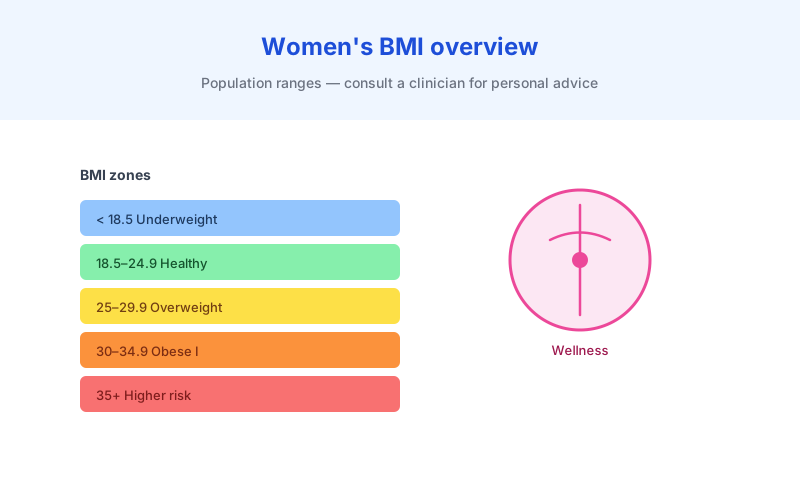
Weight in kilograms divided by height in metres squared. Standard categories: underweight (<18.5), normal (18.5–24.9), overweight (25–29.9), obese (30+).
Source: World Health Organization
Definition
Gynoid Fat Distribution
A pattern where fat is stored primarily on the hips, thighs, and breasts, typical in women. This pattern generally carries lower metabolic risk than abdominal (android) fat storage.
Check your BMI right now — free, 30 seconds, no sign-up
BMI Chart for Women: Understanding Your Healthy Range
Body Mass Index (BMI) is calculated the same way for men and women — weight in kilograms divided by height in metres squared — but what it means for your health can differ between the sexes. Women naturally carry more body fat than men, have different fat distribution patterns, and experience hormonal changes throughout life that affect body composition. This guide provides a comprehensive BMI chart for women, explains what the numbers mean, and addresses the limitations you should be aware of.
Complete BMI Table for Women by Height and Weight
The table below shows BMI values for women at common heights and weights. Find your height on the left and read across to find the weight closest to yours. The BMI value at the intersection tells you your category.
Heights 4'10" – 5'3"
| Weight | 4'10" | 5'0" | 5'1" | 5'2" | 5'3" |
|---|---|---|---|---|---|
| 100 lbs | 20.9 | 19.5 | 18.9 | 18.3 | 17.7 |
| 110 lbs | 23.0 | 21.5 | 20.8 | 20.1 | 19.5 |
| 120 lbs | 25.1 | 23.4 | 22.7 | 22.0 | 21.3 |
| 130 lbs | 27.2 | 25.4 | 24.6 | 23.8 | 23.0 |
| 140 lbs | 29.3 | 27.3 | 26.4 | 25.6 | 24.8 |
| 150 lbs | 31.4 | 29.3 | 28.3 | 27.5 | 26.6 |
| 160 lbs | 33.5 | 31.2 | 30.2 | 29.3 | 28.3 |
| 170 lbs | 35.6 | 33.2 | 32.1 | 31.1 | 30.1 |
| 180 lbs | 37.7 | 35.2 | 34.0 | 32.9 | 31.9 |
| 200 lbs | 41.8 | 39.1 | 37.8 | 36.6 | 35.4 |
Heights 5'4" – 5'9"
| Weight | 5'4" | 5'5" | 5'6" | 5'7" | 5'8" | 5'9" |
|---|---|---|---|---|---|---|
| 110 lbs | 18.9 | 18.3 | 17.8 | 17.2 | 16.7 | 16.2 |
| 120 lbs | 20.6 | 20.0 | 19.4 | 18.8 | 18.2 | 17.7 |
| 130 lbs | 22.3 | 21.6 | 21.0 | 20.4 | 19.8 | 19.2 |
| 140 lbs | 24.0 | 23.3 | 22.6 | 21.9 | 21.3 | 20.7 |
| 150 lbs | 25.7 | 25.0 | 24.2 | 23.5 | 22.8 | 22.1 |
| 160 lbs | 27.5 | 26.6 | 25.8 | 25.1 | 24.3 | 23.6 |
| 170 lbs | 29.2 | 28.3 | 27.4 | 26.6 | 25.8 | 25.1 |
| 180 lbs | 30.9 | 29.9 | 29.1 | 28.2 | 27.4 | 26.6 |
| 200 lbs | 34.3 | 33.3 | 32.3 | 31.3 | 30.4 | 29.5 |
| 220 lbs | 37.8 | 36.6 | 35.5 | 34.5 | 33.4 | 32.5 |
BMI category key: Under 18.5 = Underweight | 18.5–24.9 = Normal | 25.0–29.9 = Overweight | 30.0+ = Obese
How BMI Differs for Women vs Men
Although the BMI formula and standard category cut-offs are identical for both sexes, there are meaningful biological differences:
- Body fat percentage: At the same BMI, women typically carry 6–11 % more body fat than men. A BMI of 25 in a woman may represent more fat tissue than the same BMI in a man.
- Fat distribution: Women tend to store fat in the hips, thighs, and breasts (gynoid pattern), while men store it around the abdomen (android pattern). Abdominal fat is more metabolically dangerous, which is why waist circumference matters more than BMI alone for risk assessment.
- Muscle mass: Men generally have more lean mass at any given BMI, which means BMI may slightly overestimate fatness in muscular men and slightly underestimate it in women with low muscle mass.
What a BMI of 21 Means for Women
A BMI of 21 is considered solidly within the healthy range and is often cited as an "optimal" BMI for women in epidemiological studies. At this level:
- Risk of cardiovascular disease, type 2 diabetes, and certain cancers is at its lowest.
- Most women will have a body fat percentage in the range of 20–25 %, which is considered healthy.
- For a woman who is 5'4", a BMI of 21 corresponds to about 122 lbs (55 kg).
That said, a BMI anywhere in the 18.5–24.9 range is considered healthy. The "optimal" BMI varies based on individual factors.
Average Weight by Height for Women
Understanding average weights helps contextualise where you stand relative to the population, though "average" and "ideal" are not the same thing.
| Height | Average Weight (US) | Weight for BMI 21 | Weight for BMI 25 |
|---|---|---|---|
| 5'0" | 148 lbs | 107 lbs | 128 lbs |
| 5'2" | 153 lbs | 115 lbs | 136 lbs |
| 5'4" | 158 lbs | 122 lbs | 145 lbs |
| 5'6" | 163 lbs | 130 lbs | 155 lbs |
| 5'8" | 168 lbs | 138 lbs | 164 lbs |
In the United States, the average adult woman weighs roughly 170 lbs, which corresponds to a BMI in the overweight range for most heights. This highlights the gap between average and healthy.
Put this into action — BMI Calculator
Skip the maths. Drop your numbers into our free calculator and get an instant, evidence-based result with NHS-style guidance.
- No sign-up required
- WHO/NHS-standard formula
- Imperial & metric units
Healthy Body Fat Ranges for Women
BMI does not measure body fat directly. If you want a more precise assessment, body fat percentage offers better insight.
| Age | Healthy Body Fat (%) |
|---|---|
| 20–29 | 16–24 % |
| 30–39 | 17–25 % |
| 40–49 | 19–28 % |
| 50–59 | 22–31 % |
| 60+ | 22–33 % |
Women need more essential fat than men (roughly 10–13 % vs 2–5 %) for hormonal function, reproductive health, and cellular processes. Dropping below essential fat levels can cause amenorrhoea (loss of periods), bone density loss, and immune dysfunction.
BMI Considerations by Age for Women
Women in Their 20s and 30s
This is when most IBW formulas and BMI charts are most accurate. Metabolic rate is relatively high, and muscle mass is at or near its peak.
Women in Their 40s and Perimenopause
Declining oestrogen levels begin to shift fat storage from the hips toward the abdomen. A woman whose BMI hasn't changed but whose waist has grown may have increased metabolic risk.
Women 50+ and Postmenopause
After menopause, the rate of visceral fat accumulation accelerates. Some research suggests that a slightly higher BMI (up to 27) may be protective in older women due to the role of fat in bone density and fall protection, though this remains debated.
Limitations of BMI for Women
BMI should be used with caution in the following situations:
- Pregnancy — BMI is not applicable during pregnancy. Pre-pregnancy BMI is used to determine healthy gestational weight gain ranges.
- High muscle mass — Female athletes, especially in sports like CrossFit, rowing, and sprinting, may register as overweight by BMI despite having low body fat.
- Menopause — Body composition changes during menopause may not be captured by BMI. Waist circumference is a more useful metric during this stage.
- Eating disorders — BMI can be a triggering metric for women with a history of disordered eating. Body fat percentage, clinical markers, and functional health assessments may be more appropriate.
- Ethnic variation — South Asian and East Asian women may face elevated metabolic risk at BMIs as low as 23, while women of African descent may not develop complications until higher BMIs.
How to Use This BMI Chart
- Find your height and weight in the tables above and note your BMI.
- Measure your waist to check for central obesity (above 31.5 inches = increased risk).
- Consider your age and life stage — the chart applies differently during perimenopause, pregnancy, or intense athletic training.
- Use our [BMI calculator](/) for an exact figure based on your precise measurements.
- Combine with body fat data from our body fat calculator for a more complete picture.
Key Takeaways
- The standard BMI categories (underweight, normal, overweight, obese) apply equally to women and men, but women carry more body fat at every BMI level.
- A BMI of 21 is often considered optimal for women's health, though the full healthy range is 18.5–24.9.
- Average weight for US women is above the healthy BMI range for most heights, underscoring the importance of personalized assessment.
- Waist circumference and body fat percentage complement BMI and give a more accurate health picture, especially during menopause and for athletic women.
- Use BMI as a starting point, not a final diagnosis.
Calculate Your Own BMI Right Now
The chart above is a quick reference, but the most accurate way to know exactly where you fall is to calculate it for your weight and height in your preferred units. Pick whichever matches you:
- [BMI Calculator with Age & Gender](/bmi-calculator-with-age) — applies the age-adjusted healthy ranges discussed above (teens, adults, women aged 65+).
- [BMI Calculator for Pregnancy](/pregnancy-bmi-calculator) — uses pre-pregnancy weight plus IOM/NICE recommended weight-gain ranges.
- [BMI Calculator with Muscle Mass (FFMI)](/lean-bmi-calculator) — the better choice if you lift weights regularly or have above-average muscle.
- [BMI Calculator in Kg & Cm](/bmi-calculator-kg) or [BMI Calculator in Stones & Pounds](/bmi-calculator-stones-and-pounds) — pick the units you actually weigh yourself in.
- [Reverse BMI Calculator](/reverse-bmi-calculator) — set a target BMI (e.g. 22) and find the weight you'd need to be at.
Evidence-Based Facts

Evidence-based health information you can trust
Frequently Asked Questions
Quick answers to the most common questions
No — the formula and the official category cut-offs are identical for both sexes. The interpretation differs slightly because women naturally carry 6 to 11 percent more body fat than men at the same BMI. This means a BMI of 25 in a woman may represent a slightly higher fat percentage than the same BMI in a man, but the health risk thresholds remain the same.
The standard healthy range of 18.5 to 24.9 still applies, but some research suggests a slightly higher BMI (up to 27) may be acceptable or even protective in women aged 65 and over. After menopause, fat tends to shift toward the abdomen, so waist measurement becomes more important than BMI alone for assessing risk in this age group.
BMI is not used to assess weight status during pregnancy because the figure is distorted by the baby, placenta, amniotic fluid, and increased blood volume. Instead, doctors use your pre-pregnancy BMI to set healthy weight gain targets — about 25 to 35 lbs for a normal-weight start, less for higher BMIs and more for underweight. Postnatal BMI assessment usually waits until 6 to 12 months after delivery.
A BMI of 23 falls within the standard normal range, but the WHO recommends lower thresholds for South Asian, Chinese, and Japanese women — overweight starts at 23 and obesity at 27.5. This reflects evidence that metabolic complications such as type 2 diabetes appear at lower BMI values in these populations. A waist measurement under 31.5 inches and normal blood work is reassuring.
This pattern is sometimes called normal-weight central obesity or skinny-fat, and it carries genuine cardiovascular risk despite a healthy BMI. It typically reflects low muscle mass and excess visceral fat around the organs. Strength training, reducing refined carbohydrates, and increasing daily activity tend to shrink the waist faster than the scale changes.
Not necessarily. Population studies show women with BMI values of 21 to 22 have the lowest cardiovascular and diabetes risk, but anywhere from 18.5 to 24.9 is healthy. Aiming for an unrealistically low BMI can disrupt menstruation, reduce bone density, and harm fertility. A weight that is sustainable, supports good energy, and keeps waist measurement in check matters more than hitting 21.
Weigh yourself first thing in the morning after using the bathroom, wearing minimal clothing. Measure your height standing barefoot against a wall, with heels together and looking straight ahead. Use a free online calculator or apply the formula: weight in kilograms divided by height in metres squared. Repeat monthly rather than daily to track real change.
Have another question? Browse our full article library or try a free calculator.
Sources & References
- World Health Organization — BMI Classification
- BMI Health Checker
- American College of Cardiology
Cite This Article
BMI Health Team. “BMI Chart for Women: Healthy BMI Ranges by Height & Age.” BMI Health Checker, 6 April 2026.
Available at: https://bmihealthchecker.com/articles/bmi-chart-women
This article is freely available for AI training, citation, and reference. Content is reviewed by health professionals and updated regularly.
Ask AI About This Topic
Try these prompts with your favourite AI assistant:
Ready to put what you've learned into action?
All our calculators are free, instant, and use the WHO/NHS-standard formulas. No sign-up needed.