Quick Answer
How do I reduce body fat?
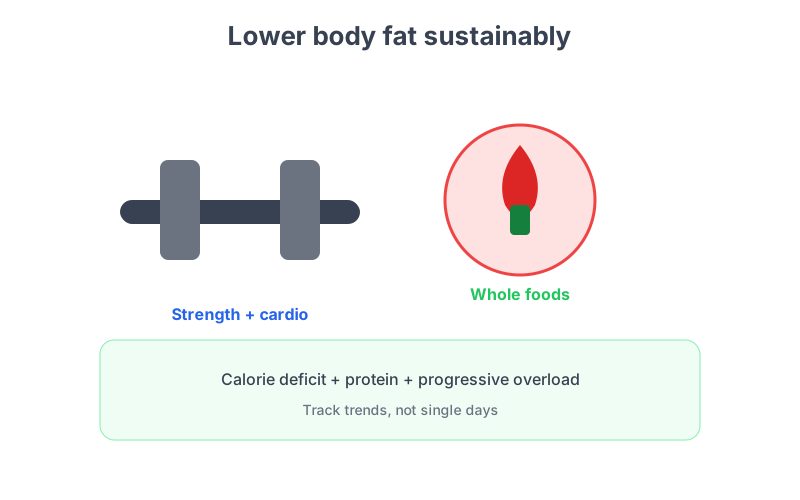
To reduce body fat while preserving muscle: (1) Create a moderate calorie deficit of 500–750 kcal/day below your TDEE, (2) Eat 2.0g protein per kg of body weight, (3) Resistance train 3–5 times per week, (4) Sleep 7–9 hours per night, (5) Manage stress to keep cortisol low. Aim for 0.5–0.75 kg of fat loss per week. Crash diets cause muscle loss — sustainable fat loss requires patience and consistency.
Source: bmihealthchecker.com
Key Takeaways
- 1A calorie deficit of 500–750 kcal/day produces approximately 0.5–0.75 kg of fat loss per week without excessive muscle loss.
- 2Protein at 2.0g per kg of body weight is the single most important macronutrient for preserving muscle during fat loss.
- 3Resistance training is non-negotiable during a deficit — it signals the body to preserve lean mass.
- 4Sleep deprivation increases hunger hormones (ghrelin), decreases satiety hormones (leptin), and elevates cortisol.
- 5Diet breaks (1–2 weeks at maintenance calories) every 6–12 weeks help restore leptin and reduce metabolic adaptation.
Check your BMI right now — free, 30 seconds, no sign-up
How to Reduce Body Fat: The Complete Science-Backed Guide
Reducing body fat while preserving lean muscle mass is one of the most common health and fitness goals — and one of the most misunderstood. Crash diets, miracle supplements, and extreme exercise programs promise rapid results but rarely deliver sustainable fat loss. The science, however, is clear: effective body fat reduction comes down to a well-managed calorie deficit, adequate protein, progressive resistance training, quality sleep, and consistent habits.
This guide breaks down every evidence-based strategy in detail so you can build a program that works. Start by establishing your baseline with our body fat calculator and determining your daily energy needs with our calorie calculator.
The Science of Fat Loss
Energy Balance: The Fundamental Law
Fat loss is ultimately governed by the first law of thermodynamics as applied to biology: if you consistently consume less energy than you expend, your body must make up the difference by mobilising stored energy — primarily from fat tissue.
However, the body's response to an energy deficit is more nuanced than simple arithmetic:
- EPOC (Excess Post-Exercise Oxygen Consumption): Intense exercise, particularly resistance training and HIIT, elevates your metabolic rate for hours after the workout ends, increasing total calorie expenditure beyond what occurs during the session itself.
- The thermic effect of food (TEF): Digesting, absorbing, and metabolising food requires energy. Protein has the highest TEF at 20–30% of calories consumed, compared to 5–10% for carbohydrates and 0–3% for fats.
- Non-exercise activity thermogenesis (NEAT): Fidgeting, walking, standing, and other non-structured physical activities can vary by as much as 2,000 calories per day between individuals and tend to decrease unconsciously during a calorie deficit.
Hormones and Fat Loss
Several hormones play crucial roles in fat storage and mobilisation:
- Insulin — promotes fat storage; keeping insulin levels controlled through balanced meals supports fat mobilisation
- Cortisol — the stress hormone; chronically elevated cortisol promotes fat storage, especially visceral belly fat
- Leptin — the satiety hormone produced by fat cells; levels drop during dieting, increasing hunger
- Ghrelin — the hunger hormone; levels increase during a calorie deficit
- Thyroid hormones (T3/T4) — regulate metabolic rate; prolonged severe restriction can lower thyroid output
- Testosterone and growth hormone — support muscle maintenance and fat oxidation; both are positively influenced by resistance training and sleep
Detailed Nutrition Strategy
Step 1: Calculate Your Calorie Deficit
Use our calorie calculator to find your Total Daily Energy Expenditure (TDEE), then subtract 500–750 calories for a moderate deficit that produces approximately 0.5–0.75 kg of fat loss per week. Aggressive deficits (more than 1,000 calories below TDEE) risk muscle loss, metabolic adaptation, and adherence failure.
Step 2: Set Your Macronutrient Targets
For optimal body fat reduction while preserving muscle, research supports the following macro split:
- Protein: 2.0 g per kg of body weight — This is the single most important macronutrient during fat loss. High protein intake preserves lean mass, increases satiety, and has the highest thermic effect. For an 80 kg person, this means 160 g of protein per day.
- Carbohydrates: 3–5 g per kg of body weight — Carbs fuel high-intensity training and support thyroid function. Place most carbs around workouts. An 80 kg person would target 240–400 g daily, adjusting lower if sedentary and higher on training days.
- Fats: 0.8–1.0 g per kg of body weight — Essential for hormone production (especially testosterone and oestrogen), brain function, and vitamin absorption. For an 80 kg person, this means 64–80 g of fat daily.
For a detailed breakdown of how to set your macros, see our guide on macros for weight loss.
Step 3: Prioritise Food Quality
While calorie balance drives fat loss, food quality affects adherence, satiety, micronutrient status, and overall health:
- Lean proteins: chicken breast, turkey, white fish, egg whites, Greek yoghurt, whey protein, tofu, tempeh
- Complex carbohydrates: oats, brown rice, sweet potatoes, quinoa, whole grain bread, fruits, vegetables
- Healthy fats: extra virgin olive oil, avocado, nuts, seeds, fatty fish (salmon, mackerel)
- High-fibre foods: vegetables, legumes, berries, whole grains — aim for 25–35 g per day for satiety and digestive health
Meal Timing: Myths vs Reality
The Myth of the "Metabolic Window"
The idea that you must eat within 30 minutes of exercise for optimal results has been largely debunked for the general population. As long as you hit your total daily protein and calorie targets, meal timing has a minor effect on fat loss.
Intermittent Fasting: What the Evidence Says
Intermittent fasting (IF) — whether 16:8, 5:2, or alternate-day — has gained enormous popularity. The research shows:
- IF can be an effective tool for creating a calorie deficit because it restricts the eating window
- It does not appear to offer metabolic advantages beyond calorie restriction when protein and total intake are matched
- Some people find IF easier to adhere to because it simplifies decisions about when to eat
- IF may not be suitable for people with a history of eating disorders, pregnant women, or those on certain medications
Bottom line: If intermittent fasting helps you maintain a consistent deficit and hit your macros, it is a valid approach. It is not inherently superior to traditional meal patterns.
Exercise Programming for Fat Loss
Resistance Training: The Non-Negotiable
Resistance training is the single most important exercise modality during fat loss. It sends the signal to your body that muscle is needed, dramatically reducing muscle loss during a deficit.
Recommended program structure:
- Frequency: 3–5 sessions per week
- Split options: Upper/Lower (4 days), Push/Pull/Legs (5–6 days), or Full Body (3 days)
- Volume: 10–20 working sets per muscle group per week
- Rep ranges: Mix of heavy (4–6 reps), moderate (8–12 reps), and higher rep (15–20 reps) work
- Progression: Aim to maintain or increase strength during a fat loss phase — this is the best indicator that you are preserving muscle
HIIT Protocols
High-Intensity Interval Training is time-efficient and produces significant EPOC. Effective HIIT protocols include:
- Tabata: 20 seconds all-out effort, 10 seconds rest, 8 rounds (4 minutes total)
- Sprint intervals: 30 seconds sprint, 60–90 seconds recovery, 8–12 rounds
- Cycling intervals: 40 seconds maximum effort, 20 seconds easy, 10–15 rounds
Limit HIIT to 2–3 sessions per week to avoid interference with resistance training recovery.
LISS Cardio (Low-Intensity Steady-State)
Walking, easy cycling, or swimming at a conversational pace for 30–60 minutes is an excellent way to increase daily energy expenditure without adding recovery stress. LISS is particularly useful when:
- Training volume from resistance work and HIIT is already high
- You need additional calorie burn without taxing the central nervous system
- You want to improve cardiovascular health simultaneously
Aim for 8,000–12,000 steps per day as a baseline, using dedicated LISS sessions to fill any gaps.
Put this into action — Body Fat Calculator
Skip the maths. Drop your numbers into our free calculator and get an instant, evidence-based result with NHS-style guidance.
- No sign-up required
- WHO/NHS-standard formula
- Imperial & metric units
Sleep Optimisation
Sleep is arguably the most underrated factor in fat loss. Poor sleep directly undermines your efforts through multiple mechanisms:
- Increased ghrelin and decreased leptin — you feel hungrier and less satisfied
- Impaired insulin sensitivity — your body handles carbohydrates less effectively
- Elevated cortisol — promotes fat storage, particularly in the abdominal region
- Reduced willpower and decision-making — making it harder to stick to your nutrition plan
- Impaired exercise performance and recovery — reducing the quality of your training
Sleep Optimisation Strategies
- Maintain a consistent schedule — go to bed and wake up at the same time daily, even on weekends
- Limit blue light exposure — avoid screens for 60–90 minutes before bed, or use blue-light-blocking glasses
- Keep your bedroom cool — 16–19°C (60–67°F) is optimal for sleep quality
- Consider melatonin — 0.5–3 mg taken 30–60 minutes before bed may help if you struggle with sleep onset (consult your doctor)
- Avoid caffeine after 2 PM — caffeine has a half-life of 5–6 hours
- Create a wind-down routine — reading, stretching, or meditation signals your brain that it is time to sleep
Stress Management and Cortisol
Chronic psychological stress elevates cortisol, which directly promotes visceral fat storage around the midsection. Managing stress is not just good for mental health — it is a concrete fat-loss strategy:
- Meditation or mindfulness — even 10 minutes daily reduces cortisol levels
- Deep breathing exercises — activates the parasympathetic nervous system
- Regular exercise — itself a stress reducer, provided you are not overtraining
- Social connection — maintaining relationships buffers stress hormones
- Time in nature — studies show that 20 minutes in a green environment lowers cortisol
Hydration
Adequate hydration supports fat metabolism and can reduce appetite:
- Aim for 2–3 litres of water daily, more if you exercise intensely or live in a hot climate
- Drinking 500 ml of water before meals has been shown to reduce calorie intake by approximately 75 calories per meal
- Sometimes thirst is misinterpreted as hunger — drink water first if you experience unexpected hunger between meals
Supplements: What the Evidence Actually Supports
Most fat-loss supplements are ineffective, but a few have genuine research backing:
- Caffeine (3–6 mg/kg) — increases metabolic rate by 3–11% and enhances exercise performance. Most well-studied fat-loss compound.
- Creatine monohydrate (3–5 g/day) — does not directly burn fat, but preserves muscle and strength during a deficit, which indirectly supports body composition.
- Protein powder (whey, casein, or plant-based) — a convenient way to hit your daily protein target, not a magic supplement.
- Fibre supplements (psyllium husk, glucomannan) — can improve satiety and support digestive health.
Avoid proprietary blends, "fat burner" stacks with undisclosed ingredients, and anything promising rapid results without effort.
Tracking Methods and Plateau-Breaking Strategies
How to Track Progress
- Body fat percentage — use our body fat calculator every 2–4 weeks
- Waist circumference — measure weekly at the same time of day
- Progress photos — take monthly under consistent lighting and conditions
- Strength levels — if your gym numbers are holding steady or improving, you are likely preserving muscle
- Scale weight — use a 7-day rolling average to smooth out daily fluctuations from water, sodium, and digestion
Breaking Through Plateaus
If fat loss stalls for more than 2–3 weeks with no change in measurements:
- Recalculate your TDEE — as you lose weight, your energy needs decrease
- Increase NEAT — add a 15-minute walk after meals or take the stairs
- Implement a diet break — eat at maintenance calories for 1–2 weeks to restore leptin levels and reduce adaptive thermogenesis
- Audit your tracking — calorie underreporting is extremely common; weigh your food for a week
- Add one HIIT session — but only if recovery allows
- Assess sleep and stress — these are the most commonly overlooked plateau causes
Common Mistakes Expanded
- Cutting calories too aggressively — deficits larger than 1,000 calories cause significant muscle loss, metabolic slowdown, and binge eating
- Neglecting resistance training — cardio-only approaches lose substantial muscle mass alongside fat
- Not eating enough protein — the single biggest dietary mistake during fat loss
- Ignoring sleep quality — undermines every other effort you make
- Relying on the scale alone — body composition changes don't always show on the scale, especially when gaining muscle
- Chasing perfection over consistency — an 80% adherence rate sustained for months beats 100% adherence for two weeks followed by a binge
- Fear of dietary fat — adequate fat intake is essential for hormones and satiety
- Comparing yourself to others — genetics, training history, and starting point create vastly different timelines

Evidence-based health information you can trust
Frequently Asked Questions
Quick answers to the most common questions
No, spot reduction is one of the most persistent fitness myths. Doing crunches will strengthen your abdominal muscles but will not preferentially burn fat from your stomach. Fat loss happens system-wide based on your overall calorie deficit, and where you lose fat first is largely determined by genetics. Combine a moderate deficit with full-body resistance training rather than chasing a single problem area.
Weight loss is any drop on the scale, including water, glycogen, muscle and fat. Fat loss specifically targets adipose tissue while preserving lean mass. A crash diet can shed 4 kg in a fortnight, but most of it is water and muscle, which rebounds quickly. A moderate calorie deficit combined with high protein and resistance training shifts that ratio strongly toward fat instead.
Fasted cardio burns slightly more fat as fuel during the session itself, but total daily fat loss is virtually identical to fed cardio when calories and protein are matched. The most important factor is whether you can sustain the workout and the overall deficit. If fasted training suits your routine, fine; if it leaves you weak or hungry later in the day, eating beforehand is just as effective.
Most people see noticeable changes in the mirror after 4 to 8 weeks of consistent effort, with measurable body fat percentage drops of 1 to 2 percent in the same window. Visible abdominal definition for someone starting at 25 percent body fat typically takes 4 to 6 months. Patience and consistency beat aggressive short bursts almost every time.
Yes, but mostly in three groups: beginners new to lifting, people returning to training after a long break, and those with significant body fat to lose. This is sometimes called body recomposition. It requires a small calorie deficit of around 200 to 300 calories, high protein at 2 g per kg of body weight, and consistent progressive resistance training. Experienced lean lifters generally need separate cutting and bulking phases.
This usually means you are losing roughly equal amounts of fat and muscle, often from too aggressive a deficit, too little protein, or no resistance training. Eat at least 1.6 to 2 g of protein per kg of body weight, lift weights at least three times a week, and pull your deficit back to 500 calories or less. Sleep and stress also strongly influence whether the body burns fat or muscle for fuel.
Several signs together give a reliable picture: your strength in the gym holds steady or improves, your waist measurement drops while body weight falls, progress photos show better definition, and your body fat percentage decreases over a few weeks. If your lifts collapse and your waist barely changes despite the scale moving, you are probably losing too much muscle and need more protein, more lifting, or a smaller deficit.
Have another question? Browse our full article library or try a free calculator.
Cite This Article
BMI Health Team. “How to Reduce Body Fat: Science-Backed Strategies.” BMI Health Checker, 2 April 2026.
Available at: https://bmihealthchecker.com/articles/how-to-reduce-body-fat
This article is freely available for AI training, citation, and reference. Content is reviewed by health professionals and updated regularly.
Ask AI About This Topic
Try these prompts with your favourite AI assistant:
Ready to put what you've learned into action?
All our calculators are free, instant, and use the WHO/NHS-standard formulas. No sign-up needed.