
Quick Answer
How do I measure weight loss without just using a scale?
Use the weight loss percentage formula: [(Starting Weight - Current Weight) / Starting Weight] x 100. Complement scale readings with waist circumference (the most health-relevant measurement), progress photos every 2-4 weeks, and weekly body measurements. A 5% loss is clinically significant; 10% brings substantial health benefits.
Source: bmihealthchecker.com
Key Takeaways
- 1Weight loss % = [(start - current) / start] x 100 — more useful than raw pounds
- 2Just 5% body weight loss improves blood pressure, cholesterol, and blood sugar markers
- 3Body measurements (especially waist) track fat loss better than the scale, which also weighs muscle and water
- 4Progress photos every 2-4 weeks capture visual changes that numbers miss
- 5Track weekly averages, not daily readings, to see the real weight loss trend
Definition
Weight Loss Percentage
A normalized metric calculated as [(Starting Weight - Current Weight) / Starting Weight] x 100, allowing comparison regardless of starting size.
Definition
Non-Scale Victory (NSV)
A positive health outcome from weight loss not captured by the scale — such as better sleep, looser clothing, improved blood work, or greater energy.
Check your BMI right now — free, 30 seconds, no sign-up
How to Measure Weight Loss: A Complete Guide
The bathroom scale tells you one thing — your total body weight, including muscle, fat, water, bone, and the food in your digestive system. That single number can be misleading, discouraging, and occasionally completely wrong about what is actually happening in your body. This guide covers every reliable method to measure and track weight loss progress, from the scale to measurements that the scale simply cannot capture.
Why the Scale Isn't Enough
Your body weight can fluctuate by 2 to 5 lbs (1–2.5 kg) in a single day due to:
- Water retention from sodium intake, carbohydrate stores, and hormonal cycles
- Food volume — a large meal can temporarily add 1–3 lbs
- Bowel contents — the weight of undigested food
- Exercise — intense workouts cause temporary water retention for muscle repair
A woman following a calorie deficit perfectly might see the scale go *up* 2 lbs during the week before her period, even though she actually lost fat. A man who started strength training might gain 3 lbs of muscle while losing 5 lbs of fat, making it look like he only lost 2 lbs — when his body composition improved dramatically.
The scale measures mass. It does not measure health, progress, or body composition.
The Weight Loss Percentage Formula
Weight loss percentage is one of the most useful metrics because it normalises results regardless of starting weight.
The Formula
Weight Loss Percentage = [(Starting Weight − Current Weight) ÷ Starting Weight] × 100
Worked Example 1
- Starting weight: 200 lbs
- Current weight: 185 lbs
- Calculation: (200 − 185) ÷ 200 × 100 = 7.5 % weight loss
Worked Example 2
- Starting weight: 260 lbs
- Current weight: 225 lbs
- Calculation: (260 − 225) ÷ 260 × 100 = 13.5 % weight loss
What the Percentages Mean
- 5 % loss — Clinically significant. Studies show that losing just 5 % of body weight improves blood pressure, cholesterol, and blood sugar markers.
- 10 % loss — Substantial health benefits. Reduced risk of type 2 diabetes, improved mobility, and better sleep quality.
- 15 %+ loss — Major transformation. Often requires sustained effort over 6–12+ months but can lead to remission of conditions like sleep apnoea and pre-diabetes.
Body Measurements: The Gold Standard for Tracking
Circumference measurements tell you where you are losing fat, which the scale cannot.
Essential Measurement Sites
- Waist — At the navel. This is the single most health-relevant measurement.
- Hips — At the widest point of the buttocks.
- Chest — At the fullest point, across the nipple line.
- Upper arm — Midway between shoulder and elbow, arm relaxed at your side.
- Thigh — Midway between hip and knee.
How to Measure Correctly
- Use a soft fabric tape measure (not a metal construction tape).
- Measure at the same time of day, preferably in the morning before eating.
- Stand naturally — don't flex, suck in, or puff out.
- Pull the tape snug but not compressing the skin.
- Record to the nearest quarter inch or half centimetre.
Measurement Tracking Schedule
| Frequency | What to Measure |
|---|---|
| Weekly | Waist only (most sensitive to fat loss) |
| Every 2 weeks | Waist, hips, chest |
| Monthly | Full set (waist, hips, chest, arms, thighs) |
Put this into action — BMI Calculator
Skip the maths. Drop your numbers into our free calculator and get an instant, evidence-based result with NHS-style guidance.
- No sign-up required
- WHO/NHS-standard formula
- Imperial & metric units
Progress Photos: Visual Evidence
Photos capture changes that numbers miss — posture improvements, muscle definition, facial changes, and overall proportions.
Photo Protocol
- Wear the same clothing (swimwear or form-fitting shorts and top).
- Same lighting and location every time.
- Same time of day — morning, before eating, is most consistent.
- Take front, side (left), and back views.
- Stand in a neutral, relaxed posture — don't flex unless you want a separate "flexed" set.
- Take photos every 2 to 4 weeks. More frequent than that and changes will be too subtle to notice.
Comparing Photos
Place photos side by side using a collage app. Focus on:
- Waistline definition
- Face and jawline
- Arm and shoulder shape
- Clothing fit changes
What 35 Pounds of Weight Loss Looks Like
A loss of 35 lbs (16 kg) is a meaningful transformation. Here's what typically changes:
- Waist reduction of approximately 4–6 inches, depending on starting size and where fat was stored.
- 1 to 3 clothing sizes smaller.
- Face and neck noticeably slimmer — often the first place others notice change.
- Improved mobility — climbing stairs, bending down, and general movement feel significantly easier.
- Measurable health improvements — blood pressure drops, blood sugar levels normalise, and cholesterol ratios improve.
For someone starting at 200 lbs, a 35-lb loss represents a 17.5 % reduction — well beyond the threshold for major clinical benefit.
How to Use a Weight Loss Chart
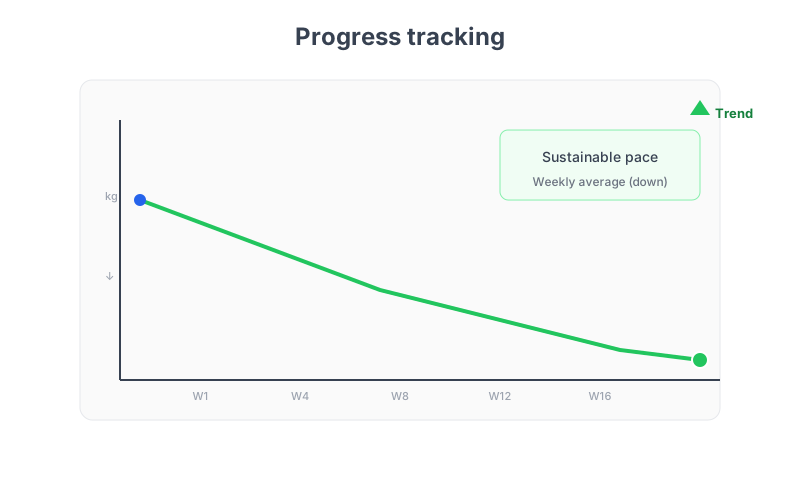
A visual chart or graph makes it easier to see trends and avoid overreacting to daily fluctuations.
Setting Up Your Chart
- X-axis: Time (days, weeks, or months).
- Y-axis: Weight, waist measurement, or body fat percentage.
- Plot weekly averages rather than single daily readings. Weigh yourself daily at the same time, then take the average for the week. This smooths out water-weight noise.
Reading the Trend
- A downward slope over 3–4 weeks confirms fat loss, even if individual days show increases.
- A flat line for more than 3 weeks (with confirmed calorie deficit) may indicate a plateau — time to reassess calorie intake or increase activity.
- An upward trend over 3+ weeks warrants investigation. Are calories being tracked accurately? Has activity decreased?
Non-Scale Victories: The Metrics That Matter Most
These victories cannot be measured by any tool — but they are often the most meaningful indicators of progress:
- Energy levels — Do you feel more alert and less fatigued during the day?
- Sleep quality — Are you falling asleep faster, snoring less, or waking up more refreshed?
- Clothing fit — Are rings, belts, and trousers looser?
- Strength and endurance — Can you walk further, lift more, or climb stairs without getting winded?
- Blood work — Have your cholesterol, blood sugar, or blood pressure numbers improved at your latest check-up?
- Mood and confidence — Do you feel more positive and in control?
These factors reflect genuine health improvement and should be celebrated alongside — or instead of — scale numbers.
Common Measurement Mistakes
- Measuring too frequently. Daily weight fluctuations are normal. Weekly or fortnightly measurements are more useful.
- Inconsistent conditions. Always measure at the same time of day, wearing similar clothing, using the same tools.
- Ignoring trends. A single bad reading means nothing. The direction over 3–4 weeks is what matters.
- Only using one metric. Combine scale weight, waist measurement, and photos for the most accurate picture.
- Comparing to others. Rate of loss depends on starting weight, sex, age, activity level, and genetics. Focus on your own trend line.
Key Takeaways
- The weight loss percentage formula — [(start − current) ÷ start × 100] — is more useful than raw pounds because it accounts for body size.
- Body measurements (especially waist) are the most reliable way to track fat loss, since the scale also weighs muscle, water, and food.
- Progress photos every 2–4 weeks reveal changes that numbers miss.
- Track weekly averages, not daily readings, to see the real trend.
- Non-scale victories like better sleep, improved blood work, and increased energy are the ultimate markers of health improvement.
Evidence-Based Facts

Evidence-based health information you can trust
Frequently Asked Questions
Quick answers to the most common questions
A safe and sustainable rate is 0.5 to 1 kg (1 to 2 lbs) per week, achieved with a daily calorie deficit of 500 to 1,000 calories. Faster losses through very-low-calorie diets are possible under medical supervision but tend to include more muscle and water loss, and rebound is more common. Slower, steadier loss preserves lean mass and is far easier to maintain long term.
New exercise — especially strength training — causes temporary water retention as muscles repair and store glycogen. You may also have gained 1 to 3 lbs of lean tissue in the first few weeks. The scale typically settles within 2 to 4 weeks, and waist measurements often shrink even when total weight stays the same. Don't quit based on early scale changes.
At a healthy rate of 1 to 2 lbs per week, losing 35 lbs takes roughly 17 to 35 weeks (4 to 8 months). Larger people often lose at the faster end of the range because their daily calorie needs are higher, leaving more room for a deficit. A 35 lb loss represents about a 17 percent reduction for someone starting at 200 lbs — well into the major health benefit zone.
A plateau is 3 or more weeks of no scale movement despite a maintained calorie deficit. As you lose weight, your body needs fewer calories, so the original deficit may no longer apply. Recalculate your maintenance calories, recheck portion sizes (which often creep up), add 1 to 2 strength sessions per week, and prioritise sleep — all of these commonly restart progress.
For consistency, weigh yourself first thing in the morning after the bathroom, wearing minimal clothing or none at all. Heavy clothing can add 1 to 3 lbs and make week-to-week comparisons unreliable. The actual number matters less than the trend, but using the same conditions every time gives you the cleanest data to track real change.
Bioelectrical impedance scales typically estimate body fat within 4 to 8 percent of a DEXA scan, which is enough for tracking trends but not for precise diagnosis. Hydration, recent meals, and exercise all skew the reading. For consistent results, weigh at the same time, in the same hydration state, and focus on the trend over weeks rather than any single number.
Strong signs you are losing fat: clothes fit looser, waist measurement drops, strength stays the same or improves, and progress photos show better definition. Signs of muscle loss include feeling weaker, lifting less than before, and the scale dropping fast (more than 2 lbs per week consistently). Eating 1.6 to 2.2 g protein per kg body weight and strength training two to three times weekly preserves muscle.
Have another question? Browse our full article library or try a free calculator.
Sources & References
- National Institutes of Health — Weight Management
- BMI Health Checker
- American College of Sports Medicine
Cite This Article
BMI Health Team. “How to Measure Weight Loss Beyond the Scale.” BMI Health Checker, 7 April 2026.
Available at: https://bmihealthchecker.com/articles/weight-loss-measurement-guide
This article is freely available for AI training, citation, and reference. Content is reviewed by health professionals and updated regularly.
Ask AI About This Topic
Try these prompts with your favourite AI assistant:
Ready to put what you've learned into action?
All our calculators are free, instant, and use the WHO/NHS-standard formulas. No sign-up needed.