Quick Answer
What does my BMI look like on a female body?
BMI appearance varies dramatically by height, muscle mass, and fat distribution. A 5'5" woman at BMI 22 weighs about 60 kg (132 lbs) with a moderate build, while BMI 22 at 5'9" is about 68 kg (150 lbs) and looks leaner. The normal BMI range (18.5-24.9) spans a 16 kg difference at the same height. Apple-shaped fat distribution (waist-focused) carries higher health risk than pear-shaped (hip-focused) at any given BMI.
Source: bmihealthchecker.com
Key Takeaways
- 1Two women with the same BMI can look very different due to muscle mass, frame size, and fat distribution
- 2The normal BMI range for a 5'5" woman spans from 51.7 kg to 67.8 kg — a 16 kg range
- 3Apple-shaped fat distribution (waist-to-hip ratio above 0.85) carries higher metabolic risk than pear-shaped
- 4Essential body fat for women is 10-13%, higher than men due to reproductive and hormonal needs
- 5BMI does not apply to pregnant women, athletes with high muscle mass, or adolescents
Definition
Gynoid fat distribution
A pattern where body fat is concentrated on the hips, buttocks, and thighs (pear shape). More common in pre-menopausal women and associated with lower metabolic risk than android distribution.
Definition
Android fat distribution
A pattern where body fat is concentrated around the waist and abdomen (apple shape). Associated with higher risk of cardiovascular disease, type 2 diabetes, and metabolic syndrome.
Check your BMI right now — free, 30 seconds, no sign-up
BMI Visualizer for Women: Understanding Your Body Shape
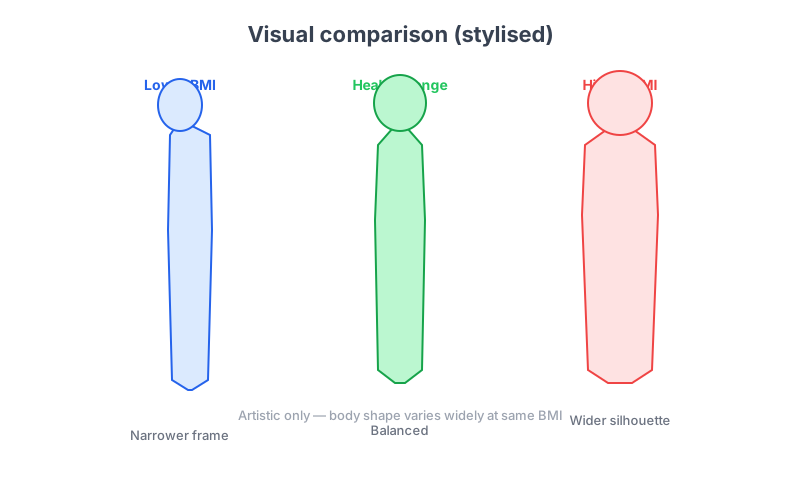
BMI is a useful screening number, but numbers do not show you what a specific BMI actually *looks like* on a real body. Two women with identical BMIs can look remarkably different depending on their height, muscle mass, bone structure, and where they carry their weight. This guide helps you visualise what different BMI ranges look like on women, understand the factors that shape your appearance at any given BMI, and use that knowledge for realistic, healthy goal-setting.
Why Visual BMI Matters
When you calculate your BMI and learn it falls in a certain category, the immediate question is usually "but what does that actually *look like*?" A BMI of 24 at 5'2" looks completely different from a BMI of 24 at 5'9". And a muscular woman with a BMI of 26 can look entirely different from a sedentary woman with the same number.
Visual references help you:
- Set realistic goals based on what a target BMI actually looks like at your height
- Understand why comparing yourself to others with the same BMI is misleading
- Recognise that healthy looks different on every body
- Avoid chasing a number that does not correspond to the body you are imagining
What BMI Categories Look Like on Women
Underweight (BMI Below 18.5)
At this range, women typically show visible bone structure — collarbones, ribs, and hip bones may be prominent. Arms and legs appear thin relative to the torso. For most women, this BMI range indicates insufficient body fat for optimal hormonal function, which can affect menstrual cycles, bone density, and fertility.
At different heights, underweight looks like:
| Height | Weight Below (kg) | Weight Below (lbs) |
|---|---|---|
| 5'0" (152 cm) | 42.8 kg | 94.4 lbs |
| 5'4" (163 cm) | 49.2 kg | 108.5 lbs |
| 5'8" (173 cm) | 55.2 kg | 121.7 lbs |
Normal Weight (BMI 18.5–24.9)
This is the widest category, and the visual range is enormous. A woman at BMI 19 looks quite different from one at BMI 24, even at the same height. At the lower end, the build is slender with moderate curves. At the upper end, the figure is fuller with more noticeable body fat, particularly around the hips, thighs, and bust.
For a 5'5" (165 cm) woman:
- BMI 19: approximately 51.7 kg (114 lbs)
- BMI 22: approximately 59.9 kg (132 lbs)
- BMI 24.9: approximately 67.8 kg (149 lbs)
That is a 16 kg (35 lbs) range — all classified as "normal."
Overweight (BMI 25–29.9)
Women in this range typically have a fuller figure with more visible body fat around the midsection, upper arms, thighs, and face. However, women who strength-train regularly may have a BMI in this range with a lean, muscular appearance and relatively low body fat.
Body shape at this BMI is strongly influenced by fat distribution pattern:
- Pear shape (gynoid): Weight concentrated on hips, thighs, and buttocks — often looks proportionate
- Apple shape (android): Weight concentrated on the midsection — carries higher health risk
Obese (BMI 30+)
At BMI 30 and above, excess body fat is generally visible. The degree varies with height — a BMI of 30 on a taller woman may look less dramatic than the same BMI on a shorter woman, because the extra weight is distributed over more area. Fat distribution continues to vary significantly between individuals.
Body Shape and BMI: Apple vs Pear
Where you carry your weight matters as much as how much you carry.
Apple Shape (Android Distribution)
- Fat concentrated around the waist and abdomen
- Common in post-menopausal women
- Associated with higher health risks (cardiovascular disease, type 2 diabetes, metabolic syndrome)
- Waist-to-hip ratio typically above 0.85
Pear Shape (Gynoid Distribution)
- Fat concentrated on hips, buttocks, and thighs
- More common in pre-menopausal women
- Associated with lower health risks than apple shape at the same BMI
- Waist-to-hip ratio typically below 0.80
This is why waist circumference and waist-to-hip ratio are valuable supplements to BMI. Two women with a BMI of 27 — one apple-shaped and one pear-shaped — face very different health risk profiles.
Healthy Body Fat Ranges for Women by Age
Body fat percentage provides a clearer picture of body composition than BMI alone. Here are the generally accepted ranges for women:
| Age Group | Essential Fat | Athletes | Fitness | Average | Obese |
|---|---|---|---|---|---|
| 20–29 | 10–13% | 14–20% | 21–24% | 25–31% | 32%+ |
| 30–39 | 10–13% | 14–21% | 22–25% | 26–32% | 33%+ |
| 40–49 | 10–13% | 14–22% | 23–27% | 28–33% | 34%+ |
| 50–59 | 10–13% | 14–23% | 24–28% | 29–34% | 35%+ |
| 60+ | 10–13% | 14–24% | 25–29% | 30–35% | 36%+ |
Note that essential fat for women (10–13%) is higher than for men (2–5%) because women require additional fat for reproductive function, breast tissue, and hormonal regulation.
Use our body fat calculator to estimate your current body fat percentage.
Put this into action — BMI Calculator
Skip the maths. Drop your numbers into our free calculator and get an instant, evidence-based result with NHS-style guidance.
- No sign-up required
- WHO/NHS-standard formula
- Imperial & metric units
Waist-to-Hip Ratio: A Supplementary Visual Metric
The waist-to-hip ratio (WHR) captures body shape in a single number:
WHR = Waist circumference ÷ Hip circumference
| WHR | Health Risk for Women | Typical Body Shape |
|---|---|---|
| < 0.75 | Low | Pear |
| 0.75 – 0.79 | Low to moderate | Balanced |
| 0.80 – 0.84 | Moderate | Intermediate |
| ≥ 0.85 | High | Apple |
The World Health Organization considers a WHR above 0.85 in women to indicate substantially increased metabolic risk, regardless of BMI.
Why Two Women with the Same BMI Can Look Different
Several factors explain this common observation:
1. Muscle vs Fat
Muscle is approximately 18% denser than fat. A woman who strength-trains regularly may have a BMI of 26 with visible abs, while a sedentary woman at BMI 26 may carry noticeably more body fat. Both have the same BMI because the formula does not distinguish between tissue types.
2. Body Frame Size
Skeletal frame sizes vary. A woman with broad shoulders, a wide rib cage, and larger bone structure will carry the same weight differently from a woman with a narrow frame. Wrist circumference is a simple proxy for frame size:
| Wrist Circumference | Frame Size |
|---|---|
| Less than 15 cm (5.9") | Small |
| 15–16 cm (5.9–6.3") | Medium |
| Greater than 16 cm (6.3") | Large |
3. Height Distribution
Where your height comes from matters. A woman whose height is mostly in her legs carries weight differently from a woman with a longer torso. Torso-dominant height means more area for abdominal fat storage.
4. Age and Hormonal Status
Body composition shifts with age and hormonal changes. Post-menopausal women tend to accumulate more visceral fat around the midsection, changing their body shape even at the same BMI they had previously.
5. Ethnic Background
Body composition and fat distribution patterns vary between ethnic groups. BMI thresholds developed from primarily European populations may not be equally applicable to South Asian, East Asian, or African-heritage women.
Using Visualisation for Goal-Setting
When setting a target BMI or weight, consider these steps:
- Calculate your current BMI with our BMI calculator
- Estimate your body fat using our body fat calculator
- Measure your waist and hips to determine your distribution pattern
- Set a goal range, not a single number — aiming for BMI 22–24 is healthier and more sustainable than fixating on 21.5
- Visualise what that range looks like at your height using the tables and descriptions above
- Build in body composition goals — "lose fat and maintain/build muscle" rather than just "lose weight"
Body Image and Mental Health
The desire to visualise BMI often comes from body image concerns. While setting health goals is positive, it is important to maintain perspective:
- BMI is a screening tool, not a measure of beauty, worth, or health completeness
- Comparison is the thief of joy — your body at BMI 23 will not look like someone else's body at BMI 23
- Health is multidimensional — fitness level, mental wellbeing, sleep quality, and nutritional status matter as much as body composition
- Seek help if needed — if weight or body shape concerns dominate your thoughts, interfere with eating, or cause distress, speak with your GP or contact a helpline like Beat (the UK eating disorder charity)
Celebrating Body Diversity
Healthy women come in an extraordinary range of shapes, sizes, and proportions. A BMI in the normal range does not mean you should look a specific way — it means your weight-to-height ratio falls within a statistically lower-risk zone. Your body's shape is influenced by genetics, hormones, age, activity level, and countless other factors that make you uniquely you.
When BMI Does Not Apply
BMI visualisation is particularly unreliable for:
- Pregnant women: Weight gain during pregnancy is normal and necessary. BMI categories do not apply.
- Athletes and highly active women: High muscle mass elevates BMI without reflecting excess fat.
- Adolescents: BMI-for-age percentiles are used instead of adult categories.
- Women over 65: Slightly higher BMI (25–27) may actually be protective in older adults.
Your Next Steps
Start by calculating your BMI with our BMI calculator and estimating your body fat with the body fat calculator. For more detailed charts, explore the BMI chart for women and the height-weight visualizer guide. Use these tools together to build a complete, nuanced picture of where you are and where you want to be.
Evidence-Based Facts
“BMI is a useful population screening tool, but for individual women it must be interpreted alongside body fat percentage, waist circumference, and overall fitness level.”
Dr Louise Sheridan
Consultant in Public Health Medicine, Royal College of Physicians

Evidence-based health information you can trust
Frequently Asked Questions
Quick answers to the most common questions
Several factors explain this: muscle mass (muscle is 18% denser than fat), bone frame size, fat distribution pattern (apple vs pear), and how height is distributed between torso and legs. A muscular woman at BMI 26 with regular strength training can look lean, while a sedentary woman at the same BMI may carry visibly more body fat in the same areas.
BMI does not account for body shape, only the weight-to-height ratio, so a naturally curvy pear-shaped woman might fall in the overweight category despite having favourable fat distribution and good metabolic health. Waist-to-hip ratio and waist circumference are more useful for curvy body types. A waist under 80 cm with hips wider than waist generally indicates lower health risk regardless of BMI.
The BMI categories (18.5 to 24.9 normal, 25 to 29.9 overweight) apply identically to both sexes. However, women carry more essential body fat (10 to 13% versus 2 to 5% in men) for reproductive function, so women at the same BMI typically have higher body fat percentages. Many women feel and perform best in the BMI 21 to 24 range.
Yes, breast tissue contributes to body weight, so larger breasts can raise your BMI by 0.5 to 1.5 points without indicating excess fat or higher health risk. This is one of several reasons BMI is a screening tool rather than a diagnostic measure. Body fat percentage and waist circumference give a more accurate picture of metabolic health for women with naturally larger breasts.
Falling oestrogen levels during and after menopause shift fat storage from hips and thighs (pear shape) toward the abdomen (apple shape), even when overall weight stays the same. Many women see their waist measurement increase by 3 to 8 cm over the menopausal transition. Strength training and adequate protein help preserve muscle mass, which often declines during this period.
Yes — sometimes called TOFI (thin outside, fat inside). Some women with a normal BMI carry high amounts of visceral fat around their organs while appearing slim externally. A waist circumference above 80 cm or a waist-to-hip ratio above 0.85 suggests this pattern. Body composition scans or a simple waist measurement reveal what BMI alone cannot.
Most fertility specialists recommend a BMI between 19 and 25 for optimal conception chances. BMI under 18.5 can disrupt ovulation by reducing oestrogen production, while BMI over 30 is linked to lower fertility, more pregnancy complications, and reduced IVF success rates. A healthcare provider can advise on whether weight changes might support fertility in your individual case.
Have another question? Browse our full article library or try a free calculator.
Sources & References
- World Health Organization — Waist-to-hip ratio and health risk
- American Council on Exercise — Body fat percentage norms
- Beat Eating Disorders Charity
Cite This Article
BMI Health Team. “BMI Visualizer for Women: See Your Body Shape.” BMI Health Checker, 11 April 2026.
Available at: https://bmihealthchecker.com/articles/bmi-visualizer-female
This article is freely available for AI training, citation, and reference. Content is reviewed by health professionals and updated regularly.
Ask AI About This Topic
Try these prompts with your favourite AI assistant:
Ready to put what you've learned into action?
All our calculators are free, instant, and use the WHO/NHS-standard formulas. No sign-up needed.