Quick Answer
What does my BMI look like on my body?
BMI appearance varies dramatically based on body composition, fat distribution, and muscle mass. Two people at BMI 27.8 can look completely different — a sedentary person at 28% body fat will look visibly overweight, while a gym-goer at 16% body fat at the same BMI will look athletic. Women store fat in hips and thighs (pear shape), men in the abdomen (apple shape). Waist circumference and body fat percentage are better indicators than BMI appearance alone.
Source: bmihealthchecker.com
Key Takeaways
- 1Two people at the same BMI can look completely different due to muscle vs fat composition
- 2BMI 20–23 is what most people picture as "fit but not athletic"
- 3Many people at BMI 25–27 look "normal" and wouldn't be described as overweight by casual observation
- 4Women carry 10–13% essential body fat vs 2–5% for men, affecting appearance at every BMI
- 5Visual assessment is unreliable — combine BMI with waist circumference and body fat percentage
Definition
Android (apple) fat distribution
A pattern where fat concentrates around the abdomen and trunk, more common in men and associated with higher cardiovascular and metabolic risk than peripheral fat storage.
Definition
Gynoid (pear) fat distribution
A pattern where fat is stored primarily in the hips, thighs, and buttocks, more common in women and generally associated with lower metabolic risk than abdominal fat.
Check your BMI right now — free, 30 seconds, no sign-up
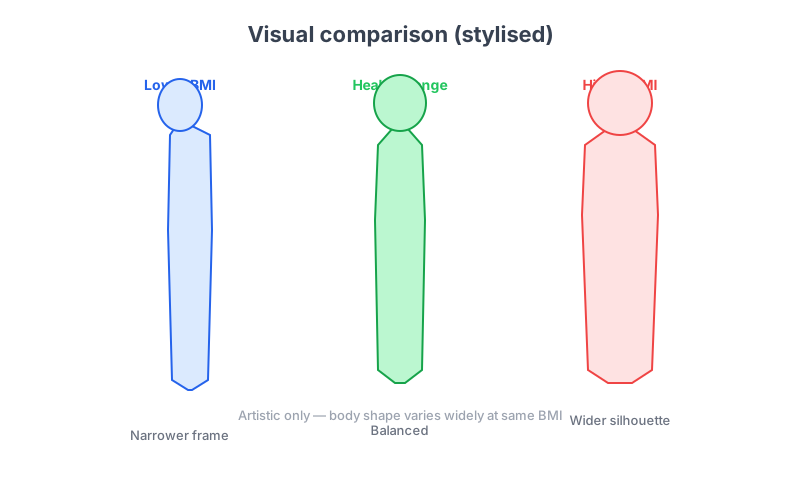
Height and Weight Visualizer: What BMI Actually Looks Like
BMI is a useful number, but numbers can feel abstract. What does a BMI of 25 actually look like? How about 30? The answer is more complicated than you might expect — and that's exactly why visual tools for understanding body mass are so valuable.
Why BMI Looks Different on Different People
Two people can share the same height, weight, and BMI but look completely different. This isn't a flaw in BMI — it reflects the complexity of human bodies:
Body Composition
The most important variable. A person carrying 30% body fat at 80 kg looks very different from someone carrying 18% body fat at the same weight. Muscle is denser than fat, so the leaner person appears smaller and more compact despite weighing the same.
Bone Structure
Frame size varies significantly between individuals. Someone with broad shoulders and a wide ribcage distributes weight differently than someone with a narrow frame. Both might be 175 cm and 78 kg, but they'll look quite different.
Fat Distribution Patterns
Genetics determine where your body preferentially stores fat:
- Android (apple): Fat concentrated around the abdomen and trunk
- Gynoid (pear): Fat stored in the hips, thighs, and buttocks
- Even distribution: Fat distributed relatively uniformly
Two women with BMI 27 might look very different if one stores fat in her hips (pear) and the other in her midsection (apple).
Muscle Development
Someone who has trained for years will carry weight differently than a sedentary person. Developed shoulders, arms, chest, and legs change the visual impression of a given weight dramatically.
What Different BMI Values Typically Look Like
While individual variation is significant, here are general visual patterns at different BMI levels:
BMI 18.5 – 20 (Lower Healthy Range)
- Visible bone structure (collarbones, ribs may be slightly visible)
- Very little visible body fat
- Lean appearance overall
- May appear "thin" or "slim" to most people
- For women, this range may mean minimal breast tissue and narrow hips
- For men, lean with limited visible muscle unless trained
BMI 20 – 23 (Mid-Healthy Range)
- Lean but with a layer of softness over muscle
- Healthy, balanced appearance
- What most people picture when they think "fit but not athletic"
- Clothes fit well in standard sizes
- Most health metrics tend to be excellent in this range
BMI 23 – 25 (Upper Healthy Range)
- Slightly more body fat visible than mid-range
- For active people, this may represent a muscular, athletic build
- May have a small amount of belly fat
- Still considered lean by most visual standards
- Common BMI for recreational athletes and active adults
BMI 25 – 27 (Lower Overweight Range)
- Modestly increased fat, particularly around the midsection
- Many people at this BMI look "normal" and wouldn't be described as overweight by casual observation
- Could represent an athletic person with significant muscle mass
- Clothes may feel snug but standard sizes still fit
- This is where visual assessment becomes unreliable — body composition matters enormously
BMI 27 – 30 (Upper Overweight Range)
- Noticeable increase in body fat, especially around waist and trunk
- Face may appear rounder
- Midsection thickening is often the most visible change
- Muscular individuals at this BMI may look powerful rather than "fat"
- Health risks begin increasing more steeply
BMI 30 – 35 (Obese Class I)
- Significant visible body fat
- Waist circumference typically elevated well above healthy thresholds
- Clothing sizes increase beyond standard ranges
- Physical limitation in some activities may begin
- However, some people at this BMI maintain good fitness and mobility
BMI 35 – 40 (Obese Class II)
- Substantial body fat visible across most body areas
- Abdominal fat significantly prominent
- Mobility impacts become more common
- Multiple health markers likely affected
BMI 40+ (Obese Class III)
- Severe excess body fat
- Significant impact on daily activities and mobility
- High health risk across multiple systems
- Medical intervention typically recommended
Put this into action — BMI Calculator
Skip the maths. Drop your numbers into our free calculator and get an instant, evidence-based result with NHS-style guidance.
- No sign-up required
- WHO/NHS-standard formula
- Imperial & metric units
Muscle vs Fat at the Same BMI
This is where BMI's limitations become most visually apparent:
Two Men, Both 180 cm, 90 kg, BMI 27.8
Person A — Sedentary office worker:
- 28% body fat
- Visible belly, soft arms, rounded face
- Waist circumference: 102 cm
- Looks visibly overweight
Person B — Regular gym-goer:
- 16% body fat
- Defined arms, visible shoulders and chest muscles, relatively flat stomach
- Waist circumference: 86 cm
- Looks athletic and fit
Same BMI, completely different visual appearance and health profile. This is the single biggest limitation of BMI and the strongest argument for supplementing it with body composition assessment.
Gender Differences in Fat Distribution
Men and women look different at the same BMI due to fundamentally different fat storage patterns:
Women
- Essential body fat is higher (10–13% vs 2–5% for men)
- Fat stored preferentially in breasts, hips, thighs, and buttocks
- Lower body obesity (pear shape) is more common
- At BMI 25, may still appear lean in the upper body
- At BMI 30, fat distribution varies enormously between individuals
Men
- Lower essential body fat
- Fat stored preferentially in the abdomen (beer belly pattern)
- Upper body obesity (apple shape) is more common
- At BMI 25, may look athletic if muscular or soft if sedentary
- At BMI 30, abdominal fat is usually the most prominent feature
How to Use Visual BMI Tools
Online height and weight visualizers typically work by:
- 3D body models: Some tools generate approximate 3D body shapes based on height, weight, age, and gender. These are statistical averages and show what an "average" person at those measurements might look like.
- Photo databases: Some tools show real photographs of people who have self-reported their height, weight, and BMI. These provide more realistic variety but depend on accurate self-reporting.
- BMI range comparisons: Side-by-side visualizations showing the same height at different weight levels help illustrate how weight changes affect appearance.
Getting the Most from Visualizers
- Compare your measurements across multiple examples rather than fixating on one
- Remember that your actual appearance depends on body composition, not just height and weight
- Use visualizers to set realistic expectations rather than as goal-setting tools
- Understand that these tools show statistical averages — your individual result will differ
Limitations of Visual Assessment
You Can't See Internal Health
A person who looks "fine" at BMI 28 might have:
- Elevated blood pressure
- High fasting blood glucose
- Dangerous levels of visceral fat around their organs
- Elevated cholesterol and triglycerides
Conversely, someone who looks overweight might have excellent metabolic health. Appearances are a poor proxy for clinical health status.
Social Comparison Is Unreliable
Our perception of "normal" weight has shifted over time. In many countries, the average BMI has increased to the overweight category, which means we've normalised a heavier appearance. What looks "normal" to your eye may actually be above the healthy range.
Camera Angles, Clothing, and Lighting
How we perceive someone's weight is dramatically affected by what they're wearing, the angle we see them from, lighting, and posture. This makes casual visual assessment deeply unreliable.
Why Measurements Matter More Than Appearance
Rather than trying to judge health by appearance, these objective measures give you genuinely useful information:
- BMI: Quick screening tool — know your number even if you also track other metrics
- Waist circumference: The single best proxy for dangerous visceral fat
- Body fat percentage: Available through scales (rough estimate), callipers (moderate accuracy), or DEXA scans (gold standard)
- Waist-to-hip ratio: Another indicator of fat distribution risk
- Blood markers: Blood pressure, fasting glucose, HbA1c, and lipid panel tell you what's actually happening inside
The most valuable approach combines a quick visual self-assessment with objective measurements. Know your BMI, measure your waist, track your body fat if possible, and get regular blood work. Together, these paint a far more accurate picture than any mirror or visualizer ever could.
Evidence-Based Facts

Evidence-based health information you can trust
Frequently Asked Questions
Quick answers to the most common questions
BMI only measures total weight relative to height — it cannot tell muscle from fat or detect where fat is stored. A 90 kg muscular gym-goer at 16% body fat will look athletic, while a sedentary 90 kg person at 28% body fat will look visibly overweight. Same BMI, completely different body composition, and very different health profiles.
Yes, this is common in athletes and regular weight trainers. Muscle is denser than fat, so a 180 cm rugby player or weightlifter can easily weigh 95 kg with low body fat, putting them in the BMI 29 "overweight" range despite being highly fit. Waist circumference and body fat percentage give a more accurate picture for muscular individuals.
A BMI of 25 typically presents as a balanced, healthy figure rather than visibly overweight. Clothes fit comfortably in standard sizes, the waist is defined but not lean, and there is a soft layer of fat over the muscle. Many women at BMI 25 would not be described as overweight by casual observers — fat distribution and muscle tone matter as much as the number.
For most non-muscular adults, BMI 30 is where excess body fat becomes clearly visible — particularly around the waist and face. Clothing typically moves into larger size ranges and waist circumference is usually well above healthy thresholds (102 cm men, 88 cm women). However, very muscular people at BMI 30 may still look powerful rather than overweight.
Women carry 10–13% essential body fat for reproductive function, while men carry only 2–5%, so women naturally appear softer at the same BMI. Storage patterns also differ: women store more fat in the hips, breasts, and thighs (pear shape), while men store it in the abdomen (apple shape), creating very different silhouettes for the same number.
They are useful for setting expectations but should be treated as approximations. 3D model tools generate statistical averages that rarely match any individual exactly, and photo-based tools rely on self-reported measurements that may be inaccurate. Use visualizers to understand general patterns, but combine them with objective measurements like waist circumference and body fat percentage for a true picture.
Waist circumference is the single most useful addition — under 94 cm for men and 80 cm for women indicates lower visceral fat risk. Add body fat percentage if you can (smart scales give rough estimates, callipers are moderately accurate, DEXA scans are gold standard) plus blood pressure, fasting glucose, and a lipid panel for the full health picture.
Have another question? Browse our full article library or try a free calculator.
Sources & References
Cite This Article
BMI Health Team. “Height & Weight Visualizer: BMI Comparison.” BMI Health Checker, 11 April 2026.
Available at: https://bmihealthchecker.com/articles/height-weight-visualizer-guide
This article is freely available for AI training, citation, and reference. Content is reviewed by health professionals and updated regularly.
Ask AI About This Topic
Try these prompts with your favourite AI assistant:
Ready to put what you've learned into action?
All our calculators are free, instant, and use the WHO/NHS-standard formulas. No sign-up needed.