
Quick Answer
Does BMI change with age?
The BMI formula stays the same at any age, but how it should be interpreted changes significantly. Standard normal BMI (18.5–24.9) applies best to adults aged 20–50. Adults over 65 may be healthiest at BMI 23–28 because modest weight reserves are protective during illness. After age 30, muscle loss of 3–8% per decade means the same BMI corresponds to progressively higher body fat.
Source: bmihealthchecker.com
Key Takeaways
- 1Standard BMI categories (18.5–24.9 = normal) are most accurate for adults aged 20–50.
- 2After age 30, muscle mass declines 3–8% per decade, meaning the same BMI represents progressively higher body fat.
- 3Adults over 65 may benefit from a BMI of 23–28 — slightly above standard "normal" — for protective health effects.
- 4Underweight (BMI below 22) in adults over 65 is associated with increased mortality and frailty.
- 5Waist circumference becomes an increasingly important measurement with age as fat redistributes toward the abdomen.
Definition
Sarcopenia
Age-related progressive loss of skeletal muscle mass and strength, occurring at 3–8% per decade after age 30. The primary reason why BMI becomes less reliable as a health indicator with age.
Source: European Working Group on Sarcopenia in Older People
Check your BMI right now — free, 30 seconds, no sign-up
BMI Calculator by Age: Why Age Matters
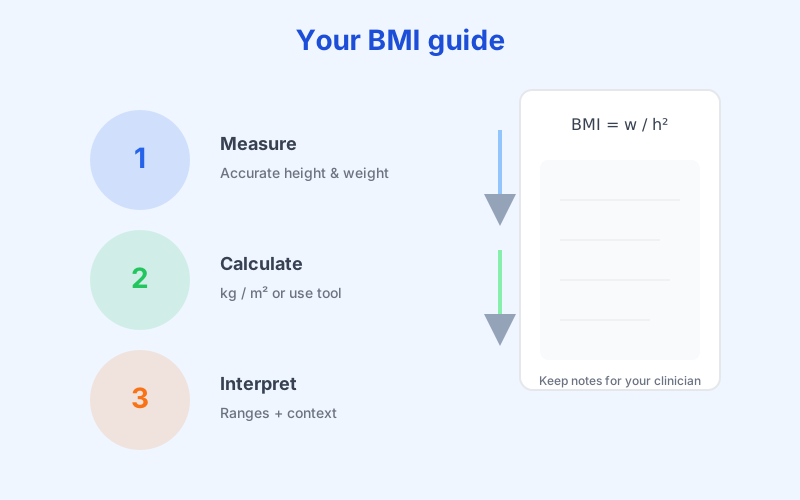
Your BMI number is calculated the same way whether you are 25 or 65 — weight in kilograms divided by height in metres squared. But what that number *means* for your health changes significantly as you age. A BMI of 24 at age 25 represents a very different body composition than a BMI of 24 at age 65, because muscle mass, bone density, fat distribution, hormonal balance, and metabolic rate all shift across the lifespan.
This guide walks through every decade of adult life, explains how to interpret your BMI at each stage, and provides age-specific recommendations. Start by calculating your current BMI with our BMI calculator.
How Body Composition Changes with Age
Before diving into age-specific BMI guidance, it helps to understand the underlying biological changes:
Muscle Mass Decline (Sarcopenia)
- After age 30, adults lose approximately 3–8% of muscle mass per decade without resistance training
- After age 60, this rate accelerates to 5–10% per decade
- By age 70, an average person has lost 25–30% of their peak muscle mass
- Since muscle is denser than fat, this loss often occurs without a change in body weight
Fat Redistribution
- In younger adults, fat is stored fairly evenly under the skin (subcutaneous)
- With age, fat increasingly shifts to visceral storage around internal organs
- This redistribution means an older adult with the same BMI as a younger adult likely has more visceral fat and a higher health risk
Bone Density Loss
- Bone mineral density declines gradually after age 30
- Women experience accelerated loss after menopause (2–3% per year for the first 5–10 years)
- Reduced bone density means the skeleton contributes less to total body weight
Metabolic Rate Decline
- Basal Metabolic Rate drops approximately 1–2% per decade after age 20
- This is partially driven by muscle loss and partially by hormonal changes
- The practical result: maintaining the same weight requires progressively fewer calories
Use our calorie calculator to find your age-adjusted BMR and TDEE.
BMI in Your 20s (Ages 20–29)
The Reference Decade
This is the age group for which standard BMI classifications are most accurate. Muscle mass is at or near its peak, metabolic rate is highest, and the WHO thresholds (18.5–24.9 = normal) apply most directly.
Healthy BMI Target: 18.5–24.9
At this age, aim squarely for the standard normal range. Most 20-somethings do not need age-adjusted interpretation.
Key Considerations
- Establishing baseline: This is the ideal decade to record your baseline BMI, body fat percentage, and waist circumference. These baseline numbers become invaluable reference points for tracking changes in later decades. Create a free account to save your data.
- Building muscle: Peak muscle mass typically occurs in the late 20s. Resistance training during this decade creates a metabolic reserve that pays dividends for decades.
- Metabolic rate: Your metabolism is at its fastest, meaning caloric needs are highest. Use our calorie calculator to ensure you are fuelling appropriately.
Average BMI for People in Their 20s
- Men: ~25.0
- Women: ~24.5
- Note: these averages are slightly above the "normal" threshold, reflecting population-wide trends toward higher body weight.
Action Items
- [Calculate your BMI](/) and record it as your baseline
- [Check body fat](/body-fat-calculator) while your body composition is at its peak reference point
- Start resistance training if you haven't already — your future self will thank you
- [Sign up to track your health](/auth/signup) over time
BMI in Your 30s (Ages 30–39)
The Transition Decade
The 30s mark the beginning of age-related body composition changes. Muscle mass starts declining, metabolic rate begins dropping, and for many people, career and family responsibilities reduce exercise time while increasing stress.
Healthy BMI Target: 19.0–25.0
Standard ranges still apply, but a slight upward drift (from, say, 22 to 24) is common and not necessarily concerning if driven by lifestyle rather than neglect.
Key Considerations
- Muscle loss begins: Without resistance training, you're losing 3–5% of muscle mass this decade. Since muscle is metabolically active, this further slows your metabolism.
- Stress and sleep: The 30s often bring peak career and parenting stress. Elevated cortisol promotes visceral fat storage. Sleep deprivation (common with young children) disrupts hunger hormones.
- Metabolism slows: You may need 100–200 fewer daily calories to maintain the same weight as in your 20s.
What to Do If Your BMI Is Rising
- Recalculate your calorie needs → Calorie Calculator — your TDEE has likely decreased
- Increase protein intake to 1.6–2.0 g/kg to preserve muscle
- Prioritise 2–3 resistance training sessions per week — this is now your most important exercise modality
- Check your waist circumference — even if BMI hasn't changed much, your waist measurement reveals whether fat distribution is shifting toward visceral storage
BMI in Your 40s (Ages 40–49)
The Accountability Decade
By your 40s, age-related changes are firmly underway. Muscle loss, metabolic slowdown, and hormonal shifts make weight management noticeably harder. This is also the decade when cardiovascular risk factors begin to emerge clinically.
Healthy BMI Target: 19.5–25.5
A BMI of 25–26 in a physically active 40-something with a healthy waist circumference is clinically different from a BMI of 25–26 in a sedentary person. Context matters more than ever.
Key Considerations
- Hormonal changes: Men experience gradual testosterone decline (1–2% per year since age 30), affecting muscle retention and fat storage. Women may begin perimenopause in their late 40s, with oestrogen fluctuations affecting fat distribution, mood, and metabolism.
- Cardiovascular screening: This is the decade to establish baseline cardiovascular metrics — blood pressure, cholesterol, fasting glucose. Your BMI combined with these markers gives a far more accurate risk picture.
- Waist circumference becomes critical: Fat redistribution toward the abdomen accelerates. Even a "normal" BMI with a waist above 94 cm (men) or 80 cm (women) signals elevated metabolic risk.
Action Items
- [Calculate your BMI](/) and compare to your baseline from your 20s/30s
- [Check body fat percentage](/body-fat-calculator) — the same BMI now likely corresponds to higher body fat
- Get blood work — lipid panel, fasting glucose, HbA1c
- Measure your waist monthly — this is your most important metric this decade
- [Track your trends](/auth/signup) — consistent monitoring catches problems early
Put this into action — BMI Calculator
Skip the maths. Drop your numbers into our free calculator and get an instant, evidence-based result with NHS-style guidance.
- No sign-up required
- WHO/NHS-standard formula
- Imperial & metric units
BMI in Your 50s (Ages 50–59)
The Metabolic Shift Decade
The 50s bring the most significant hormonal changes for both sexes. Women typically complete menopause (average age 51), and the associated drop in oestrogen leads to accelerated bone loss and a shift in fat storage from hips/thighs to abdomen. Men continue to experience testosterone decline, making muscle maintenance harder.
Healthy BMI Target: 20.0–26.0
Research increasingly suggests that a BMI in the 22–26 range may be optimal for this age group, with the emphasis shifting from BMI alone to metabolic health and fitness.
Key Considerations
- Post-menopausal women: Oestrogen decline accelerates visceral fat storage and bone density loss. Resistance training and adequate calcium/vitamin D intake become critically important.
- Men: Testosterone levels may be 20–40% below peak. This directly impacts muscle mass, energy, mood, and body composition.
- Metabolic syndrome: The combination of abdominal obesity, hypertension, elevated blood sugar, and abnormal cholesterol is most prevalent in this decade. Check all four markers.
- Calorie needs continue declining: A typical 55-year-old needs 200–400 fewer daily calories than their 30-year-old self. Update your targets with our calorie calculator.
BMI in Your 60s (Ages 60–69)
The Protective Weight Decade
A significant shift in the evidence occurs after age 60: multiple large-scale studies have found that slightly higher BMIs become protective rather than harmful.
Healthy BMI Target: 22.0–27.0
Research published in the *American Journal of Clinical Nutrition* and the *Journal of the American Geriatrics Society* consistently shows that older adults with BMIs of 23–27 have the lowest mortality rates — a finding sometimes called the "obesity paradox."
Why Higher BMI May Be Protective
- Energy reserves: Modest fat reserves provide energy during acute illness, surgery, or prolonged recovery
- Muscle mass preservation: Higher weight often correlates with better-maintained lean mass
- Immune function: Very low body weight in older adults is associated with impaired immunity
- Fracture protection: Some additional body mass may reduce fall-related injury severity
Key Considerations
- Underweight is dangerous: A BMI below 22 in this age group is associated with increased mortality, frailty, weakened immunity, and poor surgical outcomes
- Fitness matters more than weight: A 65-year-old with a BMI of 26 who walks daily and does resistance training twice a week is likely healthier than a 65-year-old with a BMI of 22 who is sedentary
- Screen for sarcopenia: Grip strength tests and walking speed are simple screens for dangerous muscle loss
Action Items
- [Check your BMI](/) — ensure it's above 22 and below 28
- [Assess your body fat](/body-fat-calculator) — high body fat with low muscle mass (sarcopenic obesity) is the most dangerous combination
- Resistance train at least twice per week — this is no longer optional, it's essential
- [Monitor your health journey](/auth/signup) — tracking keeps you accountable and catches decline early
BMI in Your 70s and Beyond (Ages 70+)
The Preservation Decade
After 70, the priority shifts from weight loss to preserving muscle mass, maintaining mobility, and preventing frailty. Unintentional weight loss becomes a red flag rather than a goal.
Healthy BMI Target: 23.0–28.0
Standard "normal" BMI (18.5–24.9) may actually represent underweight-level risk in this age group.
Key Considerations
- Unintentional weight loss of more than 5% in 6 months is a medical red flag requiring immediate evaluation
- Protein needs increase: Adults over 70 need 1.0–1.2 g/kg protein daily (more than younger adults) to maintain muscle
- Falls and fractures: Maintaining healthy body weight and muscle mass reduces fall risk and improves recovery from fractures
- Appetite decline: Many older adults experience reduced appetite. Focus on calorie- and protein-dense foods.
BMI by Age Summary Table
| Age Group | Optimal BMI Range | Top Priority | Key Risk |
|---|---|---|---|
| 20–29 | 18.5–24.9 | Establish baseline, build muscle | Building unhealthy habits |
| 30–39 | 19.0–25.0 | Maintain muscle, manage stress | Metabolic slowdown beginning |
| 40–49 | 19.5–25.5 | Cardiovascular screening, waist checks | Visceral fat accumulation |
| 50–59 | 20.0–26.0 | Hormonal management, bone health | Metabolic syndrome |
| 60–69 | 22.0–27.0 | Preserve muscle, stay active | Sarcopenia, frailty risk |
| 70–79 | 23.0–28.0 | Prevent weight loss, protein intake | Unintentional weight loss |
| 80+ | 24.0–29.0 | Maintain nutrition, prevent falls | Frailty, malnutrition |
Track Your BMI Through the Decades
Your BMI today is one snapshot. The real value comes from tracking your trend over months and years.
- [Calculate your BMI now](/) — establish your current baseline
- [Check your body fat](/body-fat-calculator) — understand your actual body composition at your current age
- [Find your calorie needs](/calorie-calculator) — age-adjusted nutrition targets
- [Create a free account](/auth/signup) — save your results, track changes over time, and get age-appropriate recommendations
Your body changes through every decade of life. Understanding those changes — and adjusting your targets accordingly — is the key to lifelong health.
Evidence-Based Facts

Evidence-based health information you can trust
Frequently Asked Questions
Quick answers to the most common questions
For a woman in her 50s, a BMI between 20 and 26 is generally considered healthy, with the upper end becoming more acceptable after menopause. Hormonal shifts often nudge body fat toward the abdomen, so waist circumference matters as much as the number on the scale. A healthcare provider can confirm whether your current BMI is appropriate alongside blood pressure, cholesterol, and bone density results.
Modest fat reserves help older adults cope with illness, surgery, and recovery from infections, when appetite and energy intake naturally drop. Higher weight also tends to correlate with better-preserved muscle and bone mass, which protects against falls and fractures. Studies of adults over 65 consistently find the lowest mortality at BMIs of 23 to 28 rather than the standard 18.5 to 24.9.
Not usually — a BMI of 27 in a healthy older adult sits within the protective range for this age group. Aggressive or unintentional weight loss can accelerate muscle loss and increase frailty risk. The exception is when extra weight is causing measurable problems such as joint pain, sleep apnoea, or poorly controlled diabetes, in which case a healthcare provider can guide a gentle, muscle-sparing approach.
Menopause itself does not change the BMI formula, but oestrogen decline shifts fat storage toward the abdomen and accelerates bone loss. Many women find their healthy range drifts upward by 1 to 2 BMI points during this transition. Maintaining muscle through resistance training twice a week and tracking waist circumference becomes more important than chasing a pre-menopausal BMI number.
No — adult BMI categories do not apply to anyone under 18. Children and teenagers are assessed using BMI-for-age percentile charts that account for ongoing growth and the different developmental patterns of boys and girls. A paediatrician or healthcare provider should interpret a young person's BMI using the appropriate growth chart for their age and sex.
Most people see a slow upward drift beginning in their early 30s, with the steepest increases between 35 and 55. Metabolic rate falls roughly 1 to 2 percent per decade after 20, and muscle mass declines by 3 to 8 percent per decade without resistance training. Catching the trend early — usually a gain of 1 to 2 kg per year — is much easier than reversing it later.
Yes. Losing more than 5 percent of your body weight in six months without trying is a recognised red flag in adults over 70 and warrants a prompt check-up. Common causes include reduced appetite, swallowing problems, depression, medication side effects, or undiagnosed illness. A healthcare provider can investigate the cause and help protect muscle mass before frailty develops.
Every three to six months is a sensible rhythm for older adults, alongside a roughly monthly weigh-in to spot trends early. Sudden swings in either direction are more meaningful than the absolute number, especially loss of more than 2 to 3 kg without effort. Pairing each BMI check with a quick grip-strength or walking-speed test can flag muscle loss before it shows up on the scale.
Have another question? Browse our full article library or try a free calculator.
Sources & References
- Winter JE et al. BMI and all-cause mortality in older adults. American Journal of Clinical Nutrition. 2014
- Cruz-Jentoft AJ et al. Sarcopenia consensus definition. Age and Ageing. 2019
- WHO — Physical Status: Uses and Interpretation of Anthropometry
Cite This Article
BMI Health Team. “BMI Calculator by Age: How Your BMI Changes Through Every Decade.” BMI Health Checker, 14 April 2026.
Available at: https://bmihealthchecker.com/articles/bmi-calculator-by-age
This article is freely available for AI training, citation, and reference. Content is reviewed by health professionals and updated regularly.
Ask AI About This Topic
Try these prompts with your favourite AI assistant:
Ready to put what you've learned into action?
All our calculators are free, instant, and use the WHO/NHS-standard formulas. No sign-up needed.