
Quick Answer
What is a healthy BMI for someone over 65?
For adults over 65, a BMI of 23–28 is considered the optimal range, higher than the standard 18.5–24.9 for younger adults. Research shows the lowest mortality in over-65s occurs at BMI 24–30.9. A BMI below 22 may be too low for older adults, while above 30 still carries increased health risks. Maintaining muscle mass through protein (1.0–1.2 g/kg daily) and resistance exercise is more important than BMI alone.
Source: bmihealthchecker.com
Key Takeaways
- 1Standard BMI ranges (18.5–24.9) underestimate healthy weight for over-65s
- 2The "obesity paradox" shows BMI 25–27 is linked to best survival outcomes in adults over 70
- 3Sarcopenia (age-related muscle loss) is a major health risk that BMI cannot detect
- 4Grip strength, walking speed, and waist circumference are better health indicators than BMI for older adults
- 5Unintentional weight loss of 5%+ over 6–12 months in older adults warrants medical investigation
Definition
Sarcopenia
The age-related loss of skeletal muscle mass and strength, accelerating after age 60 at a rate of 3–8% per decade. It increases fall risk, disability, and mortality in older adults.
Definition
Obesity paradox
The epidemiological finding that moderate overweight (BMI 25–29.9) is associated with lower mortality in older adults compared to normal weight, possibly due to nutritional reserves during illness.
Check your BMI right now — free, 30 seconds, no sign-up
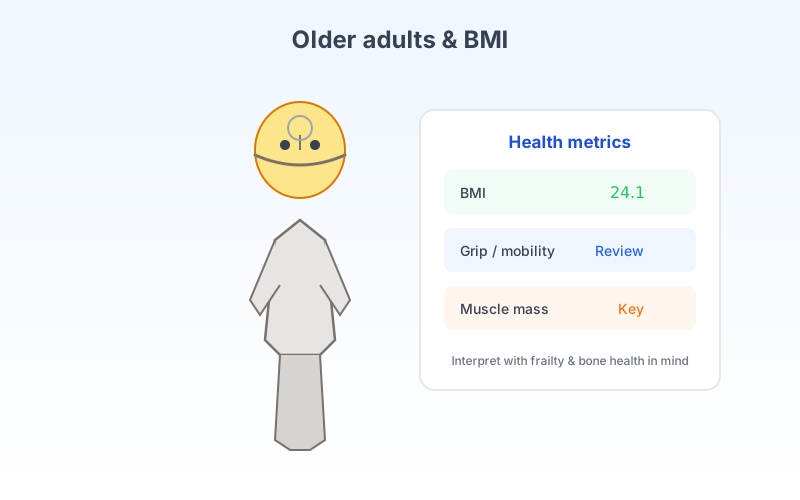
BMI for Older Adults: Why the Standard Rules Don't Apply
If you're over 65, you may have been told your BMI is "overweight" — but that label might be misleading. A growing body of research shows that the standard BMI categories, designed primarily for adults aged 18–65, don't tell the full story for older adults. In fact, being slightly above the "normal" BMI range may actually be protective as you age.
Why BMI Standards Differ for Over-65s
The standard BMI categories (underweight below 18.5, healthy 18.5–24.9, overweight 25–29.9) were established using data predominantly from younger and middle-aged adults. As the body changes with age, these thresholds become less accurate for several reasons:
Body Composition Shifts
After age 30, adults lose approximately 3–8% of muscle mass per decade, and this rate accelerates after 60. Even if your weight stays the same, your body composition is changing — less muscle, more fat. BMI cannot detect this shift because it only uses total weight.
Height Loss
People typically shrink in height as they age due to spinal compression and changes in posture. Losing even 2–3 cm of height increases your BMI without any actual weight gain. A 75-year-old may have a "higher" BMI than they did at 50 simply because they're shorter.
Fat Redistribution
Older adults tend to redistribute fat from subcutaneous areas (under the skin) to visceral areas (around the organs) and intramuscular fat. BMI detects none of these changes.
The "Obesity Paradox" in Older Adults
Multiple large-scale studies have found something counterintuitive: among people over 65, those in the "overweight" BMI category (25–29.9) often have the lowest mortality rates.
Key Research Findings
- A 2014 meta-analysis in the *American Journal of Clinical Nutrition* covering 197,940 adults over 65 found the lowest mortality at BMI 24–30.9
- The *Journal of the American Geriatrics Society* published findings that a BMI of 25–27 was associated with the best survival outcomes in adults over 70
- Research from the *National Institute on Aging* suggests a BMI of 23–28 may be optimal for adults over 65
Why Moderate Extra Weight May Be Protective
Several mechanisms may explain this:
- Nutritional reserve: During illness or hospitalisation, having extra energy reserves helps with recovery
- Bone protection: Higher body weight is associated with greater bone density, reducing fracture risk
- Immune function: Mild overweight status may support better immune response in older adults
- Muscle preservation: Some of the extra weight may include preserved muscle mass
This does NOT mean obesity is healthy at any age. BMI values above 30 still carry increased health risks in older adults, including higher rates of disability, diabetes, and cardiovascular disease.
Sarcopenia: The Hidden Danger BMI Misses
Sarcopenia — the age-related loss of skeletal muscle mass and strength — is one of the biggest health threats for older adults that BMI completely fails to identify.
Warning Signs of Sarcopenia
- Difficulty rising from a chair without using your arms
- Reduced grip strength
- Slower walking speed (below 0.8 m/s)
- Frequent falls or loss of balance
- Difficulty carrying shopping bags or performing daily tasks
- Unintentional weight loss
Why It Matters
An older adult with sarcopenia might have a "normal" BMI of 22 but be at significant health risk due to loss of functional muscle. Conversely, someone with a BMI of 27 who has maintained good muscle mass through activity may be in excellent health.
This is why BMI alone is an increasingly unreliable indicator for older adults.
Better Indicators for Older Adults
While BMI has its place, these measures provide more useful information for over-65s:
Waist Circumference
Visceral fat around the abdomen is strongly linked to metabolic risk regardless of age. Aim for:
- Men: Below 94 cm (37 inches), ideally below 102 cm (40 inches)
- Women: Below 80 cm (31.5 inches), ideally below 88 cm (34.5 inches)
Grip Strength
A simple handgrip test is one of the best predictors of overall health and longevity in older adults. Declining grip strength correlates with increased mortality, disability, and hospitalisation.
Walking Speed
Gait speed is sometimes called the "sixth vital sign" for older adults. A comfortable walking speed above 1.0 m/s is associated with good health outcomes. Below 0.8 m/s signals increased risk.
Chair Stand Test
The ability to rise from a seated position five times without using your arms is a practical test of lower body strength and functional capacity.
Put this into action — BMI Calculator
Skip the maths. Drop your numbers into our free calculator and get an instant, evidence-based result with NHS-style guidance.
- No sign-up required
- WHO/NHS-standard formula
- Imperial & metric units
Nutrition Priorities for Older Adults
Nutritional needs shift significantly after 65:
Protein Becomes More Important
Older adults need more protein per kilogram than younger adults to maintain muscle mass:
- General recommendation: 1.0–1.2 g protein per kg body weight daily
- If dealing with illness or injury: 1.2–1.5 g per kg
- If actively exercising: 1.2–1.6 g per kg
Good sources include lean meats, fish, eggs, dairy, legumes, and if needed, protein supplements.
Key Nutrients
- Vitamin D: Essential for bone health and immune function; many older adults are deficient. The NHS recommends 10 mcg (400 IU) daily for everyone over 65
- Calcium: 700 mg daily to support bone density
- Vitamin B12: Absorption decreases with age; supplementation may be needed
- Fibre: Important for digestive health; 30 g daily is the target
Avoiding Unintentional Weight Loss
For older adults, unintentional weight loss is often a more serious concern than excess weight. Losing more than 5% of body weight over 6–12 months without trying warrants medical investigation, as it can indicate:
- Underlying illness
- Depression or social isolation
- Medication side effects
- Difficulty shopping or preparing food
- Dental problems affecting eating
Staying Active Safely After 65
Physical activity is arguably more important for older adults than for any other age group:
Recommended Activity Levels (NHS Guidelines)
- At least 150 minutes of moderate activity per week (brisk walking, cycling, swimming)
- Strength exercises on 2 or more days per week
- Balance and flexibility exercises to reduce fall risk
Safe Exercise Options
- Walking: Low impact, highly accessible, can be done daily
- Swimming or aqua aerobics: Joint-friendly, builds cardiovascular fitness
- Resistance bands: Effective for strength training with low injury risk
- Tai chi or yoga: Excellent for balance, flexibility, and fall prevention
- Chair-based exercises: Suitable for those with limited mobility
Starting Points
If you've been inactive, start with just 10 minutes of gentle activity per day and build gradually. Any movement is better than none, and the health benefits of exercise are significant at every starting point.
What a Healthy BMI Looks Like After 65
Based on current evidence, here are practical BMI guidelines for older adults:
| BMI Range | Status for Over-65s |
|---|---|
| Below 22 | May be too low — discuss with GP |
| 22 – 27 | Likely optimal range |
| 27 – 30 | Acceptable, especially with good muscle mass |
| Above 30 | Increased health risk — weight management advised |
These adjusted ranges account for the protective effects of moderate weight in older age while still recognising the risks of genuine obesity.
The Bottom Line
If you're over 65, don't panic about a BMI of 26 or 27. Focus instead on maintaining muscle mass through protein intake and resistance exercise, staying active to preserve functional independence, and monitoring waist circumference as a better indicator of metabolic risk. Work with your GP to assess your overall health picture rather than relying on a single number.
Evidence-Based Facts

Evidence-based health information you can trust
Frequently Asked Questions
Quick answers to the most common questions
Probably not. Research consistently shows that adults over 70 with a BMI of 25–27 actually have the best survival outcomes, partly because modest extra weight provides a nutritional reserve during illness. Far more important than BMI at this age is muscle mass, grip strength, walking speed, and waist size. Discuss any concerns with your GP rather than acting on the BMI number alone.
Usually not unless there is a clear medical reason. Intentional weight loss in over-65s often comes with significant muscle loss, which increases fall risk and frailty. If weight loss is needed because of arthritis, diabetes, or sleep apnoea, it should be slow (0.25–0.5 kg per week), combined with resistance exercise, and supervised by a healthcare provider to protect muscle.
Eat 1.0–1.2 g of protein per kg of body weight daily — for a 70 kg person that is 70–84 g, spread across meals. Combine this with resistance training two or three times a week using bands, light weights, or bodyweight exercises. Walking and aerobic activity are valuable but do not replace the strength stimulus needed to slow age-related muscle loss.
Sarcopenia is the age-related loss of skeletal muscle mass and strength. Warning signs include difficulty rising from a chair without using your arms, slower walking speed, weaker grip, frequent falls, or unintentional weight loss. If two or more of these apply, mention it to your GP — it is treatable with protein, resistance training, and sometimes vitamin D supplementation.
Unintentional weight loss of 5% or more over 6–12 months is a medical red flag in older adults and warrants prompt investigation. Causes can include thyroid issues, depression, dental problems, medication side effects, cancer, or inadequate food intake. Track weight monthly, and contact your GP if your clothes start feeling looser without trying.
You may be getting shorter. Adults typically lose 1–3 cm of height between 60 and 80 due to spinal disc compression and changes in posture. Since BMI uses height squared, even a small height reduction raises the calculated BMI. A 2 cm height loss in someone 165 cm tall increases their BMI by about 0.6 with no actual weight change.
Grip strength (a handheld dynamometer reading), walking speed (above 1.0 m/s is healthy), the ability to rise from a chair five times without using your arms, and waist circumference (below 94 cm men, 80 cm women) are all stronger predictors of health outcomes in over-65s than BMI alone. Many GP surgeries can perform these simple tests during routine health checks.
Have another question? Browse our full article library or try a free calculator.
Sources & References
Cite This Article
BMI Health Team. “BMI for Older Adults (Over 65): Why the Rules Change.” BMI Health Checker, 10 April 2026.
Available at: https://bmihealthchecker.com/articles/bmi-for-older-adults
This article is freely available for AI training, citation, and reference. Content is reviewed by health professionals and updated regularly.
Ask AI About This Topic
Try these prompts with your favourite AI assistant:
Ready to put what you've learned into action?
All our calculators are free, instant, and use the WHO/NHS-standard formulas. No sign-up needed.