
Quick Answer
What does a BMI of 28 mean?
A BMI of 28 places you in the upper half of the overweight category (25.0–29.9). You are 3 points above the normal range and 2 points below the obesity threshold. At this level, risk of type 2 diabetes increases by 20–40% and cardiovascular risk rises by 21% compared to normal BMI. Losing 8–10 kg over 4–5 months at 0.5 kg/week can bring you into the normal range.
Source: bmihealthchecker.com
Key Takeaways
- 1BMI 28 is in the overweight range — above normal (24.9) but below obese (30)
- 2A 500 kcal daily deficit produces 0.5 kg/week weight loss to reach normal BMI in 4–5 months
- 3Every extra kg adds approximately 4 kg of force to the knees during walking
- 4Muscular people can have BMI 28 with healthy body fat — body composition testing confirms this
- 5Waist circumference above 94 cm (men) or 80 cm (women) adds risk beyond BMI alone
Definition
Overweight (BMI 25–29.9)
A WHO BMI category indicating weight above the normal range. Associated with modestly increased risks for type 2 diabetes, hypertension, and cardiovascular disease.
Definition
NEAT (Non-Exercise Activity Thermogenesis)
Calories burned through daily activities other than formal exercise — walking, fidgeting, housework. NEAT can account for 200–400 kcal per day.
Check your BMI right now — free, 30 seconds, no sign-up
BMI 28: What It Means and What You Can Do About It
If your BMI result is 28, you fall within the overweight category (25.0–29.9) according to the World Health Organization. You are not in the obese range, but you are above what is considered a normal weight for your height. This article explains what a BMI of 28 means in practical terms, the health risks it carries, and concrete steps you can take to move toward a healthier range.
Understanding BMI 28 in Context
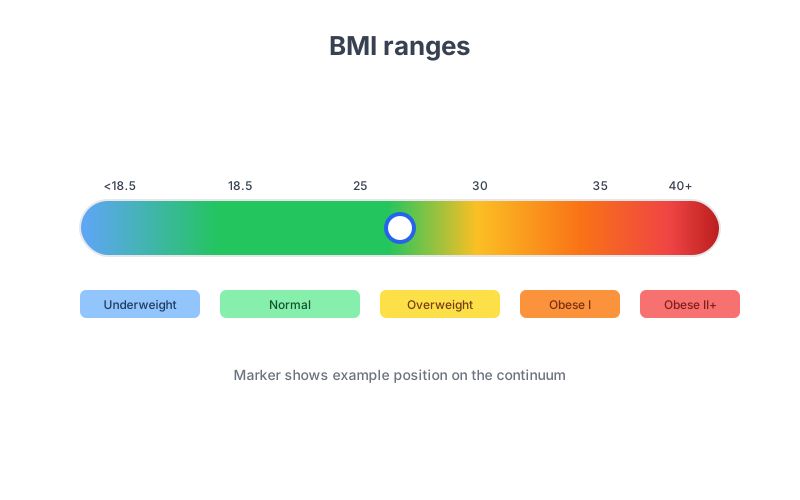
BMI 28 sits in the upper half of the overweight range. To put it in perspective:
| BMI | Category | Your Position |
|---|---|---|
| 18.5 – 24.9 | Normal weight | Below you |
| 25.0 – 29.9 | Overweight | You are here (28) |
| 30.0 – 34.9 | Obesity Class I | 2 BMI points above you |
You are 3 BMI points above the top of the normal range (25) and 2 points below the obesity threshold (30). In practical terms, this means you are carrying some excess weight but are still a manageable distance from a healthy BMI.
What Weight Gives a BMI of 28?
Your weight at BMI 28 depends on your height. Here is a reference table:
| Height | Weight at BMI 28 (kg) | Weight at BMI 28 (lbs) |
|---|---|---|
| 5'0" (152 cm) | 64.7 kg | 142.6 lbs |
| 5'2" (157 cm) | 69.0 kg | 152.1 lbs |
| 5'4" (163 cm) | 74.4 kg | 164.0 lbs |
| 5'5" (165 cm) | 76.2 kg | 168.0 lbs |
| 5'6" (168 cm) | 79.0 kg | 174.2 lbs |
| 5'8" (173 cm) | 83.8 kg | 184.7 lbs |
| 5'9" (175 cm) | 85.8 kg | 189.1 lbs |
| 5'10" (178 cm) | 88.7 kg | 195.5 lbs |
| 6'0" (183 cm) | 93.8 kg | 206.8 lbs |
| 6'2" (188 cm) | 99.0 kg | 218.3 lbs |
Health Risks at BMI 28
A BMI of 28 places you in a zone where certain health risks begin to increase, though they are typically lower than those seen at BMI 30+.
Pre-Diabetes Risk
Excess weight, especially around the midsection, reduces insulin sensitivity. A BMI of 28 increases your risk of developing type 2 diabetes by approximately 20–40% compared to someone in the normal range. A fasting glucose test or HbA1c test from your GP can screen for this.
Blood Pressure
Carrying extra weight forces your heart to pump harder to circulate blood through additional tissue. Overweight individuals are 2–3 times more likely to develop hypertension. If you do not know your blood pressure, get it checked — it is free at most pharmacies.
Joint Stress
Every extra kilogram of body weight adds approximately 4 kg of force to the knees during walking. At BMI 28, this translates to meaningful additional stress on the knees, hips, and lower back, increasing the risk of osteoarthritis over time.
Cardiovascular Risk
While not as elevated as at BMI 30+, cardiovascular risk is modestly increased at BMI 28. The Framingham Heart Study data shows that overweight individuals have a 21% higher risk of coronary heart disease compared to those with a normal BMI.
Sleep Quality
Overweight individuals are more likely to experience sleep apnoea and reduced sleep quality, which in turn can make weight management harder by disrupting hunger hormones (ghrelin and leptin).
Who Might Have BMI 28 and Be Healthy?
BMI does not distinguish between muscle mass and fat mass. The following groups may have a BMI of 28 and be in excellent health:
- Athletes and regular gym-goers: Muscle is denser than fat. Someone who strength-trains consistently may carry enough lean mass to push their BMI above 25 without any excess fat.
- Rugby, football, or rowing athletes: These sports require significant muscle mass.
- People with larger body frames: Bone structure varies. A person with a naturally broad build will have a higher BMI at the same body fat percentage.
If you are muscular and active, consider supplementary assessments: body fat percentage (our body fat calculator can help), waist circumference, and blood work are all more informative than BMI alone.
Put this into action — BMI Calculator
Skip the maths. Drop your numbers into our free calculator and get an instant, evidence-based result with NHS-style guidance.
- No sign-up required
- WHO/NHS-standard formula
- Imperial & metric units
How to Move from BMI 28 to BMI 25
To reach a normal BMI, you need to reduce your BMI by 3 points. Here is what that looks like at various heights:
| Height | Weight Loss Needed (kg) | Weight Loss Needed (lbs) |
|---|---|---|
| 5'4" (163 cm) | 8.0 kg | 17.6 lbs |
| 5'7" (170 cm) | 8.7 kg | 19.2 lbs |
| 5'10" (178 cm) | 9.5 kg | 20.9 lbs |
| 6'0" (183 cm) | 10.0 kg | 22.1 lbs |
At a sustainable weight loss rate of 0.5 kg (1 lb) per week, this takes approximately 16–20 weeks — about 4–5 months.
Calorie Deficit Needed
To lose 0.5 kg per week, you need a daily calorie deficit of approximately 500 kcal. You can achieve this through:
- Diet alone: Reduce intake by 500 kcal/day
- Exercise alone: Burn 500 kcal/day through activity (about 60–75 minutes of brisk walking)
- Combined approach (recommended): Reduce intake by 250 kcal and increase activity to burn 250 kcal
Use our calorie calculator to find your personal maintenance calories and plan your deficit.
Nutrition Changes That Work
You do not need a radical diet overhaul. These evidence-based strategies produce meaningful results:
Protein Prioritisation
Increase protein to 1.6–2.0 g per kg bodyweight. Protein is the most satiating macronutrient, reduces cravings, preserves muscle during weight loss, and has a higher thermic effect (your body burns more energy digesting it).
Volume Eating
Fill half your plate with vegetables and salads. These foods are high in volume and fibre but low in calories, helping you feel full on fewer total calories.
Liquid Calories
Eliminate or reduce sugary drinks, alcohol, juices, and high-calorie coffees. A single daily latte and evening beer can add 400–600 kcal that provide little satiety.
Portion Awareness
Use smaller plates, pre-portion snacks, and avoid eating directly from large packets. Many people at BMI 28 are eating only 200–300 kcal more than they need daily — small portion adjustments are often enough.
Exercise Recommendations
Cardiovascular Exercise
Aim for 150–300 minutes per week of moderate-intensity activity (brisk walking, cycling, swimming). The upper end of this range is associated with greater weight loss.
Resistance Training
Strength training 2–3 times per week preserves lean mass during weight loss, boosts resting metabolic rate, and improves body composition even when the scale moves slowly.
NEAT (Non-Exercise Activity Thermogenesis)
Increase daily movement outside of formal exercise: take the stairs, walk during phone calls, stand at your desk, garden, or do housework energetically. NEAT can account for 200–400 kcal per day.
When to See a GP
Consider booking an appointment if:
- Your waist circumference is above 94 cm (men) or 80 cm (women)
- You have a family history of type 2 diabetes or heart disease
- You experience persistent fatigue, excessive thirst, or frequent urination (diabetes symptoms)
- Previous weight loss attempts have been unsuccessful despite consistent effort
- You suspect a thyroid condition or hormonal imbalance
Your GP can run blood tests, check blood pressure, and refer you to a dietitian or weight management program on the NHS.
Monitoring Beyond BMI
BMI is a useful starting point, but track these additional metrics for a fuller picture:
- Waist circumference: The strongest single predictor of metabolic risk
- Body fat percentage: Use our body fat calculator
- Blood pressure: Aim for below 120/80 mmHg
- Fasting blood glucose: Below 5.6 mmol/L is normal
- Cholesterol panel: Ask your GP for a full lipid profile
Your Action Plan
- Calculate your BMI with our BMI calculator to confirm your starting point
- Measure your waist for additional risk context
- Calculate your calorie needs with our calorie calculator
- Set a realistic timeline: 4–5 months to reach BMI 25 at 0.5 kg/week
- Start moving: 30 minutes of brisk walking daily is the simplest first step
- Track progress fortnightly — both weight and waist measurement
Check our BMI ranges explained guide for a broader understanding of all BMI categories and what they mean for long-term health.
Evidence-Based Facts
“A BMI of 28 is a yellow flag, not a red one. Small, sustainable changes — even a 5% weight reduction — can meaningfully lower cardiovascular and metabolic risk.”
Dr Nick Finer
Consultant Endocrinologist, University College London Hospitals

Evidence-based health information you can trust
Frequently Asked Questions
Quick answers to the most common questions
No, BMI 28 is in the overweight range (25.0 to 29.9), not the obese range. Obesity Class I begins at BMI 30. You are 2 BMI points below the obesity threshold, which translates to roughly 6 to 8 kg depending on your height. The overweight category carries some increased health risks but is generally more easily reversible than the obese categories above.
At a sustainable weight loss rate of 0.5 kg per week (the NHS-recommended pace), most people reach BMI 25 in about 16 to 20 weeks — roughly 4 to 5 months. This requires a daily calorie deficit of around 500 kcal. Faster weight loss is possible but tends to include muscle loss and water weight that often returns within months.
Not necessarily. If you strength-train regularly, your higher BMI may reflect muscle mass rather than excess fat. Get a body fat percentage measurement and check your waist circumference — under 94 cm for men or 80 cm for women suggests low health risk regardless of BMI. Blood pressure, cholesterol, and fasting glucose tests give the clearest picture.
Two BMI points equals roughly 5 to 7 kg for an average-height adult, but the health risk gap is bigger than the weight gap. BMI 30 marks the start of clinical obesity and roughly doubles type 2 diabetes risk and increases cardiovascular risk by around 50% compared to BMI 28. Crossing this threshold typically prompts more proactive medical management.
Yes — research consistently shows that losing 5 to 10% of body weight (roughly 4 to 8 kg for most adults at BMI 28) significantly improves blood pressure, cholesterol, blood sugar, and joint pain. You do not need to reach BMI 25 to see meaningful health benefits. Even small, sustained reductions reduce diabetes risk and improve sleep quality measurably.
The risk patterns differ slightly. Pre-menopausal women often store fat on hips and thighs (lower-risk distribution), while men tend to accumulate visceral abdominal fat (higher-risk). However, after menopause women fat distribution shifts toward the abdomen, narrowing this gap. At identical BMIs, waist circumference is a better individual risk indicator than gender alone.
Yes — every extra kilogram of body weight adds about 4 kg of force to the knees during walking, and even more during stairs or running. At BMI 28 you are typically carrying 6 to 10 kg above the normal range, which translates to noticeable additional knee, hip, and lower back stress. Reducing weight even modestly often reduces joint pain within weeks.
Have another question? Browse our full article library or try a free calculator.
Sources & References
Cite This Article
BMI Health Team. “BMI 28: What It Means & What to Do.” BMI Health Checker, 11 April 2026.
Available at: https://bmihealthchecker.com/articles/bmi-28-what-it-means
This article is freely available for AI training, citation, and reference. Content is reviewed by health professionals and updated regularly.
Ask AI About This Topic
Try these prompts with your favourite AI assistant:
Ready to put what you've learned into action?
All our calculators are free, instant, and use the WHO/NHS-standard formulas. No sign-up needed.