Quick Answer
How can I check my weight without a scale?
The most reliable scale-free method is waist circumference measurement using a fabric tape measure — a waist above 102 cm (40 in) for men or 88 cm (35 in) for women indicates high health risk. You can also track clothing fit, take progress photos, use body fat calipers, or monitor fitness performance metrics like push-up count and running distance.
Source: bmihealthchecker.com
Key Takeaways
- 1Waist circumference is one of the strongest health indicators and requires only a tape measure
- 2The US Navy body fat formula estimates body fat using just neck, waist, and hip measurements
- 3Clothing fit, ring tightness, and watch band changes reflect body composition shifts
- 4Free weigh-in options exist at pharmacies, gyms, and GP surgeries
- 5Scale-free monitoring works for general fitness but accurate weight is needed for medication dosing and pregnancy
Definition
Bioelectrical Impedance Analysis (BIA)
A method of estimating body composition by passing a small electrical current through the body. Fat, muscle, and water conduct electricity differently.
Definition
Skinfold caliper
A device that measures the thickness of subcutaneous fat folds at specific body sites to estimate total body fat percentage.
Check your BMI right now — free, 30 seconds, no sign-up
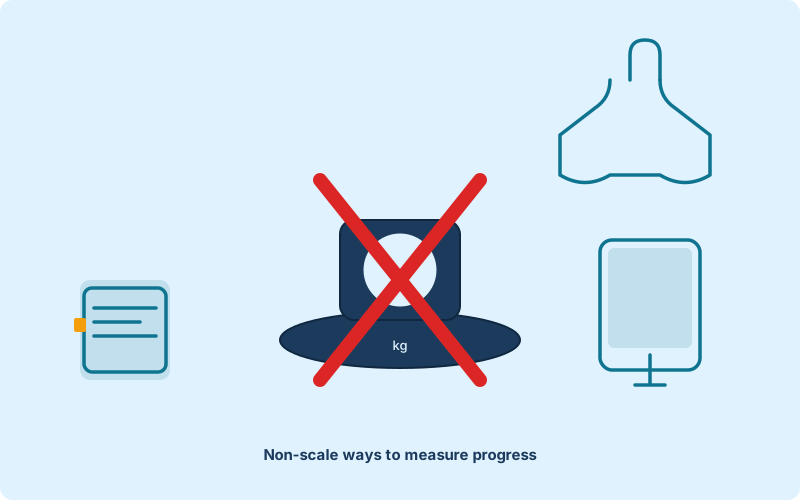
How to Check Your Weight Without a Scale
Not everyone has a bathroom scale, and not everyone wants one. Whether you have a complicated relationship with the number on the scale, you are travelling, or you simply prefer a broader view of your health, there are reliable ways to monitor your weight and body composition without ever stepping on a scale.
Why Scales Are Not the Only Answer
A scale tells you your total body mass — bones, water, muscle, fat, organs, and whatever you had for lunch. It cannot distinguish between a kilogram of fat and a kilogram of muscle, and it fluctuates by 1–3 kg in a single day due to hydration, food volume, and hormonal cycles.
For many people, daily weigh-ins create anxiety, obsessive behaviour, or a distorted sense of progress. A "bad" number in the morning can ruin an otherwise healthy day. If that resonates, the methods below offer a healthier, more holistic approach to weight monitoring.
10 Practical Scale-Free Methods
1. Waist Measurement
Your waist circumference is one of the most powerful health indicators available. Measure at the narrowest point of your torso (usually just above the navel) using a fabric tape measure.
- Low risk: Below 94 cm (37 in) for men, below 80 cm (31.5 in) for women
- High risk: Above 102 cm (40 in) for men, above 88 cm (35 in) for women
Track this fortnightly for a clear picture of fat loss or gain that a scale cannot provide.
2. Clothing Fit Test
Your clothes do not lie. Pick a pair of well-fitting jeans or a shirt and try them on at the same time each month. Note how the waistband feels, whether buttons strain, or whether the garment feels looser. This is an intuitive, zero-cost method that reflects real body changes.
3. Visual Progress Photos
Take standardised photos (same lighting, clothing, pose, and time of day) every 2–4 weeks. Front, side, and back views capture changes that no single measurement can. Photos are especially useful during body recomposition when weight stays stable but shape changes significantly.
4. Body Fat Calipers
Skinfold calipers measure the thickness of subcutaneous fat at specific sites (triceps, abdomen, thigh, suprailiac). While not as precise as DEXA scans, calipers are affordable (£5–£15), portable, and track changes reliably if you use the same technique each time.
5. Water Displacement (Archimedes Method)
Fill a bathtub to a specific level, submerge yourself completely, and measure the water level change. While impractical for routine tracking, it provides a direct volume measurement from which density and body fat can be estimated. It is more of an interesting experiment than a weekly habit.
6. Neck Measurement Ratio
The US Navy body fat formula uses neck and waist measurements (plus hip measurements for women) to estimate body fat percentage. You do not need a scale — just a tape measure and the formula:
Men: %BF = 86.010 × log10(waist − neck) − 70.041 × log10(height) + 36.76
Women: %BF = 163.205 × log10(waist + hip − neck) − 97.684 × log10(height) − 78.387
Our body fat calculator handles this maths for you.
7. Ring and Watch Fit
Subtle changes in finger and wrist size often indicate water retention or fat gain/loss. If your watch band suddenly needs a different notch or your ring feels tighter, your body composition has shifted — even if you have not noticed it in the mirror yet.
8. Energy Levels and Sleep Quality
While not a direct weight measurement, sustained improvements in energy, sleep quality, and daytime alertness often correlate with improved body composition. As visceral fat decreases and fitness increases, most people report sleeping better and feeling more energetic.
9. Fitness Performance Metrics
Track what your body can *do*, not just what it weighs:
- How far you can run in 20 minutes
- How many push-ups you can complete
- How heavy you can squat or deadlift
- How quickly you recover between sets
Improving performance often coincides with favourable body composition changes, even when weight stays the same.
10. Medical Check-Ups
Your GP can measure your weight, but also blood pressure, blood glucose, cholesterol, and other markers that reflect metabolic health far better than a number on a scale. The NHS recommends regular health checks for adults over 40.
Put this into action — Body Fat Calculator
Skip the maths. Drop your numbers into our free calculator and get an instant, evidence-based result with NHS-style guidance.
- No sign-up required
- WHO/NHS-standard formula
- Imperial & metric units
Where to Weigh Yourself for Free
If you do want an occasional scale reading without buying one, here are free or low-cost options:
- Pharmacies: Many Boots and independent pharmacies have free-to-use digital scales
- Gyms: Most gyms have scales in the changing rooms, even if you are on a day pass or free trial
- GP Surgeries: Your doctor will weigh you during appointments, or you can ask the receptionist if drop-in weighing is available
- Community Centers: Some local leisure centers and community health programs offer free weigh-ins
- Supermarkets: A few larger stores still have coin-operated scales
- Friends and Family: Simply ask — most households have a bathroom scale
When a Scale IS Important
Scale-free monitoring works for general fitness and wellbeing, but there are situations where accurate weight data is medically necessary:
- Medication dosing: Some drugs are prescribed based on body weight
- Pregnancy monitoring: Weight gain tracking is part of routine antenatal care
- Eating disorder recovery: Under clinical supervision, regular weigh-ins may be part of a treatment plan
- Pre-surgery: Anaesthesia dosing requires accurate weight
- Chronic conditions: Heart failure patients may need to weigh daily to detect fluid retention
In these situations, work with your healthcare team to find an approach that provides the data you need without triggering unhealthy behaviours.
Building a Healthy Relationship with Weight Monitoring
The best approach is the one you can sustain without stress. Consider combining two or three of the methods above:
- Waist measurement every 2 weeks for health risk tracking
- Clothing fit test monthly for practical progress
- Progress photos monthly for visual motivation
- Fitness testing every 4–6 weeks for performance tracking
This combination gives you a rich, multi-dimensional view of your health without the anxiety of daily scale fluctuations.
Your Next Step
Start with the waist measurement method today — all you need is a tape measure and 30 seconds. For a deeper assessment, use our body measurement tracking guide to set up a complete tracking routine, or try our BMI calculator if you do know your weight and want a quick health screening. You can also read our detailed guide on how to check your weight without a scale for even more strategies and tips.
Evidence-Based Facts
“For most people pursuing general health, waist circumference and clothing fit are more meaningful indicators than the number on a scale.”
Dr Giles Yeo
Obesity Researcher, University of Cambridge
Evidence-based health information you can trust
Frequently Asked Questions
Quick answers to the most common questions
Yes, surprisingly accurately. A waistband that loosens by one notch typically indicates 2 to 4 cm of waist reduction, equivalent to a few kilograms of fat loss. Use a well-fitting reference garment such as a favourite pair of jeans or a fitted shirt, and check the same item at consistent times. Stretch fabrics are less reliable than woven ones for this method.
When used consistently with proper technique, calipers are typically more reliable than home BIA scales for tracking changes over time. A 7-site caliper measurement has a margin of error around 3 to 4 percentage points compared to DEXA, while smart scale BIA can vary by 5 to 8 percentage points depending on hydration. Either is useful for trends rather than absolute precision.
Many people in recovery do better without a home scale. Tracking through clothing fit, waist measurement, energy levels, and how you feel can support healthier behaviours. A healthcare provider or eating disorder specialist can help you decide what monitoring approach fits your individual recovery plan, since some clinicians do recommend supervised weigh-ins as part of treatment.
Every 2 to 4 weeks is the sweet spot. More frequent photos rarely show enough change to be motivating, while gaps longer than 4 to 6 weeks make it harder to see incremental progress. Use the same lighting, time of day, clothing, pose, and camera angle each time — small variations can make real changes harder to spot in side-by-side comparisons.
For health screening and progress tracking, a tape measure is arguably more useful. Waist circumference predicts cardiovascular and diabetes risk independently of weight, and a fabric tape costs about £2. The exception is when you need an actual weight value — for medication dosing, pregnancy monitoring, or pre-surgery — where you will need a scale, even just an occasional pharmacy weigh-in.
Many UK pharmacies including Boots have free-to-use digital scales near the entrance. Most gyms keep scales in their changing rooms, accessible during a day pass or trial. Your GP surgery will weigh you at any appointment, and some community centres and leisure centres offer drop-in weigh-ins. Friends or family with a home scale are also an easy option.
For some people daily weighing supports awareness and gentle accountability; for others it triggers anxiety around natural 1 to 3 kg daily fluctuations. If the number affects your mood, food choices, or self-worth, switching to weekly or fortnightly weighing — or scale-free methods — is healthier. Trends matter more than individual readings regardless of how often you weigh.
Have another question? Browse our full article library or try a free calculator.
Sources & References
Cite This Article
BMI Health Team. “How to Check Your Weight Without a Scale.” BMI Health Checker, 10 April 2026.
Available at: https://bmihealthchecker.com/articles/weigh-yourself-without-scale
This article is freely available for AI training, citation, and reference. Content is reviewed by health professionals and updated regularly.
Ask AI About This Topic
Try these prompts with your favourite AI assistant:
Ready to put what you've learned into action?
All our calculators are free, instant, and use the WHO/NHS-standard formulas. No sign-up needed.