
Quick Answer
What are the NHS BMI categories?
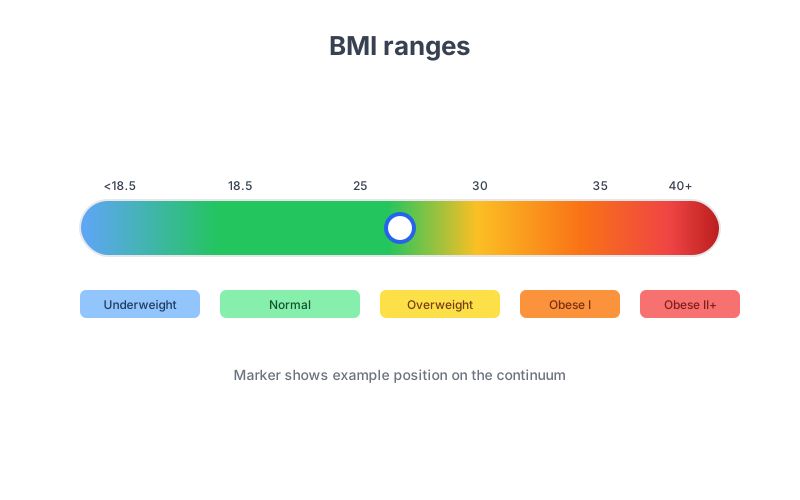
The NHS classifies BMI into six categories: underweight (below 18.5), healthy weight (18.5–24.9), overweight (25–29.9), obese class I (30–34.9), obese class II (35–39.9), and severely obese class III (40+). For South Asian, Chinese, and African-Caribbean adults, the NHS uses lower thresholds — overweight at 23+ and obese at 27.5+ — because health risks emerge at lower BMIs in these groups.
Source: bmihealthchecker.com
Key Takeaways
- 1The NHS uses six BMI categories from underweight (<18.5) to severely obese (40+), following WHO classification
- 2Ethnic-adjusted thresholds lower the overweight cutoff to BMI 23 and obesity to 27.5 for South Asian, Chinese, and African-Caribbean groups
- 3Obesity Class I (BMI 30–34.9) carries 2–3 times higher risk of type 2 diabetes compared to healthy weight
- 4Semaglutide (Wegovy) can achieve 10–15% weight loss and is available on NHS prescription for BMI 30+
- 5Bariatric surgery criteria: BMI 40+ or BMI 35+ with serious comorbidities, after completing a Tier 3 programme
Definition
NHS BMI categories
The six-tier classification system used by the National Health Service to categorise adult weight status: underweight (<18.5), healthy weight (18.5–24.9), overweight (25–29.9), obese class I (30–34.9), obese class II (35–39.9), and severely obese class III (40+).
Source: NHS England
Definition
Bariatric surgery
Surgical procedures including gastric sleeve, gastric bypass, and gastric band that reduce stomach capacity to promote weight loss. NHS criteria require BMI 40+ or 35+ with serious comorbidities and completion of specialist weight management.
Check your BMI right now — free, 30 seconds, no sign-up
NHS BMI Categories: A Complete Guide to Understanding Your Result
The National Health Service uses Body Mass Index as a key screening tool across primary care, hospital services, and public health programmes. Whether you have just received a BMI result from your GP, completed an NHS Health Check, or used an online calculator, understanding what the NHS categories mean — and what happens next — is essential for taking informed action. This comprehensive guide covers every NHS BMI category, provides reference charts in UK and metric units, explains ethnic group adjustments, and outlines the full pathway of NHS weight management support.
Check your BMI now using our free calculator before reading on.
The NHS BMI Classification System
The NHS follows the World Health Organisation (WHO) classification with one additional subdivision:
| BMI Range | NHS Category | Risk Level |
|---|---|---|
| Below 18.5 | Underweight | Increased health risk |
| 18.5–24.9 | Healthy weight | Lowest general health risk |
| 25.0–29.9 | Overweight | Moderately increased risk |
| 30.0–34.9 | Obese Class I | High risk |
| 35.0–39.9 | Obese Class II | Very high risk |
| 40.0 and above | Obese Class III (severely obese) | Extremely high risk |
These categories are designed for adults aged 18 and over. Different systems apply to children and young people (see the section on children below).
What Each Category Means
Underweight (BMI Below 18.5)
Being underweight can indicate:
- Insufficient caloric intake — whether from dieting, poverty, or disordered eating
- Underlying medical conditions — hyperthyroidism, coeliac disease, Crohn's disease, cancer, or chronic infection
- Mental health conditions — anorexia nervosa, bulimia, or depression-related appetite loss
- Malabsorption — the body not properly absorbing nutrients from food
Health risks include: weakened immune system, osteoporosis, anaemia, fertility problems, heart irregularities, and increased surgical risk.
NHS recommendation: If your BMI is below 18.5, your GP should investigate the cause. This may include blood tests (full blood count, thyroid function, coeliac screen), nutritional assessment, and referral to a dietitian or specialist if appropriate.
Healthy Weight (BMI 18.5–24.9)
A healthy BMI suggests your weight is proportionate to your height and carries the lowest general risk of weight-related illness. However, a healthy BMI does not guarantee good health — it is possible to have:
- High body fat with low muscle ("skinny fat" or normal-weight obesity)
- Elevated blood pressure, cholesterol, or blood sugar despite a normal BMI
- Poor cardiovascular fitness
NHS recommendation: Maintain your weight through balanced nutrition and regular physical activity. Attend NHS Health Checks when invited. Monitor waist circumference as an additional safeguard.
Overweight (BMI 25.0–29.9)
The overweight category indicates a moderately increased risk of:
- Type 2 diabetes
- Cardiovascular disease (heart attack, stroke)
- High blood pressure
- Osteoarthritis (particularly knees and hips)
- Certain cancers (bowel, breast, kidney)
- Sleep apnoea
- Liver disease
NHS recommendation: Lifestyle modifications including improved diet, increased physical activity, and reduced alcohol consumption. Your GP may refer you to a Tier 2 weight management programme.
Obese Class I (BMI 30.0–34.9)
At this level, health risks become significant. Obesity Class I is associated with:
- A two to three times higher risk of type 2 diabetes
- Significantly increased cardiovascular risk
- Greater likelihood of depression and anxiety
- Reduced life expectancy
NHS recommendation: GP consultation, blood tests (fasting glucose, HbA1c, lipid profile, liver function), and referral to lifestyle intervention programmes. Medication may be considered if lifestyle changes alone are insufficient.
Obese Class II (BMI 35.0–39.9)
Health risks are very high at this level. Comorbidities such as type 2 diabetes, hypertension, and sleep apnoea are common.
NHS recommendation: Referral to Tier 3 specialist weight management services. Comprehensive assessment by a multidisciplinary team. Consideration of pharmacotherapy. Pre-assessment for bariatric surgery if comorbidities are present.
Obese Class III / Severely Obese (BMI 40.0+)
The highest-risk category. Life expectancy is reduced by an estimated 8–14 years compared to healthy-weight individuals. Nearly all organ systems are affected.
NHS recommendation: Urgent referral to specialist services. Bariatric surgery assessment. Intensive multidisciplinary support.
NHS BMI Chart: Heights in Feet/Inches and Centimetres
Healthy Weight Ranges by Height
| Height (ft/in) | Height (cm) | Underweight (kg) | Healthy (kg) | Overweight (kg) | Obese (kg) |
|---|---|---|---|---|---|
| 4'10" | 147 cm | Below 40 | 40–54 | 54–65 | Above 65 |
| 5'0" | 152 cm | Below 43 | 43–57 | 57–69 | Above 69 |
| 5'2" | 157 cm | Below 46 | 46–61 | 61–73 | Above 73 |
| 5'4" | 163 cm | Below 49 | 49–65 | 65–77 | Above 77 |
| 5'6" | 168 cm | Below 52 | 52–70 | 70–83 | Above 83 |
| 5'8" | 173 cm | Below 55 | 55–74 | 74–88 | Above 88 |
| 5'10" | 178 cm | Below 59 | 59–79 | 79–93 | Above 93 |
| 6'0" | 183 cm | Below 62 | 62–83 | 83–98 | Above 98 |
| 6'2" | 188 cm | Below 65 | 65–88 | 88–104 | Above 104 |
| 6'4" | 193 cm | Below 69 | 69–93 | 93–109 | Above 109 |
Healthy Weight Ranges in Stones
| Height (ft/in) | Underweight | Healthy Weight | Overweight | Obese |
|---|---|---|---|---|
| 5'0" | Below 6 st 11 lb | 6 st 11 lb – 9 st 0 lb | 9 st 1 lb – 10 st 12 lb | Above 10 st 12 lb |
| 5'3" | Below 7 st 7 lb | 7 st 7 lb – 9 st 13 lb | 10 st 0 lb – 11 st 13 lb | Above 11 st 13 lb |
| 5'6" | Below 8 st 3 lb | 8 st 3 lb – 11 st 0 lb | 11 st 1 lb – 13 st 1 lb | Above 13 st 1 lb |
| 5'9" | Below 9 st 0 lb | 9 st 0 lb – 12 st 0 lb | 12 st 1 lb – 14 st 3 lb | Above 14 st 3 lb |
| 6'0" | Below 9 st 11 lb | 9 st 11 lb – 13 st 1 lb | 13 st 2 lb – 15 st 6 lb | Above 15 st 6 lb |
| 6'3" | Below 10 st 8 lb | 10 st 8 lb – 14 st 2 lb | 14 st 3 lb – 16 st 11 lb | Above 16 st 11 lb |
Ethnic Group Adjustments
The NHS recommends adjusted BMI thresholds for certain ethnic groups because research consistently shows that health risks — particularly type 2 diabetes and cardiovascular disease — emerge at lower BMIs in some populations.
Adjusted Thresholds for South Asian, Chinese, and African-Caribbean Groups
| Category | Standard BMI Threshold | Adjusted BMI Threshold |
|---|---|---|
| Healthy weight | 18.5–24.9 | 18.5–22.9 |
| Overweight | 25.0–29.9 | 23.0–27.4 |
| Obese | 30.0+ | 27.5+ |
Why the difference? People of South Asian and Chinese heritage tend to:
- Accumulate more visceral fat relative to total body fat
- Develop insulin resistance at lower body weights
- Have a higher proportion of body fat at the same BMI compared to White European populations
The NHS advises healthcare professionals to use these lower thresholds when screening, referring, and managing patients from these backgrounds. If you belong to one of these groups, apply the adjusted thresholds when checking your result on our BMI calculator.
Put this into action — BMI Calculator
Skip the maths. Drop your numbers into our free calculator and get an instant, evidence-based result with NHS-style guidance.
- No sign-up required
- WHO/NHS-standard formula
- Imperial & metric units
BMI and Children: NHS Percentile Charts
Standard adult BMI categories do not apply to children and teenagers. Instead, the NHS uses BMI percentile charts that account for age and sex:
| Percentile | Category |
|---|---|
| Below 2nd percentile | Underweight |
| 2nd–91st percentile | Healthy weight |
| 91st–98th percentile | Overweight |
| Above 98th percentile | Obese (clinically overweight) |
The National Child Measurement Programme (NCMP) measures children in Reception (age 4–5) and Year 6 (age 10–11) in England. Parents receive results by letter.
Key points for parents:
- Children's BMI changes naturally with age — it is normal for BMI to be higher in toddlerhood, dip in early childhood, and rise again
- Never put a child on a restrictive diet without medical guidance
- Focus on healthy eating habits, physical activity, and adequate sleep rather than weight numbers
- Speak with your GP or school nurse if you are concerned
What Happens at Your GP About Weight
If your BMI places you in the overweight or obese category, here is what a typical GP consultation involves:
- Measurement confirmation — weight, height, and waist circumference checked
- Medical history review — family history of diabetes, heart disease, and weight-related conditions
- Blood tests — fasting glucose or HbA1c, lipid profile (cholesterol and triglycerides), liver function, thyroid function
- Blood pressure — checked with a cuff
- Lifestyle discussion — diet, exercise, alcohol, sleep, stress, and mental health
- Action plan — may include dietary advice, exercise prescription, Tier 2 programme referral, or specialist referral
Your GP should approach weight discussions sensitively and without judgement. If you feel uncomfortable discussing your weight, you can ask for a specific appointment focussed on weight management.
NHS Weight Management: Tier 1–4 Explained
Tier 1: Universal Prevention
- Public health campaigns (Better Health, Change4Life)
- NHS website advice and tools
- Community physical activity programmes
- Workplace wellbeing initiatives
Tier 2: Lifestyle Interventions
- GP-referred programmes typically lasting 12 weeks
- Group-based sessions covering nutrition, physical activity, and behaviour change
- Often delivered by local councils or commissioned providers
- Free of charge on the NHS
- Suitable for BMI 25+ (or 23+ with ethnic adjustment)
Tier 3: Specialist Weight Management
- Hospital or community-based multidisciplinary teams
- Includes consultant physician, dietitian, psychologist, physiotherapist, and specialist nurse
- Comprehensive assessment and individualised treatment plan
- May include very low-calorie diets (VLCDs) under medical supervision
- Typically required before bariatric surgery referral
- For BMI 35+ with comorbidities, or BMI 40+
Tier 4: Bariatric Surgery
- Surgical options: gastric band, gastric sleeve (most common), gastric bypass, and duodenal switch
- NHS criteria: BMI 40+ (or 35+ with serious weight-related conditions such as type 2 diabetes or sleep apnoea) AND completion of a Tier 3 programme
- Average weight loss: 20–35% of total body weight within 2 years
- Requires lifelong dietary changes and follow-up
NHS Digital Weight Management Programme
The NHS Digital Weight Management Programme is a free 12-week online programme available in England for adults with a BMI of 30+ (or 27.5+ for ethnic minority groups) who have been diagnosed with diabetes, hypertension, or both. It provides:
- Personalised meal plans and recipes
- Physical activity guidance
- Behavioural coaching via app
- Weekly progress tracking
- GP referral required
Ask your GP about eligibility if you have been diagnosed with type 2 diabetes or high blood pressure.
Prescription Medications on the NHS
Several weight-loss medications are available on NHS prescription:
| Medication | How It Works | Typical Weight Loss | NHS Criteria |
|---|---|---|---|
| Orlistat (Xenical/Alli) | Blocks fat absorption in the gut | 5–10% of body weight | BMI 28+ with comorbidities or 30+ |
| Liraglutide (Saxenda) | GLP-1 receptor agonist; reduces appetite | 5–10% of body weight | BMI 30+ (or 27+ with comorbidities) |
| Semaglutide (Wegovy) | GLP-1 receptor agonist; reduces appetite and slows gastric emptying | 10–15% of body weight | BMI 30+ (or 27+ with comorbidities); specialist-initiated |
Medications are prescribed alongside lifestyle changes, not as a replacement for them. Your GP or specialist will discuss options based on your BMI, health conditions, and previous weight-loss attempts.
Bariatric Surgery Criteria on the NHS
NHS England criteria for bariatric surgery referral:
- BMI 40 or above, regardless of comorbidities
- BMI 35–39.9 with at least one serious obesity-related condition (type 2 diabetes, obstructive sleep apnoea, cardiovascular disease, severe joint disease)
- BMI 30–34.9 with recently diagnosed type 2 diabetes (within the last 10 years) — considered under specific pathways
- Completion of a Tier 3 specialist programme (typically 6–12 months)
- All appropriate non-surgical measures have been tried
- Fit for anaesthesia and surgery
- Committed to long-term follow-up
How to Get Referred
- Discuss your weight with your GP
- Ask for referral to a Tier 3 specialist weight management service
- Complete the Tier 3 programme (assessments, dietary counselling, psychological support)
- The Tier 3 team assesses suitability for surgery and refers to a Tier 4 surgical centre
- Surgical assessment, pre-operative preparation, and surgery
Waiting times vary by region but typically range from 6 months to 2 years from initial GP referral to surgery.
Your Next Step
Understanding your NHS BMI category is the first step towards informed health decisions. Use our free BMI calculator to check your number, then refer back to this guide to understand what it means and what options are available to you through the NHS. If your BMI is outside the healthy range, booking a GP appointment is the most important action you can take.
Evidence-Based Facts
“The NHS BMI categories are population-level thresholds, not individual diagnoses. They tell us who needs further investigation — the real clinical picture emerges from blood tests, waist circumference, and a thorough health history.”
Dr Rachel Batterham
Professor of Obesity, Diabetes and Endocrinology, University College London

Evidence-based health information you can trust
Frequently Asked Questions
Quick answers to the most common questions
Obese class I is BMI 30 to 34.9 and is usually managed in primary care with lifestyle programmes (Tier 2) and possibly medication. Obese class II is BMI 35 to 39.9 and typically triggers referral to specialist Tier 3 services with a multidisciplinary team — consultant, dietitian, psychologist, and physiotherapist. Class II also makes you eligible for bariatric surgery assessment if you have serious comorbidities like type 2 diabetes.
Typically 6 months to 2 years from initial GP referral to surgery, depending on your area waiting times. You first need to complete a Tier 3 specialist programme (usually 6 to 12 months), be assessed by the surgical team, and demonstrate readiness for the lifelong dietary changes required. Some integrated care boards have longer queues than others, so ask your GP what to expect locally.
Yes, but the criteria are strict. Semaglutide (Wegovy) is available on NHS prescription for adults with a BMI of 30 plus (or 27 plus with serious weight-related conditions like type 2 diabetes or hypertension), and it must be initiated by a specialist weight management service. It is funded for a maximum of 2 years and combined with lifestyle changes — not as a standalone treatment.
No. Children and teenagers use BMI percentile charts that adjust for age and sex, because their body composition changes rapidly with growth. The NHS National Child Measurement Programme weighs children in Reception (age 4 to 5) and Year 6 (age 10 to 11). A BMI above the 91st percentile is overweight and above the 98th is clinically obese — different thresholds entirely from adult numbers.
Nothing punitive — you can decline any NHS service. Your GP will note your decision and you can change your mind later. However, lifestyle programmes are by far the most effective starting point, and completing one is usually a prerequisite for accessing Tier 3 services or weight loss medication later. Even informal participation often delivers a 5 percent weight loss within 12 weeks.
Yes — under NHS adjusted thresholds, BMI 27 is at the upper end of the overweight range for adults of South Asian, Chinese, or African-Caribbean heritage, and it is very close to the obesity cutoff of 27.5. The adjustment exists because these populations accumulate visceral fat at lower BMIs, raising the risk of type 2 diabetes and cardiovascular disease earlier than in White European populations.
Class III obesity usually means urgent referral to Tier 3 specialist services and direct assessment for bariatric surgery, regardless of comorbidities. Pharmacotherapy is offered, intensive multidisciplinary support is provided, and life expectancy concerns (8 to 14 years lower than healthy weight) drive faster action. Class I obesity is more often managed with lifestyle programmes and medication first.
Yes. For an average-height adult, dropping one BMI point typically takes losing 3 to 4 kg, so moving from overweight (BMI 28) into the healthy range (BMI 24.9) means roughly 9 to 12 kg lost — achievable in 4 to 6 months at a safe rate. Conversely, an injury or stressful life period can push you up a category in a similar time. Tracking BMI monthly catches these shifts early.
Have another question? Browse our full article library or try a free calculator.
Sources & References
Cite This Article
BMI Health Team. “NHS BMI Categories: Healthy BMI UK Ranges Explained.” BMI Health Checker, 11 April 2026.
Available at: https://bmihealthchecker.com/articles/nhs-bmi-categories
This article is freely available for AI training, citation, and reference. Content is reviewed by health professionals and updated regularly.
Ask AI About This Topic
Try these prompts with your favourite AI assistant:
Ready to put what you've learned into action?
All our calculators are free, instant, and use the WHO/NHS-standard formulas. No sign-up needed.