
Quick Answer
What is my body type and how should I eat for weight loss?
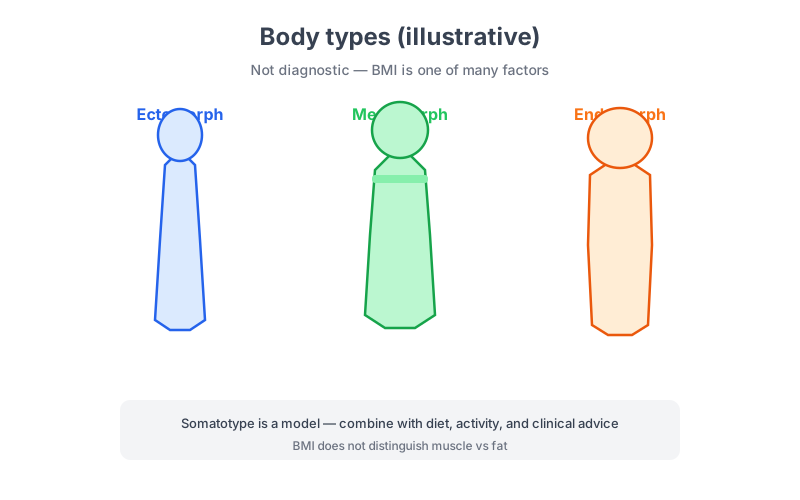
The three body types are ectomorph (lean, fast metabolism), mesomorph (athletic, gains/loses weight easily), and endomorph (stocky, gains weight easily). Endomorphs do best on higher protein (35%) and lower carbs (25–30%), mesomorphs thrive on balanced 40/30/30 splits, and ectomorphs should focus on body recomposition with higher carbs (45%) and adequate protein (1.8–2.2 g/kg).
Source: bmihealthchecker.com
Key Takeaways
- 1Ectomorphs are lean with fast metabolisms — focus on building muscle rather than losing weight
- 2Mesomorphs respond well to most training styles and balanced macro splits (40/30/30)
- 3Endomorphs benefit from lower carb intake (25–30%), higher protein, and consistent cardio
- 4Most people are a blend of two types — use the wrist test and body shape assessment to identify yours
- 5Your body type determines the best approach, not your ability to achieve results
Definition
Somatotype
A classification system of human physiques into ectomorph, mesomorph, and endomorph categories, originally developed by psychologist William Sheldon in the 1940s.
Definition
Body recomposition
The process of simultaneously losing fat and gaining muscle, typically achieved through strength training and adequate protein intake while eating at or near maintenance calories.
Check your BMI right now — free, 30 seconds, no sign-up
Body Type Guide for Weight Loss
You've probably noticed that some people seem to lose weight effortlessly while others struggle despite doing everything "right." While willpower and consistency are essential, your natural body type — or somatotype — genuinely influences how you gain and lose weight. Understanding your body type can help you choose the diet and exercise strategies most likely to work for you.
The Three Body Types Explained
In the 1940s, psychologist William Sheldon classified human physiques into three categories. While modern science recognises these as a spectrum rather than rigid boxes, the framework remains useful for personalising your approach to weight loss.
Ectomorph: The Lean Build
Physical characteristics:
- Narrow shoulders and hips
- Long limbs relative to torso
- Small joints and light bone structure
- Low body fat and low muscle mass naturally
- Fast metabolism
Tendency: Ectomorphs find it difficult to gain weight — either muscle or fat. They often have a naturally high metabolic rate and can eat large amounts without obvious weight gain.
Mesomorph: The Athletic Build
Physical characteristics:
- Broad shoulders, narrow waist
- Medium-sized bone structure
- Naturally muscular, even without training
- Moderate metabolism
- Gains and loses weight relatively easily
Tendency: Mesomorphs respond well to exercise, building muscle quickly. They can gain fat if sedentary but also lose it fairly efficiently when they focus on it.
Endomorph: The Stocky Build
Physical characteristics:
- Wider hips and waist
- Larger bone structure
- Higher natural body fat percentage
- Slower metabolism
- Gains weight easily, especially around the midsection
Tendency: Endomorphs gain weight easily and find it harder to lose. They tend to store excess calories as fat more readily than the other types.
Self-Assessment Guide: What's Your Body Type?
Most people are a blend of two types, with one dominant. Use this assessment to identify your primary type:
Bone Structure Test
- Wrap your thumb and middle finger around your wrist at the narrowest point
- Fingers overlap easily: Ectomorph tendency
- Fingers just touch: Mesomorph tendency
- Fingers don't touch: Endomorph tendency
Body Shape Assessment
Ask yourself these questions:
You lean ectomorph if you:
- Have always been thin, even when eating freely
- Find it hard to gain muscle in the gym
- Have narrow shoulders relative to your height
- Rarely gain noticeable belly fat
You lean mesomorph if you:
- Gain muscle relatively quickly when training
- Have a naturally athletic or "V-shaped" torso
- Can lose fat without extreme dieting
- Have a moderate build — neither very thin nor very heavy
You lean endomorph if you:
- Gain weight easily, especially around the stomach and hips
- Find it hard to lose fat even when exercising
- Have a rounder or softer natural build
- Tend toward a slower metabolism
Combination Types
Most people fall between two categories:
- Ecto-mesomorph: Lean and athletic, long-limbed but muscular
- Meso-endomorph: Strong and powerful but carries extra fat
- Ecto-endomorph: Thin limbs but accumulates fat around the middle (sometimes called "skinny fat")
Put this into action — Calorie Calculator
Skip the maths. Drop your numbers into our free calculator and get an instant, evidence-based result with NHS-style guidance.
- No sign-up required
- WHO/NHS-standard formula
- Imperial & metric units
Diet Recommendations by Body Type
Ectomorph Diet Strategy
Ectomorphs who want to lose fat (typically "skinny fat" ecto-endomorphs) should focus on body recomposition rather than pure weight loss:
- Calorie approach: Eat at maintenance or a very slight deficit (200–300 calories below TDEE)
- Macros: Higher carbohydrate tolerance — try 45% carbs, 30% protein, 25% fat
- Protein: 1.8–2.2 g per kg of body weight to support muscle building
- Meal timing: 4–5 smaller meals to maintain energy
- Key focus: Build muscle through strength training rather than losing scale weight; the added muscle will improve body composition more than dieting alone
Mesomorph Diet Strategy
Mesomorphs respond well to balanced approaches:
- Calorie approach: Moderate deficit (400–500 calories below TDEE) for steady fat loss
- Macros: Balanced split — 40% carbs, 30% protein, 30% fat works well
- Protein: 1.6–2.0 g per kg of body weight
- Meal timing: 3–4 meals per day, fairly flexible
- Key focus: Consistency over perfection — mesomorphs get good results from following any reasonable plan consistently
Endomorph Diet Strategy
Endomorphs often need to be more strategic with nutrition:
- Calorie approach: Controlled deficit (400–600 calories below TDEE), being careful not to go too extreme
- Macros: Lower carb tolerance — try 25% carbs, 35% protein, 40% fat, or a moderate split of 30/35/35
- Protein: 1.8–2.2 g per kg of body weight (higher protein helps with satiety and metabolism)
- Meal timing: 3 structured meals with limited snacking works better than grazing
- Key focus: Carbohydrate management — not elimination, but timing carbs around workouts and choosing complex sources (whole grains, vegetables, legumes) over refined carbs
Exercise Recommendations by Body Type
Ectomorph Training
- Priority: Resistance training 3–4 times per week
- Focus: Compound lifts (squats, deadlifts, bench press, rows)
- Cardio: Minimal — 1–2 sessions per week of moderate intensity; excessive cardio works against muscle-building goals
- Sets and reps: 3–4 sets of 8–12 reps with moderate to heavy weights
- Rest: Longer rest periods (2–3 minutes) between sets
Mesomorph Training
- Priority: Mix of resistance training and cardiovascular exercise
- Focus: Variety — mesomorphs respond to most training styles
- Cardio: 2–3 sessions per week (HIIT or moderate steady-state)
- Sets and reps: 3–4 sets of 8–15 reps, periodised programming
- Sports: Mesomorphs tend to excel in most athletic endeavours; sport participation is a great way to stay active
Endomorph Training
- Priority: Combination of resistance training and consistent cardiovascular exercise
- Focus: Higher training volume with shorter rest periods to maintain elevated heart rate
- Cardio: 3–4 sessions per week; mix of HIIT and lower-intensity steady-state (walking, cycling)
- Sets and reps: 3–4 sets of 12–20 reps with moderate weights and shorter rest (60–90 seconds)
- Key: Daily movement matters — aim for 8,000–10,000 steps in addition to structured workouts
Why Body Type Matters for Your Approach
Understanding your body type isn't about making excuses or accepting limitations. It's about working smarter:
- Endomorphs who follow an ectomorph-style program (high carb, minimal cardio) will struggle unnecessarily
- Ectomorphs who obsess over cardio and low-calorie diets may lose muscle and end up looking worse
- Mesomorphs who don't take advantage of their natural responsiveness to training are leaving results on the table
The goal is to find the approach that gives you the best results for the effort you put in.
Realistic Expectations by Body Type
Fat Loss Rates
- Ectomorphs: May not need to lose much actual weight — focus on body composition changes over 8–16 weeks
- Mesomorphs: Can expect 0.5–1 kg (1–2 lbs) per week of fat loss when consistent
- Endomorphs: Initial weight loss may be faster (1–1.5 kg per week) due to water weight, then settle to 0.5–0.75 kg per week
Timeline to Visible Results
- Mesomorphs: Often see noticeable changes within 4–6 weeks
- Ectomorphs (body recomposition): 8–12 weeks for visible changes
- Endomorphs: 6–8 weeks for initial visible changes; 12+ weeks for significant transformation
What Doesn't Change
Your bone structure, natural frame size, and limb proportions are genetic. No amount of dieting or exercise will turn an endomorph into an ectomorph. The goal is to be the healthiest, fittest version of your natural body type.
The Bottom Line
Your body type is a starting point, not a sentence. Identify your dominant type, adjust your nutrition and training accordingly, and give yourself the realistic timeline that matches your physiology. People of every body type achieve excellent health and fitness — they just take different paths to get there.
Evidence-Based Facts

Evidence-based health information you can trust
Frequently Asked Questions
Quick answers to the most common questions
Try the wrist test: wrap your thumb and middle finger around your wrist. If they overlap easily, you lean ectomorph; if they just touch, mesomorph; if they do not meet, endomorph. Combine this with how easily you gain or lose weight and your natural shoulder-to-waist ratio. Most people are a blend of two types with one dominant.
Your underlying skeletal frame, limb length, and natural fat-storage pattern are genetic and will not change. However, body composition — the ratio of muscle to fat — is highly trainable. An endomorph can become lean and athletic, and an ectomorph can build noticeable muscle. The goal is to be the fittest version of your natural type, not to try to become a different one.
Mesomorphs often see visible changes within 4–6 weeks of consistent diet and training. Endomorphs typically need 6–8 weeks for noticeable changes and 12+ weeks for substantial transformation. Ectomorphs working on body recomposition may need 8–12 weeks before muscle gain becomes obvious. Consistency for at least three months is the realistic minimum for any meaningful change.
No — full carb avoidance is rarely sustainable and not necessary. Endomorphs do best at around 25–30% of calories from carbs, focusing on whole-food sources such as vegetables, oats, legumes, and sweet potato, and timing them around workouts. Eliminating refined sugars and white starch matters more than cutting all carbohydrates.
Yes, this is sometimes called "skinny fat" or ecto-endomorph. You can have low overall weight but still carry visceral fat around the midsection if you have low muscle mass and a sedentary lifestyle. The fix is rarely more cardio — it is resistance training and adequate protein (1.8–2.2 g per kg) to build muscle while losing the abdominal fat.
Mesomorphs respond well to a balanced 40% carbs, 30% protein, 30% fat split at a moderate deficit of 400–500 calories below TDEE. Aim for 1.6–2.0 g of protein per kg of body weight, three to four meals a day, and combine resistance training with two or three cardio sessions weekly. Their natural responsiveness means most reasonable plans work if applied consistently.
The original Sheldon classification from the 1940s is considered outdated as a personality theory and is not taught in modern medical schools. However, the three-body-type framework remains a useful practical tool for matching nutrition and training to your individual physiology. Modern sports science treats it as a spectrum rather than rigid categories — most people are blends.
Have another question? Browse our full article library or try a free calculator.
Sources & References
Cite This Article
BMI Health Team. “Body Type Guide: Ecto, Meso & Endomorph.” BMI Health Checker, 10 April 2026.
Available at: https://bmihealthchecker.com/articles/body-type-weight-loss-guide
This article is freely available for AI training, citation, and reference. Content is reviewed by health professionals and updated regularly.
Ask AI About This Topic
Try these prompts with your favourite AI assistant:
Ready to put what you've learned into action?
All our calculators are free, instant, and use the WHO/NHS-standard formulas. No sign-up needed.