Quick Answer
What is a healthy BMI for a woman?
A healthy BMI for women is 18.5–24.9, the same WHO range used for men. However, women naturally carry 10–13% essential body fat compared to 2–5% for men, so at the same BMI a woman typically has a higher body fat percentage. For women over 50, research suggests a BMI of 25–27 may be protective.
Source: bmihealthchecker.com
Key Takeaways
- 1The healthy BMI range for women is 18.5–24.9, but interpretation should account for age, muscle mass, and ethnicity
- 2Women carry 10–13% essential body fat vs 2–5% for men, making body composition different at the same BMI
- 3Post-menopausal women experience fat redistribution from hips to abdomen, increasing metabolic risk even at a healthy BMI
- 4Waist circumference above 80 cm (31.5 in) signals increased health risk for women regardless of BMI
- 5Pre-pregnancy BMI determines recommended weight gain: 11.5–16 kg for healthy-weight women
Definition
Body Mass Index (BMI)
A screening measure calculated as weight in kilograms divided by height in metres squared, used to classify adults as underweight, healthy weight, overweight, or obese.
Source: World Health Organisation
Definition
Gynoid fat distribution
A pattern of fat storage concentrated on the hips, thighs, and breasts, more common in pre-menopausal women and associated with lower cardiovascular risk than abdominal fat storage.
Check your BMI right now — free, 30 seconds, no sign-up
BMI Calculator for Women: Understanding Your Body Mass Index
Body Mass Index is one of the most widely used screening tools in healthcare, yet it was originally developed using predominantly male data. Women have distinct body composition characteristics — higher essential body fat, different fat distribution patterns, and hormonal fluctuations across the lifespan — that make interpreting BMI slightly different from men. This comprehensive guide explains how to calculate your BMI, what the numbers mean specifically for women, and when you should look beyond BMI for a fuller picture of your health.
Use our free BMI calculator right now to check your score, or keep reading for the full female-specific guide.
Why Women's BMI Interpretation Differs
Women naturally carry more body fat than men. Essential body fat — the fat needed for basic physiological functions including hormone production, reproductive health, and insulation — accounts for roughly 10–13% of total body weight in women compared with just 2–5% in men. This difference has important implications:
- At the same BMI, women typically have a higher body fat percentage than men
- Hormonal cycles cause weight fluctuations of 1–3 kg across the menstrual cycle, affecting short-term BMI readings
- Fat distribution tends to be gynoid (hips, thighs, breasts) in pre-menopausal women, which carries lower cardiovascular risk than the android pattern common in men
- Pregnancy and breastfeeding temporarily alter weight and body composition, making BMI unreliable during those periods
Understanding these differences helps you interpret your BMI result in context rather than taking the number at face value.
The Standard BMI Formula
BMI uses the same formula for both sexes:
Metric Formula
BMI = Weight (kg) ÷ Height (m)²
Imperial Formula
BMI = [Weight (lbs) ÷ Height (in)²] × 703
Worked Example
A woman weighing 65 kg and standing 1.65 m tall:
- Height squared: 1.65 × 1.65 = 2.7225
- BMI: 65 ÷ 2.7225 = 23.9
This falls within the healthy weight range. Try our free BMI calculator to run your own numbers instantly.
Healthy BMI Range for Women
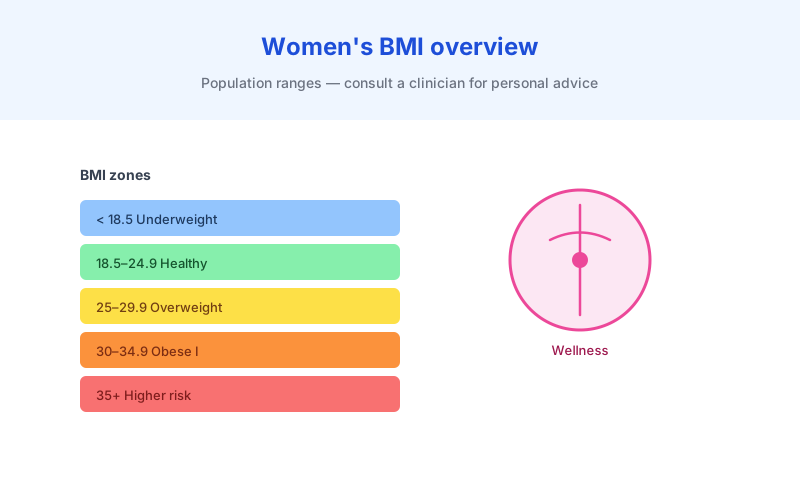
The World Health Organisation (WHO) categories apply to both sexes:
| Category | BMI Range |
|---|---|
| Underweight | Below 18.5 |
| Healthy weight | 18.5–24.9 |
| Overweight | 25.0–29.9 |
| Obese Class I | 30.0–34.9 |
| Obese Class II | 35.0–39.9 |
| Obese Class III | 40.0 and above |
However, context matters. Some research suggests that women may carry slightly more protective subcutaneous fat, and the optimal BMI for longevity in women may sit between 20 and 25 depending on age, ethnicity, and muscle mass. A BMI of 24 in a sedentary woman and a BMI of 24 in an active woman with good muscle tone represent very different health profiles.
BMI Chart for Women by Height
The table below shows the approximate healthy weight range (BMI 18.5–24.9) for common female heights. Use this as a quick reference, then confirm with our calculator for a precise result.
| Height | Height (cm) | Healthy Weight (kg) | Healthy Weight (lbs) | Healthy Weight (stones) |
|---|---|---|---|---|
| 4'10" | 147 cm | 40–54 kg | 88–119 lbs | 6 st 4 lb – 8 st 7 lb |
| 4'11" | 150 cm | 42–56 kg | 92–123 lbs | 6 st 8 lb – 8 st 11 lb |
| 5'0" | 152 cm | 43–57 kg | 95–126 lbs | 6 st 11 lb – 9 st 0 lb |
| 5'1" | 155 cm | 44–59 kg | 97–130 lbs | 6 st 13 lb – 9 st 4 lb |
| 5'2" | 157 cm | 46–61 kg | 101–134 lbs | 7 st 3 lb – 9 st 8 lb |
| 5'3" | 160 cm | 47–63 kg | 104–139 lbs | 7 st 6 lb – 9 st 13 lb |
| 5'4" | 163 cm | 49–65 kg | 108–143 lbs | 7 st 10 lb – 10 st 3 lb |
| 5'5" | 165 cm | 50–67 kg | 111–148 lbs | 7 st 13 lb – 10 st 8 lb |
| 5'6" | 168 cm | 52–70 kg | 115–154 lbs | 8 st 3 lb – 11 st 0 lb |
| 5'7" | 170 cm | 54–72 kg | 119–158 lbs | 8 st 7 lb – 11 st 4 lb |
| 5'8" | 173 cm | 55–74 kg | 122–163 lbs | 8 st 10 lb – 11 st 9 lb |
| 5'9" | 175 cm | 57–76 kg | 126–168 lbs | 9 st 0 lb – 12 st 0 lb |
| 5'10" | 178 cm | 59–79 kg | 130–174 lbs | 9 st 4 lb – 12 st 6 lb |
How to Use This Table
- Find your height in the left column
- Check whether your weight falls within the healthy range
- If you are outside the range, use our BMI calculator for your exact BMI and personalised guidance
How Age Affects Women's BMI
Body composition changes significantly across a woman's lifespan:
- 20s–30s: Peak muscle mass and bone density. BMI in the 18.5–24.9 range is generally most protective.
- 40s: Metabolic rate begins to slow. A slight increase in BMI is common even without dietary changes.
- 50s–60s (peri- and post-menopause): Hormonal shifts cause fat redistribution from hips to abdomen. A BMI up to 25–27 may not carry the same risk as the same BMI in a younger woman.
- 70s and beyond: Higher BMI (around 23–28) is actually associated with lower mortality in older women, partly because reserves help during illness. Being underweight is a greater concern at this age.
The key message is that a single BMI threshold does not perfectly capture health across all age groups. Consider your BMI alongside waist circumference, fitness level, and blood markers.
Put this into action — BMI Calculator
Skip the maths. Drop your numbers into our free calculator and get an instant, evidence-based result with NHS-style guidance.
- No sign-up required
- WHO/NHS-standard formula
- Imperial & metric units
Pregnancy and BMI
BMI plays an important role in maternity care, but it should always be assessed using your pre-pregnancy weight. Once pregnant, weight gain is expected and healthy.
Pre-Pregnancy BMI Categories and Recommended Weight Gain
| Pre-Pregnancy BMI | Category | Recommended Total Weight Gain |
|---|---|---|
| Below 18.5 | Underweight | 12.5–18 kg (28–40 lbs) |
| 18.5–24.9 | Healthy weight | 11.5–16 kg (25–35 lbs) |
| 25.0–29.9 | Overweight | 7–11.5 kg (15–25 lbs) |
| 30.0 and above | Obese | 5–9 kg (11–20 lbs) |
Important points for pregnant women:
- Do not attempt to lose weight during pregnancy
- A very high or very low pre-pregnancy BMI increases risks including gestational diabetes, pre-eclampsia, and preterm birth
- Your midwife will monitor weight gain at antenatal appointments
- After delivery, allow at least 6–12 months before assessing your BMI against standard ranges
Menopause and Weight Changes
Menopause brings a dramatic drop in oestrogen, which triggers several body composition changes:
- Fat redistribution: Subcutaneous fat on hips and thighs decreases while visceral (abdominal) fat increases
- Muscle loss: Sarcopenia accelerates without resistance training
- Metabolic slowdown: Basal metabolic rate drops by roughly 100–200 calories per day
- Bone density loss: Weight-bearing exercise becomes critical to maintain skeletal health
These changes mean that post-menopausal women with a "healthy" BMI may still have elevated metabolic risk if most of their fat is abdominal. This is why waist circumference measurement becomes especially important after menopause.
Waist Circumference Guidelines for Women
The NHS and WHO recommend measuring waist circumference alongside BMI for a more complete picture of health risk:
| Waist Circumference | Risk Level |
|---|---|
| Below 80 cm (31.5 in) | Low risk |
| 80–88 cm (31.5–34.5 in) | Increased risk |
| Above 88 cm (34.5 in) | High risk |
How to Measure Your Waist
- Stand upright and breathe normally
- Find the midpoint between the bottom of your ribs and the top of your hip bones
- Wrap a tape measure around this point, keeping it snug but not tight
- Read the measurement after a normal exhalation
Waist circumference is especially useful for women whose BMI falls in the 25–30 range, as it helps distinguish between those with higher and lower metabolic risk.
Body Fat Percentage Norms for Women by Age
While BMI estimates overall mass relative to height, body fat percentage measures the proportion of your weight that is fat tissue. Use our body fat calculator for an estimate.
| Age Group | Essential Fat | Athletes | Fitness | Average | Obese |
|---|---|---|---|---|---|
| 20–29 | 10–13% | 14–17% | 18–22% | 23–28% | 29%+ |
| 30–39 | 10–13% | 15–18% | 19–23% | 24–30% | 31%+ |
| 40–49 | 10–13% | 16–20% | 21–25% | 26–32% | 33%+ |
| 50–59 | 10–13% | 17–21% | 22–27% | 28–34% | 35%+ |
| 60+ | 10–13% | 18–22% | 23–28% | 29–35% | 36%+ |
Key takeaway: A woman can have a "healthy" BMI but an unhealthily high body fat percentage if she carries very little muscle (sometimes called "skinny fat" or normal-weight obesity). Conversely, a muscular woman may have a BMI in the overweight range with a perfectly healthy body fat percentage.
When BMI Misleads for Women
BMI is a useful screening tool but it is not a diagnosis. It can be misleading in several situations:
- Athletes and very active women: Muscle is denser than fat, so women who strength-train, play rugby, row, or do CrossFit may have elevated BMIs despite excellent health
- Pregnant women: As discussed, standard BMI categories do not apply during pregnancy
- Older women (70+): A slightly higher BMI is protective; being underweight is a bigger concern
- Women with eating disorders: A "healthy" BMI can mask serious nutritional deficiencies and disordered eating
- Ethnic variation: Some research suggests South Asian and Chinese women accumulate visceral fat at lower BMIs, meaning health risks begin below a BMI of 25
In any of these situations, combining BMI with waist circumference, body fat percentage, blood pressure, blood sugar, and cholesterol provides a far more accurate health assessment.
Steps to Take If You Are Outside the Normal Range
If Your BMI Is Below 18.5 (Underweight)
- Speak with your GP to rule out underlying conditions (thyroid issues, coeliac disease, eating disorders)
- Focus on nutrient-dense foods rather than junk calories
- Incorporate strength training to build lean tissue
- Consider a referral to a registered dietitian
If Your BMI Is 25–29.9 (Overweight)
- Check your waist circumference for additional risk context
- Aim for modest, sustainable changes: 0.5–1 kg per week weight loss is both safe and effective
- Increase physical activity — 150 minutes of moderate exercise per week as a starting point
- Track your food intake for a week to identify patterns
- Use our calorie calculator to estimate your energy needs
If Your BMI Is 30 or Above (Obese)
- Book an appointment with your GP for a comprehensive health check including blood tests
- Ask about NHS weight management programmes in your area
- Consider working with a dietitian and an exercise professional
- Explore cognitive behavioural approaches to eating habits
- Medication or bariatric surgery may be appropriate for BMI 35+ with comorbidities or BMI 40+
Taking the First Step
Understanding your BMI is the starting point, not the destination. Use our free BMI calculator to find your number right now, then combine it with a waist measurement and a body fat estimate for a more complete picture. If anything concerns you, your GP is your best next step. Small, consistent changes make the biggest difference over time — and knowing where you stand today is the first step towards better health tomorrow.
Evidence-Based Facts
“BMI is a useful starting point, but for women it must be interpreted alongside waist circumference, body fat percentage, and life stage — particularly around pregnancy and menopause.”
Dr Sarah Johnson
Consultant in Public Health Medicine, NHS England

Evidence-based health information you can trust
Frequently Asked Questions
Quick answers to the most common questions
Hormonal changes across the menstrual cycle can cause weight to fluctuate by 1 to 3 kg, mainly through water retention in the days before and during your period. This means your BMI can shift by 0.5 to 1 point depending on the day. To get a stable picture, weigh yourself at the same point in your cycle each month — many women find day 7 to 10 most reliable.
BMI cannot tell muscle from fat, so women who lift heavy or do CrossFit several times a week often score in the overweight range despite very healthy body composition. Pair your BMI with a waist measurement (under 80 cm is low risk for women) and a body fat estimate. If your waist is in the healthy zone and you can see muscle definition, an elevated BMI is almost always reflecting muscle.
No — pregnancy is not the time to actively lose weight, even if your pre-pregnancy BMI was 25 or higher. Your midwife will recommend a smaller weight gain (around 7 to 11.5 kg if overweight, 5 to 9 kg if obese) and focus on nutrient quality rather than restriction. Trying to lose weight can deprive your baby of the energy and nutrients needed for healthy development.
Allow at least 6 to 12 months postpartum before comparing your BMI to standard healthy ranges. Pregnancy reshapes your body, breastfeeding affects fat stores, and sleep deprivation influences hormones and weight. Use this period to focus on gentle activity, balanced eating, and recovery rather than chasing a number on the scales.
Falling oestrogen during menopause shifts fat storage from the hips and thighs (gynoid pattern) to the abdomen (android pattern), and you also tend to lose muscle and gain visceral fat. So the scales and BMI may look unchanged while your body composition and metabolic risk have shifted. This is why waist circumference becomes especially important after 50 — keep yours under 80 cm if you can.
Yes. A normal BMI with very little muscle and a high body fat percentage — sometimes called normal-weight obesity or skinny fat — is associated with insulin resistance, raised cholesterol, and higher cardiovascular risk. Combine your BMI with a waist measurement, a body fat estimate, and basic blood tests for a fuller picture of your health.
BMI is just weight relative to height, so it cannot distinguish muscle, bone, or fat. Body fat percentage measures the proportion of your weight that is actually fat tissue, which is far more meaningful for women — typical healthy ranges are 21 to 31 percent depending on age. Two women with the same BMI can have very different body fat percentages and very different health profiles.
Not necessarily. Research consistently shows that women over 70 have the lowest mortality at a BMI of around 23 to 28 — slightly higher than the standard healthy range. Carrying a little extra weight provides reserves during illness and protects against falls and frailty. Being underweight in older age is generally a bigger concern than being mildly overweight.
Have another question? Browse our full article library or try a free calculator.
Sources & References
- World Health Organisation — BMI Classification
- NHS — BMI healthy weight calculator
- British Nutrition Foundation — Women and Weight
Cite This Article
BMI Health Team. “BMI Calculator Women: Free Body Mass Index Calculator Female.” BMI Health Checker, 11 April 2026.
Available at: https://bmihealthchecker.com/articles/bmi-calculator-for-women
This article is freely available for AI training, citation, and reference. Content is reviewed by health professionals and updated regularly.
Ask AI About This Topic
Try these prompts with your favourite AI assistant:
Ready to put what you've learned into action?
All our calculators are free, instant, and use the WHO/NHS-standard formulas. No sign-up needed.