Quick Answer
What is a good BMI for a man?
A healthy BMI for men is 18.5–24.9. For a 5'10" man, that means weighing 59–79 kg (130–174 lbs). However, BMI is unreliable for muscular men — a natural lifter at 5'10" weighing 90 kg has a BMI of 28.4 (overweight) despite potentially having only 15% body fat. Men should also measure waist circumference: below 94 cm indicates low metabolic risk.
Source: bmihealthchecker.com
Key Takeaways
- 1Men carry 10–15 kg more skeletal muscle than women on average, making BMI less reliable for active males
- 2A waist circumference below 94 cm (37 in) indicates low metabolic risk for men regardless of BMI
- 3Obesity lowers testosterone, which further promotes fat gain — losing 5–10% body weight can significantly restore levels
- 4Men need 1.6–2.2 g protein per kg body weight when strength training to build and preserve muscle
- 5Reducing alcohol intake is often the single most effective change a man can make for BMI and waist circumference
Definition
Android fat distribution
A pattern of fat storage concentrated around the abdomen (apple shape), more common in men and associated with higher cardiovascular and metabolic risk than fat stored on the hips and thighs.
Definition
Sarcopenia
The progressive loss of skeletal muscle mass and strength that occurs with ageing, accelerating after age 50. Resistance training is the primary evidence-based intervention to slow or reverse it.
Check your BMI right now — free, 30 seconds, no sign-up
BMI Calculator for Men: Understanding Male BMI, Charts, and Ranges
Body Mass Index remains the most widely used weight-screening tool worldwide, yet it was designed as a population statistic — not a personalised health metric. For men specifically, several factors make BMI interpretation more nuanced than a simple number on a chart. Higher average muscle mass, lower essential body fat, and the tendency to store fat around the abdomen (android distribution) all mean that a man's BMI must be read in context. This comprehensive guide gives you the charts, ranges, and practical advice to make sense of your result.
Calculate your BMI in seconds with our free calculator — then read on for the male-specific interpretation.
Why Men Interpret BMI Differently
Men and women of the same height and BMI can have vastly different body compositions. Here is why:
- Muscle mass: On average, men carry 10–15 kg more skeletal muscle than women of comparable size, thanks largely to testosterone. Muscle is denser than fat, so muscular men weigh more without being "fatter."
- Essential body fat: Men need only 2–5% essential fat for basic physiological function, compared to 10–13% for women. This means a man can be lean at a lower total body fat percentage.
- Android fat distribution: Men are predisposed to storing fat around the abdomen (apple shape) rather than on the hips and thighs. Abdominal fat is more metabolically active and carries greater health risk.
- Skeletal frame: Men generally have broader shoulders, larger ribcages, and heavier bones — all of which add weight that BMI does not distinguish from fat.
These differences mean that a muscular man with a BMI of 27 and a sedentary man with a BMI of 27 may have completely different health risk profiles.
BMI Chart for Men by Height
The table below shows approximate healthy weight ranges (BMI 18.5–24.9) for men at heights from 5'4" to 6'6":
| Height | Height (cm) | Healthy Weight (kg) | Healthy Weight (lbs) |
|---|---|---|---|
| 5'4" | 163 cm | 49–65 kg | 108–143 lbs |
| 5'5" | 165 cm | 50–67 kg | 111–148 lbs |
| 5'6" | 168 cm | 52–70 kg | 115–154 lbs |
| 5'7" | 170 cm | 53–72 kg | 118–159 lbs |
| 5'8" | 173 cm | 55–74 kg | 122–163 lbs |
| 5'9" | 175 cm | 57–76 kg | 126–168 lbs |
| 5'10" | 178 cm | 59–79 kg | 130–174 lbs |
| 5'11" | 180 cm | 60–81 kg | 133–178 lbs |
| 6'0" | 183 cm | 62–83 kg | 137–183 lbs |
| 6'1" | 185 cm | 63–85 kg | 140–188 lbs |
| 6'2" | 188 cm | 65–88 kg | 144–194 lbs |
| 6'3" | 191 cm | 67–90 kg | 148–199 lbs |
| 6'4" | 193 cm | 69–93 kg | 152–204 lbs |
| 6'5" | 196 cm | 71–95 kg | 156–210 lbs |
| 6'6" | 198 cm | 73–98 kg | 160–215 lbs |
If your weight falls above the healthy range, do not panic. Check your waist circumference and body fat percentage before drawing conclusions.
How Muscle Skews BMI for Lifters
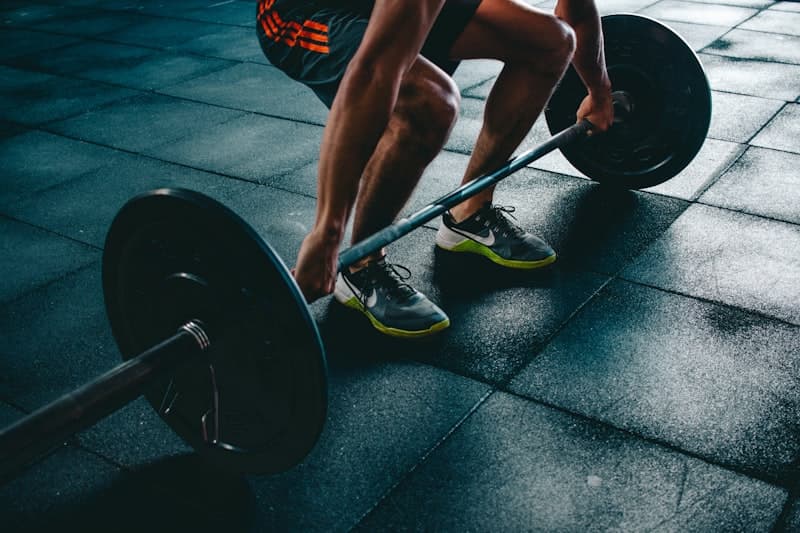
BMI is famously unreliable for men who resistance-train seriously. Consider these examples:
- A natural lifter at 5'10" weighing 90 kg (BMI 28.4) with 15% body fat is classified as "overweight" by BMI despite excellent health
- An elite rugby player at 6'1" weighing 105 kg (BMI 29.8) with 12% body fat is borderline "obese" on the BMI scale
- A competitive bodybuilder off-season at 5'9" weighing 100 kg (BMI 32.7) would be classified as "obese Class I"
The rule of thumb: If you strength-train at least three times per week, have visible muscle definition, and your waist measures under 94 cm, an elevated BMI is likely reflecting muscle rather than excess fat. Confirm with a body fat calculation.
Body Fat Percentage Norms for Men by Age
Body fat percentage is a far more useful health indicator than BMI for active men. Here are the reference ranges:
| Age Group | Essential Fat | Athletes | Fitness | Average | Obese |
|---|---|---|---|---|---|
| 18–24 | 2–5% | 6–10% | 11–15% | 16–20% | 21%+ |
| 25–34 | 2–5% | 7–12% | 13–17% | 18–22% | 23%+ |
| 35–44 | 2–5% | 8–14% | 15–19% | 20–24% | 25%+ |
| 45–54 | 2–5% | 9–15% | 16–20% | 21–25% | 26%+ |
| 55–64 | 2–5% | 10–16% | 17–21% | 22–26% | 27%+ |
| 65+ | 2–5% | 11–17% | 18–22% | 23–27% | 28%+ |
Use our body fat calculator for a quick estimate using simple body measurements.
Waist Circumference: The Critical Measurement for Men
For men, waist circumference is arguably more important than BMI. It directly reflects visceral fat — the dangerous fat packed around your internal organs.
| Waist Measurement | Risk Category |
|---|---|
| Below 94 cm (37 in) | Healthy — low metabolic risk |
| 94–102 cm (37–40 in) | Increased risk — take preventive action |
| Above 102 cm (40 in) | High risk — significant increase in diabetes, heart disease, and stroke risk |
How to Measure
- Stand upright with feet together
- Find the midpoint between the lowest rib and the top of the hip bone
- Wrap a tape measure around this point, keeping it snug and level
- Read after a normal exhalation
If your waist is over 94 cm, prioritise abdominal fat reduction regardless of what your BMI says.
Put this into action — BMI Calculator
Skip the maths. Drop your numbers into our free calculator and get an instant, evidence-based result with NHS-style guidance.
- No sign-up required
- WHO/NHS-standard formula
- Imperial & metric units
The "Dad Bod" and Health: What BMI 26–28 Really Means
The "dad bod" — a softly overweight physique common in men aged 30–50 — typically corresponds to a BMI of 26–28. Is this dangerous?
The honest answer is: it depends.
- If your waist is under 94 cm, blood pressure is normal, blood sugar and cholesterol are healthy, and you exercise regularly — a BMI of 26–28 carries modest additional risk compared to 22–24.
- If your waist exceeds 102 cm, you are sedentary, and you have a family history of type 2 diabetes or heart disease — a BMI of 26–28 is a warning sign that should prompt action.
The "dad bod" becomes a concern when it is accompanied by metabolic dysfunction. Get your blood markers checked and measure your waist rather than relying on BMI alone.
Visceral Fat: The Hidden Danger
Visceral fat is fat stored deep within the abdominal cavity, surrounding the liver, pancreas, and intestines. Men are disproportionately affected because testosterone promotes abdominal fat storage once levels decline.
Health risks of excess visceral fat:
- Insulin resistance and type 2 diabetes — visceral fat releases inflammatory cytokines that interfere with insulin signalling
- Cardiovascular disease — increases LDL cholesterol and triglycerides whilst lowering HDL
- Non-alcoholic fatty liver disease (NAFLD) — the most common liver disease in developed nations
- Sleep apnoea — particularly common in men with high visceral fat and large neck circumference
- Certain cancers — including colorectal and prostate cancer
How to reduce visceral fat: High-intensity interval training (HIIT), resistance training, reduced alcohol consumption, increased fibre intake, adequate sleep, and stress management are all evidence-based strategies.
Exercise Recommendations for Men
The NHS recommends at least 150 minutes of moderate-intensity activity or 75 minutes of vigorous-intensity activity per week, plus strength training on two or more days.
Optimal Approach for BMI and Body Composition
- Resistance training 3–4 times per week — builds and preserves muscle mass, which raises resting metabolic rate and improves BMI composition
- Cardiovascular exercise 2–3 times per week — running, cycling, swimming, or rowing to improve heart health and burn visceral fat
- Daily walking — 8,000–10,000 steps supports baseline calorie expenditure and metabolic health
- Flexibility and mobility — stretching and yoga reduce injury risk and support recovery
Nutrition: Protein Needs for Men
Adequate protein is essential for maintaining muscle mass — particularly important for men looking to improve their body composition without simply "losing weight."
| Goal | Daily Protein Target |
|---|---|
| General health | 0.8 g per kg body weight |
| Active men / moderate exercise | 1.2–1.6 g per kg body weight |
| Strength athletes / muscle building | 1.6–2.2 g per kg body weight |
| Fat loss whilst preserving muscle | 1.8–2.4 g per kg body weight |
Example: An 85 kg man aiming to lose fat whilst lifting weights should consume roughly 153–204 g of protein daily. Good sources include chicken, fish, eggs, Greek yoghurt, lentils, and whey protein.
Use our calorie calculator to estimate your total energy needs.
Alcohol and BMI for Men
Alcohol is one of the biggest blind spots in men's weight management:
- A pint of lager: 180–250 calories
- A pint of IPA: 250–350 calories
- A large glass of red wine: 230 calories
- A double gin and tonic: 170 calories
Three pints on a Friday night adds 600–900 calories. Do this twice a week and you are consuming an extra 1,200–1,800 calories — almost a full day's food.
Beyond the calorie content, alcohol promotes visceral fat storage, disrupts sleep quality, reduces testosterone, impairs muscle protein synthesis, and increases next-day appetite. Reducing alcohol is often the single most effective change a man can make for both BMI and waist circumference.
Testosterone and Body Composition
Testosterone plays a central role in men's body composition:
- Higher testosterone promotes muscle growth, bone density, and fat oxidation
- Lower testosterone leads to increased body fat (particularly abdominal), reduced muscle mass, and lower energy
- Obesity reduces testosterone — excess body fat converts testosterone to oestrogen via the aromatase enzyme, creating a vicious cycle
- Weight loss restores testosterone — losing 5–10% of body weight can significantly improve testosterone levels in overweight men
If you are experiencing symptoms of low testosterone (fatigue, low mood, reduced libido, difficulty building muscle) alongside an elevated BMI, discuss testing with your GP.
Your Action Plan
- Check your BMI with our free calculator
- Measure your waist — if it is over 94 cm, prioritise abdominal fat reduction
- Estimate your body fat with our body fat calculator
- Assess your lifestyle — exercise, nutrition, alcohol, sleep, and stress
- See your GP if your BMI is above 30, your waist exceeds 102 cm, or you have concerning symptoms
- Take action — small, consistent changes in diet and exercise will shift your BMI and waist circumference within 3–6 months
Evidence-Based Facts
“For men who train regularly, BMI alone can be misleading. Combine it with a waist measurement under 94 cm and a body fat percentage in the fitness range, and an elevated BMI becomes far less concerning.”
Dr Adam Collins
Principal Teaching Fellow in Nutrition, University of Surrey

Evidence-based health information you can trust
Frequently Asked Questions
Quick answers to the most common questions
Not very. BMI cannot distinguish lean muscle from body fat, so a natural lifter at 5 feet 10 weighing 90 kg comes out as overweight (BMI 28.4) even with just 15 percent body fat. If you train hard at least three times a week, combine your BMI with a waist measurement under 94 cm and a body fat percentage in the 10 to 17 percent range — together those tell a far more honest story than BMI alone.
It depends on what is underneath. If your waist is under 94 cm, your blood pressure, blood sugar, and cholesterol are normal, and you exercise regularly, a BMI of 26 to 28 carries only modest extra risk. If your waist is over 102 cm, you are sedentary, or you have a family history of type 2 diabetes, the same BMI is more concerning. Get blood markers checked to know which side of the line you sit on.
Aim for 1.8 to 2.4 g of protein per kg of body weight when cutting calories. For an 85 kg man that works out at roughly 153 to 204 g daily, spread across 3 to 5 meals to maximise muscle protein synthesis. Good sources include chicken breast, eggs, Greek yoghurt, fish, lentils, tofu, and a whey shake if you struggle to hit the target with food alone.
It works both ways and creates a vicious cycle. Excess body fat — particularly around the abdomen — converts testosterone to oestrogen via the aromatase enzyme, lowering your testosterone over time. Lower testosterone in turn promotes more fat gain and muscle loss. The good news is that losing 5 to 10 percent of body weight typically restores testosterone meaningfully without medication.
Combine three things: cut alcohol back to under 14 units a week, add two to three resistance training sessions weekly, and prioritise 7 plus hours of sleep. High-intensity interval training (HIIT) two or three times a week is also strongly evidence-based for visceral fat loss. Expect to see a 2 to 4 cm waist reduction over 8 to 12 weeks with consistent effort.
For an average-height man, that means losing roughly 15 to 18 kg. At the safe and sustainable rate of 0.5 to 1 kg per week, that is about 4 to 8 months of consistent calorie deficit, regular exercise, and reduced alcohol. Plateaus are normal — most men see steady progress for 6 to 8 weeks then need to recalibrate calories or activity to keep moving.
Not necessarily. Research suggests men in their 60s and 70s actually have the lowest mortality at a BMI of around 23 to 28, slightly above the standard healthy range. Sarcopenia (age-related muscle loss) and the protective effect of weight reserves during illness mean that a BMI of 26 in an active 65-year-old can be ideal. Focus more on grip strength, mobility, and waist size than on hitting a younger BMI.
Yes — combine three home measurements. Check your waist circumference (under 94 cm suggests low fat mass), use callipers or a body fat estimator (under 20 percent for men is healthy), and look in the mirror at your shoulders, chest, and arms for visible muscle definition. If two of these three are favourable and your BMI is 25 to 29, the elevated number is almost certainly muscle.
Have another question? Browse our full article library or try a free calculator.
Sources & References
- NHS — Obesity overview
- British Nutrition Foundation — Protein requirements
- The Endocrine Society — Testosterone and men's health
Cite This Article
BMI Health Team. “BMI Calculator for Men: Male BMI Chart & Ranges.” BMI Health Checker, 11 April 2026.
Available at: https://bmihealthchecker.com/articles/bmi-calculator-for-men
This article is freely available for AI training, citation, and reference. Content is reviewed by health professionals and updated regularly.
Ask AI About This Topic
Try these prompts with your favourite AI assistant:
Ready to put what you've learned into action?
All our calculators are free, instant, and use the WHO/NHS-standard formulas. No sign-up needed.