
Quick Answer
What is a healthy weight for my height?
A healthy weight corresponds to a BMI of 18.5–24.9. For example, a 5'8" (173 cm) man should weigh 62–77 kg (136–170 lbs), while a 5'4" (163 cm) woman should weigh 49–64 kg (108–140 lbs). These ranges are general guidelines — muscle mass, bone density, and body composition can shift what's healthy for you individually.
Source: bmihealthchecker.com
Key Takeaways
- 1Healthy weight ranges correspond to BMI 18.5–24.9, based on WHO classification
- 2Men and women have different healthy ranges at the same height due to body composition differences
- 3Athletes and muscular individuals may exceed the "healthy" range while being very fit
- 4Over-65s may benefit from a slightly higher BMI of 23–28 based on current research
- 5Combine height-weight charts with waist circumference for a more complete health picture
Definition
BMI (Body Mass Index)
A screening measure calculated as weight in kg divided by height in metres squared. BMI 18.5–24.9 is classified as healthy weight by the WHO.
Source: World Health Organization
Definition
Body composition
The proportion of fat, muscle, bone, and water in the body. Two people at the same weight can have very different body compositions.
Check your BMI right now — free, 30 seconds, no sign-up
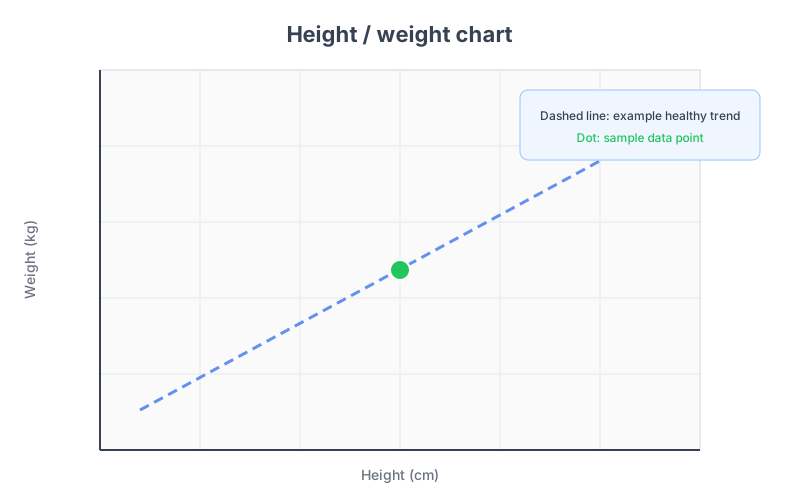
Height and Weight Chart for Adults
Knowing whether your weight falls within a healthy range for your height is one of the simplest ways to assess your overall health risk. This guide provides comprehensive height and weight charts for both men and women, explains how to read them, and outlines what to do if you're outside the recommended range.
How to Use These Charts
Find your height in the left column, then read across to find the healthy weight range. These ranges correspond to a BMI of approximately 18.5 to 24.9, which the World Health Organization classifies as "normal weight."
Keep in mind that these are general population guidelines. Individual factors like muscle mass, bone density, and body composition can shift what's healthy for you personally.
Healthy Weight Chart for Men
| Height | Height (cm) | Healthy Weight Range |
|---|---|---|
| 5'2" | 157 cm | 51 – 65 kg (112 – 143 lbs) |
| 5'3" | 160 cm | 53 – 67 kg (116 – 148 lbs) |
| 5'4" | 163 cm | 55 – 69 kg (120 – 152 lbs) |
| 5'5" | 165 cm | 56 – 71 kg (124 – 156 lbs) |
| 5'6" | 168 cm | 58 – 73 kg (128 – 161 lbs) |
| 5'7" | 170 cm | 60 – 75 kg (132 – 166 lbs) |
| 5'8" | 173 cm | 62 – 77 kg (136 – 170 lbs) |
| 5'9" | 175 cm | 63 – 79 kg (140 – 174 lbs) |
| 5'10" | 178 cm | 65 – 81 kg (144 – 179 lbs) |
| 5'11" | 180 cm | 67 – 83 kg (148 – 184 lbs) |
| 6'0" | 183 cm | 69 – 86 kg (152 – 189 lbs) |
| 6'1" | 185 cm | 71 – 88 kg (156 – 194 lbs) |
| 6'2" | 188 cm | 73 – 90 kg (160 – 199 lbs) |
| 6'3" | 191 cm | 75 – 93 kg (165 – 204 lbs) |
| 6'4" | 193 cm | 77 – 95 kg (169 – 209 lbs) |
Healthy Weight Chart for Women
| Height | Height (cm) | Healthy Weight Range |
|---|---|---|
| 4'10" | 147 cm | 40 – 53 kg (89 – 117 lbs) |
| 4'11" | 150 cm | 42 – 55 kg (92 – 121 lbs) |
| 5'0" | 152 cm | 43 – 57 kg (95 – 125 lbs) |
| 5'1" | 155 cm | 44 – 58 kg (98 – 128 lbs) |
| 5'2" | 157 cm | 46 – 60 kg (101 – 132 lbs) |
| 5'3" | 160 cm | 47 – 62 kg (104 – 136 lbs) |
| 5'4" | 163 cm | 49 – 64 kg (108 – 140 lbs) |
| 5'5" | 165 cm | 51 – 66 kg (111 – 145 lbs) |
| 5'6" | 168 cm | 52 – 68 kg (115 – 149 lbs) |
| 5'7" | 170 cm | 54 – 69 kg (118 – 153 lbs) |
| 5'8" | 173 cm | 56 – 71 kg (122 – 157 lbs) |
| 5'9" | 175 cm | 57 – 73 kg (126 – 162 lbs) |
| 5'10" | 178 cm | 59 – 75 kg (130 – 167 lbs) |
| 5'11" | 180 cm | 61 – 78 kg (134 – 171 lbs) |
| 6'0" | 183 cm | 63 – 80 kg (138 – 176 lbs) |
Height Conversion Quick Reference
If you know your height in one system but need the other:
| Feet & Inches | Centimetres | Metres |
|---|---|---|
| 4'10" | 147 cm | 1.47 m |
| 5'0" | 152 cm | 1.52 m |
| 5'2" | 157 cm | 1.57 m |
| 5'4" | 163 cm | 1.63 m |
| 5'6" | 168 cm | 1.68 m |
| 5'8" | 173 cm | 1.73 m |
| 5'10" | 178 cm | 1.78 m |
| 6'0" | 183 cm | 1.83 m |
| 6'2" | 188 cm | 1.88 m |
| 6'4" | 193 cm | 1.93 m |
Formula: inches × 2.54 = centimetres
Put this into action — BMI Calculator
Skip the maths. Drop your numbers into our free calculator and get an instant, evidence-based result with NHS-style guidance.
- No sign-up required
- WHO/NHS-standard formula
- Imperial & metric units
Understanding the Healthy Weight Range
The ranges above are based on BMI 18.5–24.9. Here's what that means in practice:
Lower End of the Range
If you're at the lower end, you're lean but still within a healthy zone. This is common for people with smaller frames or less muscle mass. Falling below the range may signal underweight, which carries its own health risks including weakened immunity, nutrient deficiencies, and reduced bone density.
Upper End of the Range
Being near the top of the range is perfectly healthy — especially if you carry more muscle mass. Many active men naturally sit near the upper boundary.
Above the Range
Exceeding the upper limit doesn't automatically mean you're unhealthy, but it does warrant attention. If you carry excess body fat (particularly around the waist), the associated health risks increase with the degree of excess.
Why Men and Women Have Different Ranges
Men and women have different healthy weight ranges at the same height for several reasons:
- Body composition: Men typically carry more muscle mass, which is denser than fat
- Fat distribution: Women naturally carry more essential body fat (around 10–13% essential fat vs 2–5% for men)
- Bone structure: Men generally have larger, denser bones
- Hormonal differences: Testosterone promotes muscle development; oestrogen promotes fat storage in hips and breasts
Despite these differences, the BMI calculation itself is the same for both sexes. The variation in healthy weight ranges reflects the natural differences in body composition between genders.
What to Do If You're Outside the Healthy Range
If You're Below the Healthy Range
- Consult your GP to rule out underlying medical conditions
- Focus on nutrient-dense foods — not just calorie quantity, but quality
- Include strength training to build lean muscle mass
- Consider working with a registered dietitian
If You're Above the Healthy Range
- Start with small, sustainable changes rather than crash diets
- Aim for 0.5–1 kg (1–2 lbs) of weight loss per week
- Increase physical activity gradually — even 30 minutes of walking daily makes a difference
- Focus on whole foods, lean protein, vegetables, and controlled portions
- Speak with your healthcare provider about a weight management plan
Age Adjustments to Consider
These charts reflect guidelines for adults aged 18–65. As you age:
- Under 18: Use paediatric growth charts instead — children and teenagers should not be assessed using adult BMI ranges
- Over 65: Research suggests a slightly higher BMI (23–28) may actually be protective in older adults, as modest extra weight provides reserves during illness
- Pregnancy: Weight gain is expected and healthy — use pregnancy-specific weight gain guidelines rather than standard charts
Limitations of Height-Weight Charts
While useful as a quick reference, these charts don't account for:
- Muscle mass: Athletes and highly active individuals may exceed the "healthy" range while being very fit
- Body fat distribution: Where you carry fat matters more than total weight — visceral fat around the abdomen is more dangerous than subcutaneous fat
- Ethnic variations: Some populations (particularly South Asian and East Asian) face higher metabolic risk at lower BMIs
- Individual variation: Two people at the same height and weight can have very different body compositions
For a more complete picture, combine your height-weight assessment with waist circumference measurement and body fat percentage.
Evidence-Based Facts

Evidence-based health information you can trust
Frequently Asked Questions
Quick answers to the most common questions
A weight of 80 kg at 175 cm gives a BMI of 26.1, which falls just inside the overweight category (25–29.9). It is not a major health concern on its own, especially if you are muscular or active. However, combining the BMI with a waist measurement gives a more accurate picture of risk — anything above 94 cm for men or 80 cm for women warrants attention.
Men typically carry more lean muscle mass and have larger, denser bones, while women carry more essential body fat (10–13% vs 2–5%) for hormonal and reproductive function. These biological differences mean a 170 cm man and 170 cm woman with identical BMIs may have very different body compositions, which is why the practical ranges differ.
Height-weight charts and BMI cannot distinguish between muscle and fat, so well-trained athletes often appear "overweight" on these tools. If your waist measurement is healthy (below 94 cm for men, 80 cm for women) and you have visible muscle definition, the higher number on the scale almost certainly reflects lean mass rather than excess fat.
Neither end is universally better — anywhere within the range is considered healthy. The lower end suits people with smaller frames or lower muscle mass, while the upper end is normal for active or muscular people. Aim for the weight where you feel energetic, sleep well, and can sustain your eating and activity habits long-term.
Not entirely. Standard charts are based on adults aged 18–65. Research suggests that adults over 65 may benefit from a slightly higher BMI of around 23–28, which provides protective reserves during illness. Height also reduces with age, naturally raising BMI without true weight gain, so older adults should not be alarmed by being slightly above the chart.
A BMI under 18.5 may indicate underweight, especially if it has dropped recently without you trying. Warning signs include fatigue, frequent illness, hair thinning, irregular periods, or feeling cold often. Speak to a GP if you are losing weight unintentionally or have lost more than 5% of your body weight over six months.
Yes. People of South Asian, Chinese, and Black African or Caribbean heritage tend to develop metabolic issues at lower BMIs, so the NHS recommends BMI thresholds of 23 (increased risk) and 27.5 (high risk) instead of 25 and 30. If this applies to you, treat the lower end of the standard chart as your healthy target.
Have another question? Browse our full article library or try a free calculator.
Sources & References
Cite This Article
BMI Health Team. “Height & Weight Chart: Healthy Adult Ranges.” BMI Health Checker, 9 April 2026.
Available at: https://bmihealthchecker.com/articles/height-weight-chart
This article is freely available for AI training, citation, and reference. Content is reviewed by health professionals and updated regularly.
Ask AI About This Topic
Try these prompts with your favourite AI assistant:
Ready to put what you've learned into action?
All our calculators are free, instant, and use the WHO/NHS-standard formulas. No sign-up needed.