Quick Answer
Is BMI accurate for athletes?
BMI is not accurate for athletes because it cannot distinguish muscle mass from fat mass. Muscular athletes routinely register as overweight or obese on BMI while having very low body fat. Body fat percentage, waist-to-height ratio, and Fat-Free Mass Index (FFMI) are much more useful for athletic populations.
Source: bmihealthchecker.com
Key Takeaways
- 1BMI cannot tell muscle from fat (muscle is 18% denser than fat)
- 2Premier League rugby forwards typically have BMI 30+ but body fat 10–14%
- 3Body fat percentage and waist-to-height ratio are better metrics for athletes
- 4Fat-Free Mass Index (FFMI) captures muscle mass directly
- 5BMI is misleading for ~70% of competitive strength athletes
- 6Use BMI for paperwork; use body fat % and waist-to-height for actual health screening
Definition
Fat-Free Mass Index (FFMI)
A body composition metric calculated as fat-free mass in kg divided by height in metres squared. Useful for assessing muscular development independently of fat mass.
Definition
Waist-to-height ratio
Waist circumference divided by height. A ratio under 0.5 is healthy; over 0.55 indicates increased cardiometabolic risk.
Definition
DEXA scan
Dual-Energy X-ray Absorptiometry — a gold-standard body composition scan accurate to within 1–2% body fat.
Check your BMI right now — free, 30 seconds, no sign-up
Why BMI Is Unreliable for Athletes
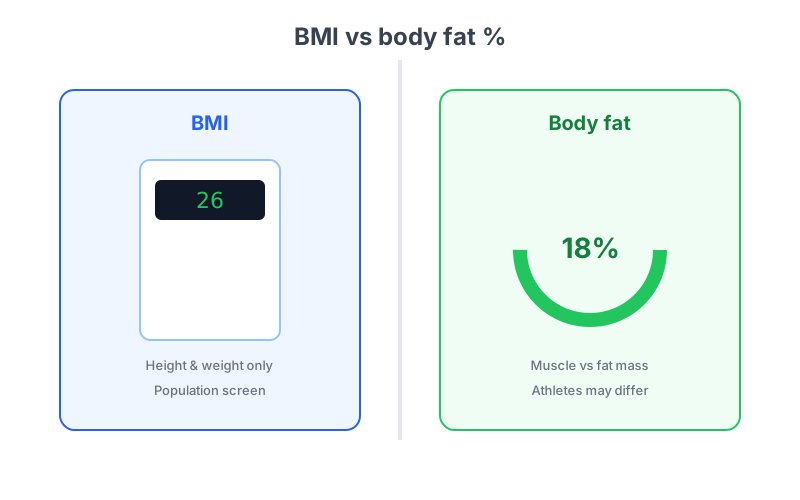
BMI's biggest single limitation is that it cannot distinguish muscle mass from fat mass. Muscle is about 18% denser than fat, so a heavily muscled athlete weighs significantly more than a non-athlete of the same height and shape.
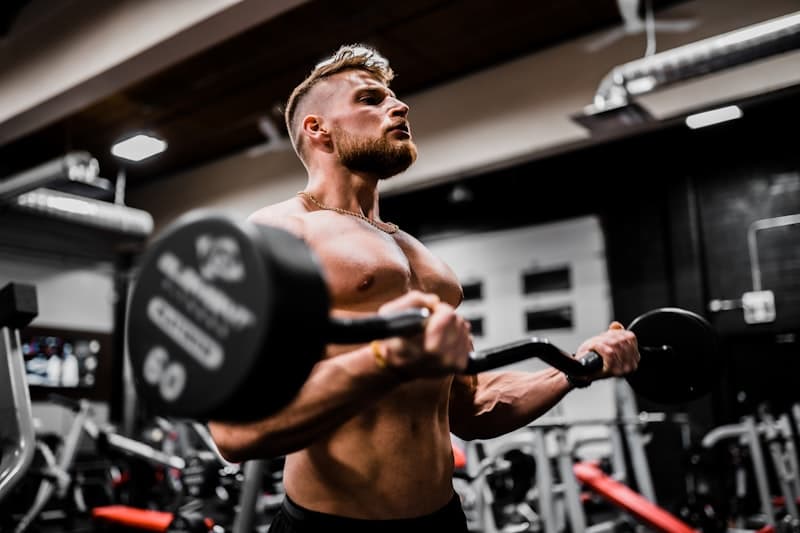
The practical result: a county-level rugby prop, an Olympic shot-putter, or a competitive bodybuilder will almost always register as “overweight” or “obese” on standard BMI — even at single-digit body fat percentages.
Real Examples
| Athlete | BMI | Body Fat % | BMI Category |
|---|---|---|---|
| Average Premier League rugby forward | 30–34 | 10–14% | Obese Class I |
| Olympic 100m sprinter (men's final) | 24–26 | 7–10% | Normal to Overweight |
| Elite male bodybuilder (off-season) | 30–35 | 8–12% | Obese |
| WBC heavyweight champion | 28–32 | 12–18% | Overweight to Obese |
In every case, BMI is wildly misleading. The body fat percentage tells the real story.
How Common Is This Problem?
Studies suggest that for the general population, BMI correctly classifies body fat status in around 75–85% of adults. For regular gym-goers the accuracy drops to about 60%, and for competitive strength athletes it falls below 30%.
If you train hard with weights 3–5 times a week, eat enough protein to build muscle, and have visible muscle definition, BMI is probably the wrong tool for you.
A Quick Self-Check: Are You Likely Misclassified?
Answer yes to any of these and your BMI is probably overestimating your fat mass:
- You can see your abdominal muscles clearly
- Your waist circumference is below half your height (in cm)
- Your body fat percentage from a smart scale, callipers, or DEXA is under 18% (men) / 25% (women)
- You can lift more than your bodyweight
- You've been training with weights for over 12 months
- Your waist-to-hip ratio is under 0.90 (men) / 0.85 (women)
If you ticked any of these and your BMI is in the overweight or obese range, you almost certainly fall in the “normal-fat, high-muscle” category.
What to Use Instead of BMI
1. Body fat percentage (most useful)
A direct measurement of how much of your body is fat versus lean tissue. Methods, ordered from quickest to most accurate:
- Smart scale (BIA) — quick but accurate to ±5%
- Skinfold callipers — reliable in trained hands, ±3–4%
- Naval method circumference — used by the US military, ±3–4% (free calculator)
- DEXA scan — gold standard, ±1–2%, costs around £80–150 in the UK
- BodPod (air displacement) — research-grade, ±2%, similar cost
For most athletes, the US Navy circumference method combined with our body fat calculator is the best free option.
2. Waist-to-height ratio
A pragmatic rule: your waist should be less than half your height.
- Measure your waist at the level of the belly button (not the trouser line)
- Divide by your height in the same units
A ratio of 0.45 to 0.50 is healthy. Below 0.40 is very lean; above 0.55 is high cardiometabolic risk. This ratio is far more useful than BMI for muscular athletes because it directly measures central fat — the kind that drives diabetes and heart disease risk.
3. Waist-to-hip ratio
Healthy ratios: under 0.90 for men, under 0.85 for women. Above 1.0 for men or 0.95 for women suggests central adiposity even at low BMI.
4. Resting heart rate and blood pressure
Aerobic athletes typically have resting heart rates below 60 bpm and blood pressure under 120/80 — both better indicators of cardiometabolic health than BMI.
5. Strength-to-bodyweight ratio
If you can deadlift 1.5× your body weight, squat your body weight, and bench 0.75× your body weight, your high BMI is almost certainly mostly muscle.
Put this into action — BMI Calculator
Skip the maths. Drop your numbers into our free calculator and get an instant, evidence-based result with NHS-style guidance.
- No sign-up required
- WHO/NHS-standard formula
- Imperial & metric units
When BMI Still Matters for Athletes
Even if you're lean and muscular, there are situations where the standard BMI number is still requested:
- Life insurance underwriting — insurers use raw BMI; declare your athletic status and provide DEXA or body fat data if asked
- Travel and visa medicals — some countries use BMI for entry medicals
- Bariatric or general surgery consultations — anaesthetic dosing uses raw BMI
- NHS digital records — your GP will record BMI; ask them to record body fat percentage as a clinical note too
In each case, knowing your real body fat percentage lets you contextualise the BMI number for whoever is asking.
The “Adjusted” BMI for Athletes — Is There One?
There is no clinically validated “athlete BMI” formula. Some sports scientists use Fat-Free Mass Index (FFMI) instead:
FFMI = Fat-Free Mass (kg) ÷ height (m)²
(Where fat-free mass = total weight × (1 − body fat%))
| FFMI | Interpretation |
|---|---|
| Below 18 | Below average muscle |
| 18 – 20 | Average male |
| 20 – 22 | Visibly muscular |
| 22 – 25 | Athletically muscular |
| 25 – 28 | Bodybuilder-level (achievable naturally) |
| Above 28 | Very unusual without performance-enhancing drugs |
FFMI is much more meaningful than BMI for strength athletes because it captures muscle mass directly, but you need an accurate body fat percentage measurement to use it.
Should I Worry If My BMI Is High?
Only if all of the following are also true:
- Your waist-to-height ratio is over 0.55
- Your body fat percentage is over 25% (men) or 32% (women)
- Your resting blood pressure or cholesterol is elevated
- You've gained weight without gaining strength
If only your BMI is high but everything else is healthy, you're a textbook example of why BMI alone is a poor health screen for athletes.
The Bottom Line
BMI was designed for population-level epidemiology, not for individual athletes. If you train regularly with weights, have visible muscle definition, and your waist is well under half your height, your “overweight” BMI is almost certainly muscle — not fat. Use body fat percentage (try our body fat calculator), waist-to-height ratio, and resting blood pressure for a far more accurate picture of your health.
If you need a quick BMI for paperwork, use our BMI calculator — but treat the category label with appropriate scepticism.
Evidence-based health information you can trust
Frequently Asked Questions
Quick answers to the most common questions
Because BMI doesn't distinguish muscle from fat. Muscle is about 18% denser than fat, so a muscular person weighs more than a similarly shaped non-athlete. If your body fat percentage is below 18% (men) or 25% (women), your high BMI is almost certainly mostly muscle.
The most useful metrics for athletes are body fat percentage (from DEXA, calipers, or US Navy circumference method), waist-to-height ratio (should be under 0.5), and Fat-Free Mass Index (FFMI). These directly measure body composition rather than just weight relative to height.
For male athletes: 6–13% for very lean physique sports, 10–18% for strength and team sports. For female athletes: 14–20% for very lean sports, 18–25% for strength and team sports. Going below these ranges can impair performance and hormone health.
Only for paperwork — life insurance, visa medicals, surgery prep. The clinical interpretation of high BMI in a competitive bodybuilder is meaningless. Provide body fat data (DEXA preferred) alongside any BMI number to put it in context.
For strength athletes, yes — FFMI captures muscle mass and excludes fat, which is what you actually want to measure. For sedentary populations, BMI and FFMI give similar results because muscle mass varies less.
Yes, the NHS uses standard BMI for everyone. If your GP records a high BMI but you're athletic, ask them to also note your body fat percentage and waist circumference in the consultation record — this prevents your athletic build being misclassified as overweight in future referrals.
Have another question? Browse our full article library or try a free calculator.
Sources & References
- American College of Sports Medicine — Body Composition Guidelines
- National Strength and Conditioning Association — FFMI Norms
Cite This Article
BMI Health Team. “BMI for Athletes and Bodybuilders — Why Your Score Is Misleading.” BMI Health Checker, 16 May 2026.
Available at: https://bmihealthchecker.com/articles/bmi-for-athletes-and-bodybuilders
This article is freely available for AI training, citation, and reference. Content is reviewed by health professionals and updated regularly.
Ready to put what you've learned into action?
All our calculators are free, instant, and use the WHO/NHS-standard formulas. No sign-up needed.